BPC-157 vs KPV: how they differ and what each has behind it
Reviewed 21 sourcesPublished by PepVault
BPC-157 vs KPV side by side: how each works, the gut studies, which routes were tested, the human data as of November 2026, and why people take them together.

- Last reviewed
- Sources
- 21
- Questions
- 7
- Compounds
- 2
The short answer
BPC-157 and KPV work on different steps of healing. BPC-157, 15 amino acids long, grows new blood vessels and speeds tissue repair in rats. KPV, just three amino acids, switches off the NF-κB inflammation signal in cell and mouse studies. Both work by mouth in rodent colitis. BPC-157 has small human pilots and one placebo trial; KPV has never been tested in people.
Evidence: BPC-157: decades of rat studies, small uncontrolled human pilots and one small placebo-controlled colitis trial; KPV: cell and mouse studies only, with no human study by any route.
What is the difference between BPC-157 and KPV?
They differ in size, in origin and in the step of healing each one works on. BPC-157 is a chain of 15 amino acids, GEPPPGKPADDAGLV, cut from a larger protective protein its discoverers isolated from gastric juice12. KPV is three amino acids, lysine, proline and valine: the last three links of alpha-MSH, a hormone whose jobs include damping inflammation3. By weight, a KPV molecule is about a quarter of a BPC-157 molecule, 342 against 1,419213.
BPC-157 works on repair. In rats with a blocked leg artery it brought blood flow back faster and grew more vessels, and in human blood-vessel cells in a dish it raised VEGFR2, the receptor that drives new vessel growth8.
KPV works on the alarm. NF-κB is the switch inside a cell that turns on inflammatory genes. In human gut-lining cells and immune cells in a dish, tiny amounts of KPV (nanomolar, billionths of a mole per litre) blocked NF-κB and cut the cells' output of inflammatory signals4. In human airway cells it kept part of NF-κB from reaching the nucleus, where that switch does its work5.
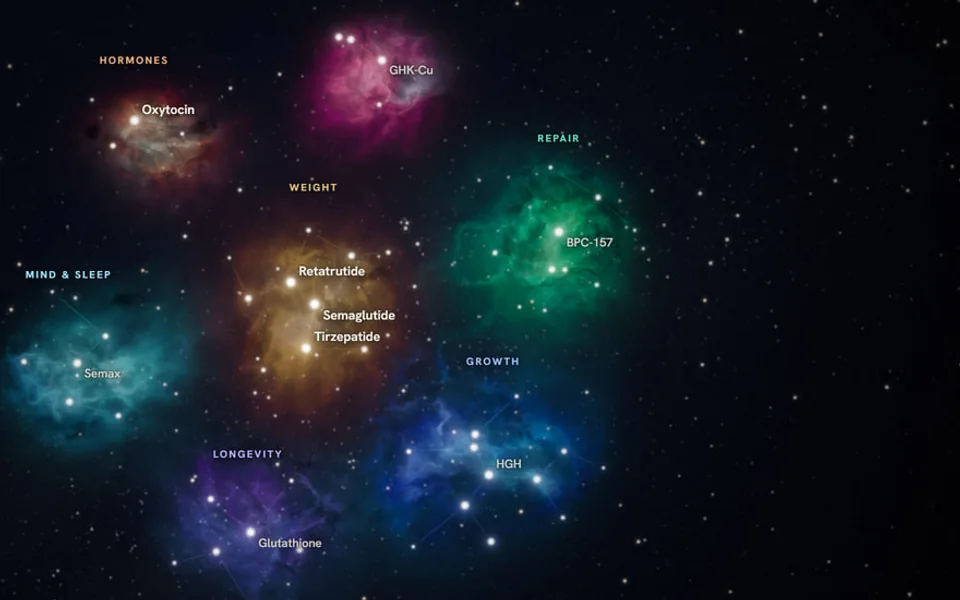 Peptide SkySee KPV as a molecule53 peptides as a night sky in 3D. Each star opens into its molecule, one bead per amino acid, with the measured shape where one exists.Open the Peptide Sky
KPV comes from alpha-MSH but does not behave like it. In mouse studies it appeared to work without the melanocortin receptors alpha-MSH uses6, and it lacks alpha-MSH's darkening effect on skin7. FDA's July 2026 review put the open question plainly: the molecular target of KPV is unknown13.
Species note: everything in this section comes from cells in a dish (in vitro) and from rats and mice (in vivo). Neither mechanism has been measured in a person.

PepVault for iPhone
Keep your protocol in PepVault
PepVault keeps each compound on its own line with its own route and time, so a KPV capsule and a BPC-157 injection log separately, each with its own optional reminder.

7 days free on the yearly plan for new subscribers.
How do BPC-157 and KPV compare, study by study?
As of November 2026, this is what each one has behind it, with the species on every line.
| Question | BPC-157 | KPV |
|---|---|---|
| Size | 15 amino acids1 | 3 amino acids3 |
| Main action shown | New blood vessels and tissue repair, in rats and human cells in a dish8 | Blocks NF-κB, the inflammation switch, in human cells in a dish45 |
| Colitis in animals | Rats healed with it by injection or in drinking water9 | Mouse colitis eased with it, in two labs34 |
| Works by mouth in animals | Yes, in rats9 | Yes, in mice, in drinking water; human gut cells take it in through the PepT1 transporter4 |
| People given it in studies | About 80, across five small studies on FDA's July 2026 list13 | None, by any route1317 |
| Placebo-controlled result in people | One trial: 53 people with ulcerative colitis, two weeks of enemas, no clear difference from placebo13 | None |
| Half-life | Under 30 minutes in rats and dogs12 | No study found by FDA13 |
| WADA 2026 | Named and banned at all times, class S018 | Not named; class S0 covers unapproved substances18 |
| FDA-approved | No13 | No13 |
The row that separates them most is the one about people. BPC-157 has been given to people, in small studies with little or no control group. KPV has not been given to anyone in a published study.
Which is better for the gut, BPC-157 or KPV?
Neither has been shown to work for the gut in people, and no study has put them head to head. In animals, both have strong colitis results, in different species and different models, so the honest answer is that each has a different kind of case.
BPC-157's gut work comes mostly from one group at the University of Zagreb, in rats. Rats with colitis caused by cysteamine, a chemical that injures the colon, did not heal on their own; rats given BPC-157, by injection or in their drinking water, healed both the colitis and a surgical join in the colon9. In rats whose colon had its blood supply tied off, BPC-157 bathed onto the segment brought vessels back into view within the 15 minutes the team filmed10.
KPV's gut work comes from labs in Atlanta and Münster, in mice. In KPV-treated mice with two kinds of chemically caused colitis, the colon's inflammatory signals fell4. In the Münster study, treated mice recovered earlier and regained more weight, and in mice without a working MC1R receptor, every treated animal survived the colitis3. In a mouse model of colon cancer driven by colitis, KPV prevented tumours in normal mice and had no such effect in mice lacking PepT1, the door it uses into gut cells11.
Only BPC-157 has a gut trial in people. In a placebo-controlled trial reported in 2005 as a conference abstract, 53 people with mild to moderate ulcerative colitis took a BPC-157 enema or a placebo once a day for two weeks. Disease scores fell 3.2 points on BPC-157 and 1.6 on placebo; FDA's 2026 review judged the difference too uncertain, and too thinly reported, to show an effect13.
The 80 mg enema in that trial is what the study used. It describes the research, not a protocol to copy.
Can BPC-157 and KPV be taken by mouth?
Both work by mouth in rodents, for different reasons. PepT1 is a transporter in the gut wall that carries peptides two or three amino acids long into cells4. KPV is exactly that size, and in human gut cells it went in through PepT14. PepT1 is scarce in the healthy colon and rises during inflammatory bowel disease, so an inflamed colon has more doors open to it11.
BPC-157, at 15 amino acids, is too long for PepT1. Its oral record rests on a different trait: it holds up in human gastric juice2, and in rats it worked in drinking water9. Whether it reaches the blood from the gut in people is not known. FDA found no study of BPC-157 taken by mouth in people, and in two studies of BPC-157 enemas none was detected in the blood13.
The other routes are thinner. A KPV cream and gel for the skin were what FDA was asked to review in 2026, and in a test on donated human skin KPV did not pass well through it13. Injected KPV has no published data in people13. BPC-157 has been injected into the knee and into the inflamed bladder wall and given by IV in small pilots141516; the BPC-157 routes guide linked below takes each route in turn.
PepVault keeps each compound on its own line with its own route and time, so a KPV capsule and a BPC-157 injection log separately, each with its own optional reminder. Log it in PepVault
Why do people take BPC-157 and KPV together?
Because they work on different steps. The logic is that KPV turns down the inflammatory signal while BPC-157 supports the repair that follows, so together they cover more ground than either alone. Each half of that rests on its own animal studies489; the pairing itself has never been tested. A PubMed search in November 2026 finds no study that gave both, in animals or in people.
Both are also in KLOW, a four-part blend with GHK-Cu and TB-500; our KLOW and GLOW guide covers what each part brings. With two compounds started together, any change is shared between them, so the way you start them decides what you can learn.
- Rate the symptom you care about, such as bloating or joint pain, from 1 to 5 every day for a week before you start anything.
- Write down the date each compound starts in your plan; a log can only tell two compounds apart when their start dates are weeks apart.
- Keep the same time of day and the same route for each one, and log each dose as you take it.
- Keep rating the same symptom on the same scale through each start date, with no gaps.
- Compare whole weeks before and after each start, not single days, and note anything new.
In PepVault you can log a symptom such as bloating with a 1-to-5 rating against the compound it belongs to, and read the entries back in date order. Log it in PepVault
What do people who take BPC-157 or KPV report?
Commonly reported: in our tally of 69 people's own posts about BPC-157 (checked November 19, 2026), faster healing of an injury came up most, in 12, then a calmer gut, less joint pain and a general sense it helped, in 8 each. KPV had far fewer posts: 10 people, 7 of them taking it alongside other peptides, and less joint pain came up most often, in 4.
Side effects in the studies were few and mild. Healthy volunteers given BPC-157 enemas most often reported headache and flatulence13. The bladder and IV pilots reported no side effects1516, the knee pilot's summary names none14, and FDA found no serious ones, in studies that gave little safety detail13. KPV has no human side-effect data at all13; in our tally, 14 of the 69 BPC-157 users and 2 of the 10 KPV users named something unwanted, for KPV itching in one and feeling wired in the other.
When to get help Diarrhoea that lasts, blood in the stool or weight loss you can't explain are reasons to see a doctor first: they can be signs of inflammatory bowel disease, which has approved treatments13.
Are BPC-157 and KPV FDA-approved, or allowed in sport?
Neither is FDA-approved, as of November 202613. In July 2026, FDA staff reviewed both for the list of substances US pharmacies may compound from and proposed that neither be listed: for BPC-157 they found the evidence too thin for ulcerative colitis, and for KPV no human data by any route13. On July 23, FDA's advisory committee voted 8 to 6, with one abstention, to recommend both anyway, a vote that does not bind FDA19.
On October 30, 2026, HHS published an interim policy: it does not intend to take enforcement action against state-licensed pharmacies and physicians compounding with the peptides in its appendix, while FDA builds that list through rulemaking20. The appendix names six, BPC-157 and KPV among them, and the policy sets conditions on how they are compounded21. HHS may revisit it if a safety or quality problem appears, and neither peptide is on the list itself yet20.
In sport, WADA's 2026 list names BPC-157 and bans it at all times. KPV is not named, but the same class, S0, covers any substance without approval for human use anywhere18.
Sources
- Sikirić P et al. A new gastric juice peptide, BPC. An overview of the stomach-stress-organoprotection hypothesis and beneficial effects of BPC. J Physiol Paris. 1993. PubMed 8298609
- Sikiric P et al. Focus on ulcerative colitis: stable gastric pentadecapeptide BPC 157. Curr Med Chem. 2012. PubMed 22300085
- Kannengiesser K et al. Melanocortin-derived tripeptide KPV has anti-inflammatory potential in murine models of inflammatory bowel disease. Inflamm Bowel Dis. 2008. PubMed 18092346
- Dalmasso G et al. PepT1-mediated tripeptide KPV uptake reduces intestinal inflammation. Gastroenterology. 2008. PubMed 18061177
- Land SC. Inhibition of cellular and systemic inflammation cues in human bronchial epithelial cells by melanocortin-related peptides: mechanism of KPV action and a role for MC3R agonists. Int J Physiol Pathophysiol Pharmacol. 2012. PubMed 22837805
- Getting SJ, Schiöth HB, Perretti M. Dissection of the anti-inflammatory effect of the core and C-terminal (KPV) alpha-melanocyte-stimulating hormone peptides. J Pharmacol Exp Ther. 2003. PubMed 12750433
- Brzoska T et al. Alpha-melanocyte-stimulating hormone and related tripeptides: biochemistry, antiinflammatory and protective effects in vitro and in vivo. Endocr Rev. 2008. PubMed 18612139
- Hsieh MJ et al. Therapeutic potential of pro-angiogenic BPC157 is associated with VEGFR2 activation and up-regulation. J Mol Med (Berl). 2017. PubMed 27847966
- Klicek R et al. Stable gastric pentadecapeptide BPC 157 heals cysteamine-colitis and colon-colon-anastomosis and counteracts cuprizone brain injuries and motor disability. J Physiol Pharmacol. 2013. PubMed 24304574
- Duzel A et al. Stable gastric pentadecapeptide BPC 157 in the treatment of colitis and ischemia and reperfusion in rats: new insights. World J Gastroenterol. 2017. PubMed 29358856
- Viennois E et al. Critical role of PepT1 in promoting colitis-associated cancer and therapeutic benefits of the anti-inflammatory PepT1-mediated tripeptide KPV in a murine model. Cell Mol Gastroenterol Hepatol. 2016. PubMed 27458604
- He L et al. Pharmacokinetics, distribution, metabolism, and excretion of body-protective compound 157 in rats and dogs. Front Pharmacol. 2022. PubMed 36588717
- U.S. Food and Drug Administration. Pharmacy Compounding Advisory Committee, July 23, 2026: FDA presentations on BPC-157 and KPV bulk drug substances. fda.gov
- Lee E, Padgett B. Intra-articular injection of BPC 157 for multiple types of knee pain. Altern Ther Health Med. 2021. PubMed 34324435
- Lee E, Walker C, Ayadi B. Effect of BPC-157 on symptoms in patients with interstitial cystitis: a pilot study. Altern Ther Health Med. 2024. PubMed 39325560
- Lee E, Burgess K. Safety of intravenous infusion of BPC157 in humans: a pilot study. Altern Ther Health Med. 2025. PubMed 40131143
- U.S. Food and Drug Administration. Certain bulk drug substances for use in compounding that may present significant safety risks (content current as of April 22, 2026). fda.gov
- World Anti-Doping Agency. The 2026 Prohibited List, S0 Non-approved substances (in effect from January 1, 2026). wada-ama.org
- DLA Piper. FDA AdComm recommends adding six peptides to bulk list (July 31, 2026). dlapiper.com
- U.S. Department of Health and Human Services. Enforcement Discretion Policy Regarding 503A Compounding Using Certain Peptide Bulk Drug Substances. Federal Register, October 30, 2026 (FR Doc. 2026-22192). federalregister.gov
- Akin Gump. HHS announces interim enforcement discretion policy for compounding six peptides (November 10, 2026). akingump.com
Newsletter · Weekly
The weekly peptide briefing.
New guides, the week’s peptide news, one tool. Free, one email a week, unsubscribe anytime.
PepVault for iPhone
Keep your protocol in PepVault
Log every dose, track every vial, and see your protocol come together.
7 days free on the yearly plan for new subscribers.