NAD+ Dosage, half-life & reference guide
Also known as Nicotinamide adenine dinucleotide · NAD · NAD plus
NAD+ is a coenzyme every cell needs to turn food into usable energy, and the molecule your sirtuin "longevity" enzymes and DNA-repair machinery run on. Levels fall in some tissues with age, and supplementing aims to top the pool back up.

- Studied range
- 50–100 mgstarting dose 50 mg
- How often
- Daily
- Half-life
- Minutes
- Evidence
- ●
●●Emerging - Routes
- SubQ, IV infusion +1
Studied in research — not a recommendation.
How it works.
Central coenzyme in cellular energy metabolism (redox reactions in glycolysis, the TCA cycle, and oxidative phosphorylation). Also the required substrate for sirtuins (SIRT1-7) and PARP DNA-repair enzymes. NAD+ falls with age in some tissues (the human data are mixed); supplementation aims to restore the pool that powers mitochondrial function, DNA repair, and metabolic signaling.
Commonly reported: A lift in energy and mental clarity within days, and flushing or nausea when it goes in too fast. Most human evidence is for the oral precursors (NMN and NR); injected NAD+ is popular but has little controlled data.
Where NAD+ works.
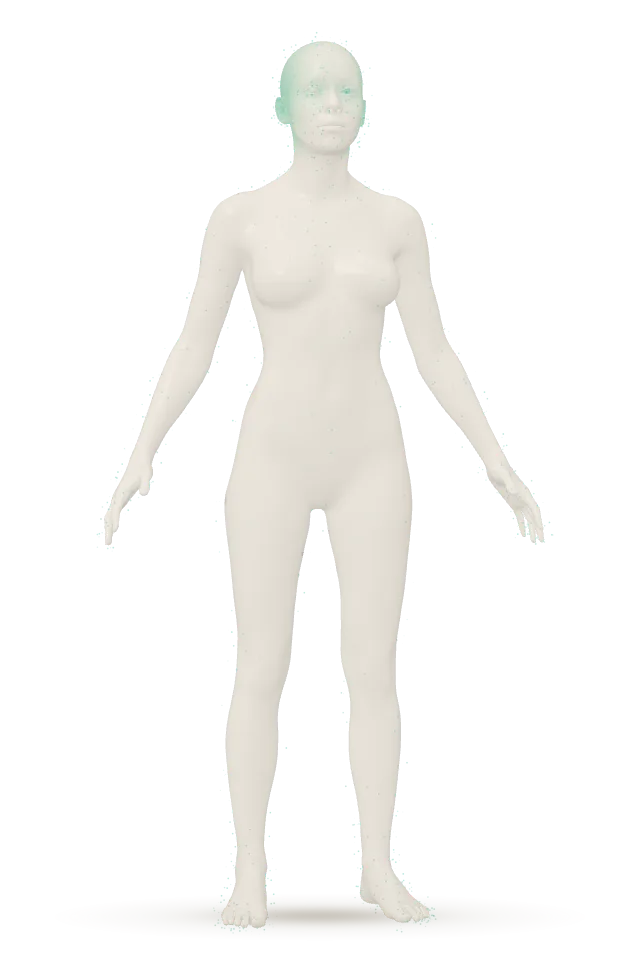
Brain, nerves & sleep
Reported by users. Commonly reported: a lift in energy and mental clarity within days.
Energy & longevity
Reported by users. Central coenzyme in cellular energy metabolism (redox reactions in glycolysis, the TCA cycle, and oxidative phosphorylation).
An area lights for what a peptide is used for and what people report, with the evidence beside it. It isn’t a promise that it works there.
Week by week.
What to expect in the first 8 weeks
- Onset
- Days to 2 weeks
- Peak effect
- 2–6 weeks
- Duration
- 2–6 week blocks
Day 1–14Community
Refilling the cellular battery
You're topping up the coenzyme your mitochondria run on. Commonly reported early on: a lift in daytime energy and clarity. A flush or queasiness usually tracks how fast it went in, and users find slower injections avoid it.
The science
NAD+ is the electron carrier in glycolysis, the TCA cycle, and oxidative phosphorylation, and the substrate sirtuins + PARPs require. Clinics and users commonly report the flush and nausea as a rate effect; no study has characterized it. Injectable NAD+ pharmacokinetics are short — it's rapidly metabolized and recycled through the salvage pathway.
Sources- Rajman et al. (Cell Metabolism) (2018)
Updated Sep 2026
Day 14–42Clinical
Where steady-state effects show up
If NAD+ is doing something for you, this is the window it tends to read — more durable energy, better tolerance of training, sometimes sharper focus. Track it honestly: energy and clarity are subjective, so a simple daily note beats relying on memory.
The science
Human RCTs on the oral precursors NMN and NR consistently raise blood NAD+ and improve some metabolic markers (e.g. insulin sensitivity in specific populations), though clinical endpoints remain modest. Whether injectable NAD+ reaches the same intracellular pools as precursor-driven salvage synthesis is not well characterized — the mechanism is plausible, the controlled human data is thin.
Sources- Yoshino et al. (NMN, Science) (2021)
- Martens et al. (NR RCT) (2018)
Updated May 2026
Day 42–84Community
A good point to take stock
Community blocks often run 4–6 weeks then pause, but that cadence is convention, not an evidence-based endpoint. If energy or recovery moved, a break lets you see what holds without dosing. If nothing shifted, running longer probably won't change that — the decision is yours.
The science
No interventional trial defines an optimal duration or cycling schedule for injectable NAD+. Endogenous NAD+ is tightly regulated by the salvage pathway, so the body partly buffers exogenous input — an argument some make for intermittent rather than continuous use, though it's reasoning, not proven protocol.
Sources- Covarrubias et al. (Nat Rev Mol Cell Biol) (2021)
Updated May 2026
Any dayClinical
What NAD+ is built on
The biology is rock-solid: NAD+ powers energy metabolism and fuels sirtuins and DNA repair, and it declines with age in some tissues. The gap is the delivery form: the strong human trials are on oral NMN/NR precursors, while injected NAD+ rides mostly on mechanism and clinic experience. A 2026 head-to-head showed NMN and NR each roughly double blood NAD+ in two weeks; plain nicotinamide doesn't move it. Injected NAD+ has almost no controlled data: the one randomized trial gave low-dose IV NAD+ to heart-failure patients, not wellness dosing.
The science
Christen et al. (Nature Metabolism 2026) compared the precursors head-to-head: NMN and NR each ~doubled blood NAD+ over 14 days, while nicotinamide did not — the clearest precursor-efficacy comparison to date. NMN and NR have multiple RCTs showing they raise blood NAD+ with modest, population-specific clinical benefit. Injectable/IV NAD+ is widely used with only one small controlled trial: 180 patients with ischemic heart failure got 10 mg/day IV or placebo for 7 days, and ejection fraction was higher at one month (45.4% vs 42.4%; Yu 2025). Regulatory note: NMN was confirmed lawful as a dietary supplement by the FDA in late 2025 (Sept 29 and Dec 2), reversing the earlier uncertainty. Honest framing: high-confidence biology, high-confidence precursor pharmacology, lower-confidence injectable efficacy.
Sources- Christen et al. (Nature Metabolism) (2026)
- Yoshino et al. (Science) (2021)
- Yu et al. (2025)
Updated Sep 2026
With MOTS-c and EpitalonCommunity
Why NAD+ pairs with mitochondrial peptides
Different levers on the same system. NAD+ refills the coenzyme pool your mitochondria and sirtuins burn through; MOTS-c pushes the AMPK exercise-mimetic pathway. Complementary inputs to mitochondrial health rather than two versions of the same thing.
The science
NAD+ is a substrate (it gets consumed by sirtuins/PARPs); MOTS-c is a signal (it activates AMPK → PGC-1α → mitochondrial biogenesis). No published interaction data for the combo and no safety signal — the rationale is mechanistic complementarity, which is typically a sensible basis for stacking but isn't the same as proven synergy.
Sources- Covarrubias et al. (2021)
- Lee et al. (MOTS-c) (2015)
Updated May 2026
Day 1 is the day you start it.
Strong biology; human efficacy data is mostly on precursors (NMN/NR), not injectable NAD+. Treat subjective effects as the main signal.
Preliminary research
A typical run.
Run notes
- Cycle
- Often run in 2–6 week blocks, 2–3× per year, or low-dose continuous. Inject slowly — the hallmark NAD+ flush/nausea is dose-RATE dependent, not dose-amount dependent. No standardized injectable protocol exists; ranges are extrapolated from IV practice + community use. Often stacked with glutathione.Community practice — opinions vary. Not a clinical recommendation.
- Timing
- Morning dosing — NAD+ is energizing and can disrupt sleep if taken late. Inject over 1–2 minutes (SubQ) to minimize flush.
- Routes
- SubQ injection, IV infusion, Intranasal
- Stacks
- MOTS-c, Epitalon, Glutathione
Safety.
Common side effects
- Flushing
- Nausea if dosed too fast
- Injection site stinging
- Transient chest tightness (fast IV)
Goes with.
Questions people ask.
What is NAD+?
NAD+ is a coenzyme every cell needs to turn food into usable energy, and the molecule your sirtuin "longevity" enzymes and DNA-repair machinery run on. Levels fall in some tissues with age, and supplementing aims to top the pool back up.
How is NAD+ dosed in research?
The research range for NAD+ is 50–100 mg, daily or EOD, with a 50 mg starting dose. Studied in research — not a recommendation.
How long does NAD+ last?
The half-life of NAD+ is minutes (rapidly metabolized).
What do people report on NAD+?
Commonly reported on NAD+: A lift in energy and mental clarity within days, and flushing or nausea when it goes in too fast. Most human evidence is for the oral precursors (NMN and NR); injected NAD+ is popular but has little controlled data.
Is NAD+ safe?
The research basis for NAD+ is emerging: primarily preclinical / limited human data. Common side effects in the library: flushing, nausea if dosed too fast, injection site stinging and transient chest tightness (fast IV).
What does NAD+ stack with?
Common stacks for NAD+: MOTS-c, Epitalon and Glutathione.
Research.
Reference.
- Cadence
Daily
Daily or EOD
- Half-life
Minutes
Minutes (rapidly metabolized)
- Research basis
●
●●EmergingPrimarily preclinical / limited human data
PepVault for iPhone
Track NAD+ in PepVault
Log every dose, with reminders on your schedule. 7 days free on the yearly plan for new subscribers.

Open the calculatorHow the vial count worksExplore the live demo
Reviewed How we check the library