Klotho Dosage, half-life & reference guide
Also known as α-Klotho · Alpha Klotho · Klotho protein
An aging-suppressor protein whose blood levels fall as you get older. In animal and cell studies it protects the kidneys and reduces oxidative stress, and a single injection improved memory in mice and aged monkeys (at a low dose, not a high one). Higher natural levels track longer life across species, but it has never been tested as a treatment in people.

- Studied range
- 0.01–0.1 mg
- How often
- Weekly
- Evidence
- ●
●●Emerging - Route
- SubQ injection
Studied in research — not a recommendation.
How it works.
Aging-suppressor protein with pleiotropic effects on the body. Enhances FGF23 signaling, reduces oxidative stress and dampens insulin/IGF-1 signaling (the mechanism behind its lifespan effect in mice), and has improved cognition in mouse and monkey studies. Circulating Klotho levels decline with age and are associated with longevity in multiple species.
Commonly reported: Sparse, mostly anecdotal reports of sharper focus or memory; many notice nothing.
Where Klotho works.
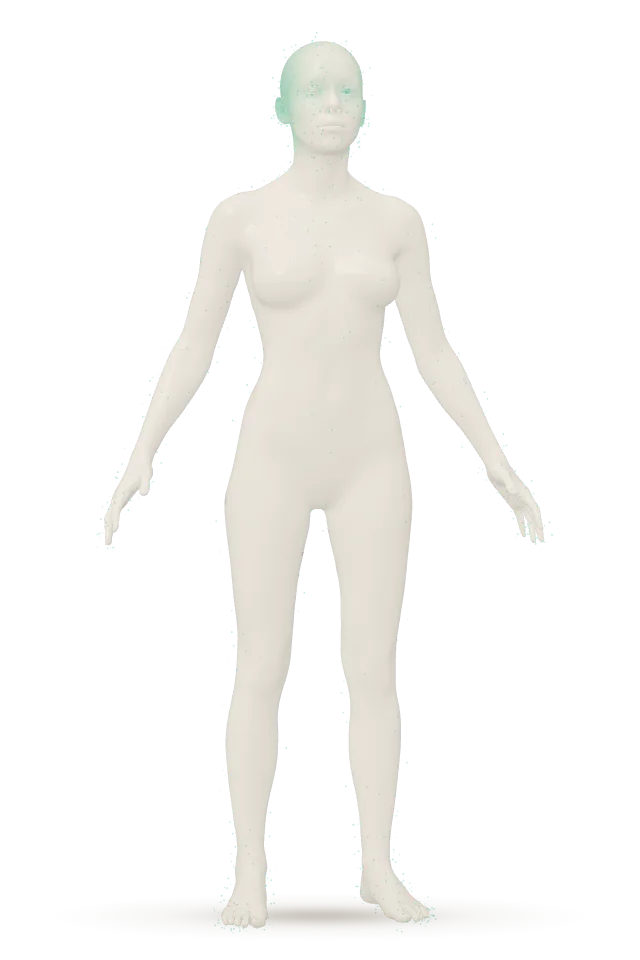
Brain, nerves & sleep
In animals. A single injection improved memory in mice and aged monkeys (at a low dose, not a high one).
Energy & longevity
In animals. Dampens insulin/IGF-1 signaling (the mechanism behind its lifespan effect in mice).
An area lights for what a peptide is used for and what people report, with the evidence beside it. It isn’t a promise that it works there.
Week by week.
What to expect in the first 8 weeks
Day 1–28Community
Early research-stage compound
Klotho is a genuinely experimental protein — no established human protocol, very low doses, weekly cadence. Commonly reported: no specific sensation in the first month. Treat it as a baseline month; whether measurable changes follow in people is unknown.
The science
α-Klotho is an aging-suppressor protein whose circulating levels decline with age. In mice bred to make extra klotho, learning and memory improved (Dubal et al. 2014); single injections improved memory in mice and aged monkeys (Leon 2017; Castner 2023), and in monkeys a low dose worked while a high dose didn't. Human pharmacokinetics are essentially uncharacterized — injectable protocols are extrapolated from animal data.
Sources- Dubal et al. (2014)
- Leon et al. (2017)
- Castner et al. (2023)
Updated Sep 2026
Day 28–84Animal
Cognitive signal in animal data
The animal literature's strongest signal is cognitive — working memory, learning, synaptic plasticity. Commonly reported: sparse anecdotes of sharper focus or memory, while many notice nothing. Emphasis on animal — human data is not there.
The science
Dubal et al. 2014 (Cell Reports) documented enhanced cognition in mice genetically engineered to make more klotho (young and old), attributed to GluN2B-containing NMDA receptor function. Separate work ties Klotho to FGF23 signaling and kidney phosphate handling — the kidney-axis effects are better characterized than the cognitive ones.
Sources- Dubal et al. (2014)
- Kuro-o (2019)
Updated Sep 2026
Any dayAnimal
What Klotho is built on
Klotho has compelling mechanistic and observational data — higher levels correlate with longer life across species — but exogenous injectable protocols are extrapolated from rodent work. No completed human clinical trials for therapeutic dosing. Treat as research-stage.
The science
Kuro-o et al. 1997 identified Klotho as the aging-suppressor gene in mice. Subsequent work established roles in FGF23 signaling, oxidative stress, insulin/IGF-1 modulation, and cognitive function. Dubal 2014 is the landmark cognitive paper. Purity and authenticity of community-available Klotho is an additional concern — it's a large protein, not a simple peptide.
Sources- Kuro-o et al. (1997)
- Dubal et al. (2014)
Updated Apr 2026
After week 8
Day 84–180Community
Long-arc reassessment
At 3–6 months, if you've been running this consistently, pull bloodwork — kidney function, phosphate, FGF23 if you can get it. Klotho's strongest human biomarker footprint is in the kidney axis, so that's where changes would show up first.
The science
Serum α-Klotho levels correlate with kidney function and all-cause mortality in observational studies. Exogenous dosing has not been run in a published human trial, so biomarker interpretation is inferential. Approach with the same caution as any research-stage compound.
Sources- Kuro-o (2019)
Updated Apr 2026
Day 1 is the day you start it.
A typical run.
Run notes
- Cycle
- Very limited data. Weekly dosing used in research. No established community cycle protocol.Community practice — opinions vary. Not a clinical recommendation.
- Timing
- Research stage — no established timing guidance.
- Route
- SubQ injection
- Stacks
- Epitalon, MOTS-c
Safety.
Common side effects
- Limited human data — research stage compound
- Injection site reaction
Questions people ask.
What is Klotho?
An aging-suppressor protein whose blood levels fall as you get older. In animal and cell studies it protects the kidneys and reduces oxidative stress, and a single injection improved memory in mice and aged monkeys (at a low dose, not a high one). Higher natural levels track longer life across species, but it has never been tested as a treatment in people.
How is Klotho dosed in research?
The research range for Klotho is 0.01–0.1 mg, weekly. Studied in research — not a recommendation.
How long does Klotho last?
The half-life of Klotho is unknown in research context.
What do people report on Klotho?
Commonly reported on Klotho: sparse, mostly anecdotal reports of sharper focus or memory; many notice nothing.
Is Klotho safe?
The research basis for Klotho is emerging: primarily preclinical / limited human data. Common side effects in the library: limited human data — research stage compound and injection site reaction.
What does Klotho stack with?
Common stacks for Klotho: Epitalon and MOTS-c.
Research.
Reference.
- Cadence
Weekly
- Half-life
Unknown in research context
- Research basis
●
●●EmergingPrimarily preclinical / limited human data
PepVault for iPhone
Track Klotho in PepVault
Log every dose, with reminders on your schedule. 7 days free on the yearly plan for new subscribers.

Open the calculatorHow the vial count worksExplore the live demo
Reviewed How we check the library