DSIP Dosage, half-life & reference guide
Also known as Delta Sleep-Inducing Peptide · Delta sleep peptide
A neuropeptide named for deepening sleep: it boosted deep-sleep (delta) brain waves in rabbits, though small human trials found weak or no sleep benefit and no effect on cortisol.

- Studied range
- 200–400 mcg
- How often
- Daily
- Half-life
- Short
- Evidence
- ●
●●Emerging - Route
- SubQ injection
Studied in research — not a recommendation.
How it works.
Neuropeptide named for boosting deep-sleep (delta) brain waves in rabbits; human sleep studies found small or no effects. Early lab and animal work suggested it dampens stress hormones, but a human study found no effect on ACTH or cortisol. Antioxidant and mild pain-relieving effects come from rodent studies.
Commonly reported: Mixed, with some describing deeper sleep and vivid dreams while many notice nothing, and morning grogginess at higher doses. Used in short 5-10 day cycles for disrupted sleep or high-stress periods.
Where DSIP works.
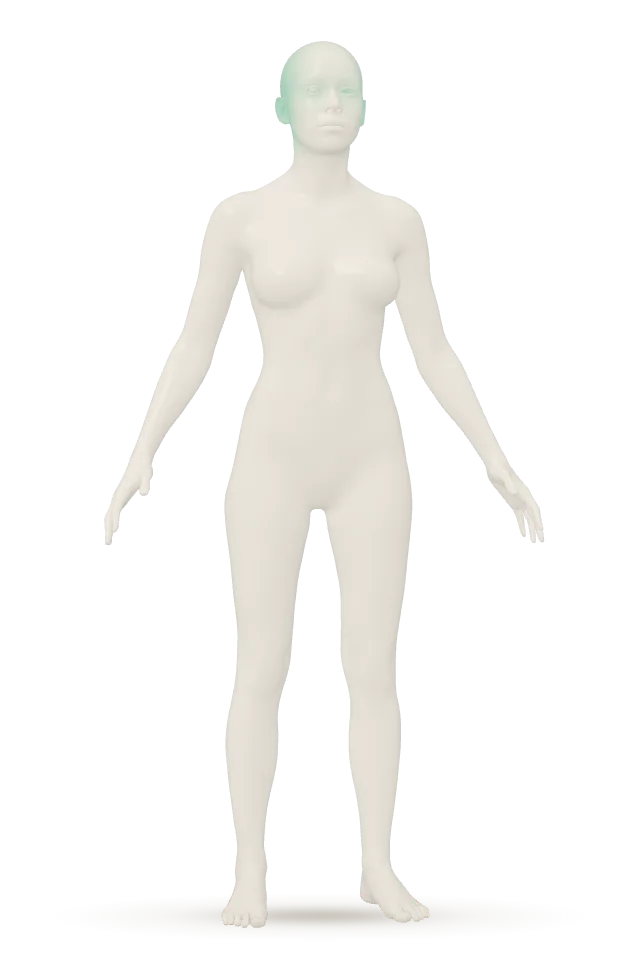
Brain, nerves & sleep
In animals. Commonly reported: mixed, with some describing deeper sleep and vivid dreams while many notice nothing.
An area lights for what a peptide is used for and what people report, with the evidence beside it. It isn’t a promise that it works there.
Week by week.
What to expect in the first 8 weeks
Day 1–3Community
Deeper sleep, for some
Commonly reported: effects are mixed, with some people noticing deeper, more restorative sleep and vivid dreams in the first few nights, while many notice nothing. The aim is more time in delta (slow-wave) sleep, the phase where the body does its real repair work, though human sleep studies saw little change.
The science
DSIP was named for raising deep-sleep brain waves in rabbits; in a double-blind study in insomniacs, slow-wave and REM sleep were unchanged (Monti 1987), and an insomnia trial found only weak effects (Bes 1992). In healthy men it didn't change ACTH or cortisol (Späth-Schwalbe 1995). Isolated from the blood of sleeping rabbits by Schoenenberger and Monnier (1977).
Sources- Schoenenberger & Monnier (1977)
- Monti et al. (1987)
- Späth-Schwalbe et al. (1995)
Updated Sep 2026
Day 3–10Community
Mid-cycle: judge it by your sleep
Commonly reported by those who respond: deeper sleep by mid-cycle, with stress feeling more manageable and better recovery between training sessions. A cortisol-lowering effect is often claimed, but the one human test found none. Users keep doses conservative, since more isn't better with sleep peptides.
The science
Early animal work suggested DSIP dampens stress hormones, but in healthy men IV doses left ACTH and cortisol almost identical to placebo (Späth-Schwalbe 1995). Mild pain relief shows up in mouse studies, mainly through spinal noradrenergic pathways rather than endorphins (Nakamura 1989).
Sources- Späth-Schwalbe et al. (1995)
- Nakamura et al. (1989)
Updated Sep 2026
Any dayClinical
What DSIP is built on
DSIP is one of the oldest studied neuropeptides — discovered in 1977. Animal results were inconsistent, and small 1980s–90s human trials found weak or no sleep benefit and no cortisol effect. Not FDA-approved or clinically validated at Western standards; it has decades of community use in short cycles, and FDA says it lacks the information to know whether it causes harm.
The science
DSIP-like material is found in the brain and pituitary, but its gene has never been found, so its natural role is unresolved (Kovalzon 2006). Animal results were inconsistent: sleep promotion showed up with some synthetic analogues more than with DSIP itself. Human data is limited to small clinical studies and extensive community use. The 5-10 day cycle protocol is community-derived based on the principle of avoiding tolerance.
Sources- Schoenenberger & Monnier (1977)
- Kovalzon & Strekalova (2006)
Updated Sep 2026
Day 1 is the day you start it.
Mixing and a typical run.
Example numbers
Reconstitution example
Reconstitute a 5 mg vial of DSIP with 2 mL of bacteriostatic water and a 300 mcg dose is 12 units on a U-100 syringe, about 16 doses per vial.
- Vial
- 5 mg
- Water
- 2 mL
- Amount
- 300 mcg
Draw to12 units
0.3 mL insulin syringe · 30 units
Run notes
- Cycle
- Community protocols use 5-10 day cycles with equal time off, typically for disrupted sleep or high-stress periods.Community practice — opinions vary. Not a clinical recommendation.
- Timing
- 30-60 min before bed. Conservative dosing — more is not better with sleep peptides.
- Route
- SubQ injection
- Stacks
- Epithalon, Pinealon
Safety.
Common side effects
- Mild headache
- Vivid dreams
- Morning grogginess at higher doses
Questions people ask.
What is DSIP?
A neuropeptide named for deepening sleep: it boosted deep-sleep (delta) brain waves in rabbits, though small human trials found weak or no sleep benefit and no effect on cortisol.
How is DSIP dosed in research?
The research range for DSIP is 200–400 mcg. Nightly or as needed 30-60 min before sleep. Short cycles of 5-10 days. Studied in research — not a recommendation.
How long does DSIP last?
The half-life of DSIP is short (rapidly degraded in blood).
What do people report on DSIP?
Commonly reported on DSIP: mixed, with some describing deeper sleep and vivid dreams while many notice nothing, and morning grogginess at higher doses. Used in short 5-10 day cycles for disrupted sleep or high-stress periods.
Is DSIP safe?
The research basis for DSIP is emerging: primarily preclinical / limited human data. Common side effects in the library: mild headache, vivid dreams and morning grogginess at higher doses.
What does DSIP stack with?
Common stacks for DSIP: Epithalon and Pinealon.
Research.
Reference.
- Cadence
Daily
Nightly or as needed 30-60 min before sleep. Short cycles of 5-10 days.
- Half-life
Short
Short (rapidly degraded in blood)
- Research basis
●
●●EmergingPrimarily preclinical / limited human data
PepVault for iPhone
Track DSIP in PepVault
Log every dose and keep your vial and the doses left in it. 7 days free on the yearly plan for new subscribers.

Open the calculatorHow the vial count worksExplore the live demo
Reviewed How we check the library