Humanin Dosage, half-life & reference guide
Also known as HN · Mitochondrial-derived peptide
Another mitochondrial-derived peptide. In cell and rodent studies it protects cells from programmed death, improves insulin sensitivity and lowers the toxicity of amyloid-beta, the protein linked to Alzheimer's.

- Studied range
- 2–4 mg
- How often
- Weekly
- Evidence
- ●
●●Emerging - Route
- SubQ injection
Studied in research — not a recommendation.
How it works.
Mitochondria-derived peptide with cytoprotective and neuroprotective effects. In cell and rodent studies (many using the more potent analog HNG) it reduces apoptosis, improves insulin sensitivity and lowers amyloid-beta toxicity. Higher levels were found in children of centenarians, though how it relates to longevity is unclear.
Commonly reported: Subtle or no felt effect, and community reports are sparse. Children of centenarians have higher humanin levels, but it has never been tested as a treatment in people.
Where Humanin works.
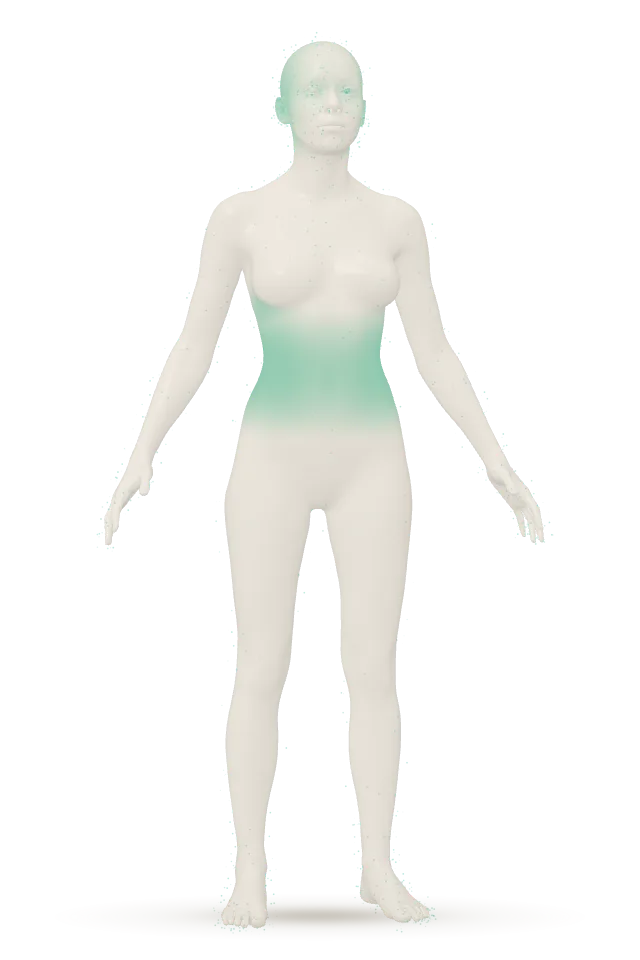
Brain, nerves & sleep
In animals. Strong animal mechanism work in neuroprotection and insulin sensitivity, much of it with the analog HNG.
Appetite & metabolism
In animals. Its work is background cell protection and better insulin sensitivity, seen so far only in cells and rodents.
Energy & longevity
In animals. Mitochondria-derived peptide with cytoprotective and neuroprotective effects. In cell and rodent studies (many using the more potent analog HNG) it reduces apoptosis.
An area lights for what a peptide is used for and what people report, with the evidence beside it. It isn’t a promise that it works there.
Week by week.
What to expect in the first 8 weeks
Day 1–28Animal
Quiet month — nothing loud happens
Humanin is a slow, quiet peptide: commonly reported, you won't feel much, if anything, the way you would a GH pulse or a GLP-1 dose. Its work is background cell protection and better insulin sensitivity, seen so far only in cells and rodents.
The science
Humanin is a 24-amino acid mitochondrial-derived peptide (MDP). Guo 2003 showed it blocks Bax-driven cell death; Muzumdar 2009 showed it improves insulin sensitivity in rats. Children of centenarians have higher circulating humanin (Yen 2020), though among the oldest people higher levels tracked worse health (Conte 2019): suggestive, not causal.
Sources- Guo et al. (2003)
- Muzumdar et al. (2009)
- Yen et al. (2020)
- Conte et al. (2019)
Updated Sep 2026
Day 28–56Animal
Metabolic markers may be shifting
If you track fasting glucose or HbA1c, it's a reasonable time to check, though the insulin effect has only been seen in rodents and no study sets a timeline. Commonly reported: little to feel; some describe steadier energy.
The science
In rats, humanin improved insulin sensitivity in clamp studies, acting through the brain via hypothalamic STAT-3 signaling (Muzumdar 2009); no study gives a 4–6 week window. Humanin also binds IGFBP-3, which matters for cell survival (Ikonen 2003). No completed human trials for metabolic endpoints.
Sources- Muzumdar et al. (2009)
- Ikonen et al. (2003)
Updated Sep 2026
Day 56–84Community
Good point to reassess
Community protocols commonly run 8–12 weeks — less a stopping point than a reassessment prompt, since long-term human data doesn't exist. If something meaningful shifted (energy, recovery, metabolic markers), a pause here lets you see what sticks. If nothing named itself, another cycle probably won't change that.
The science
Long-term human dosing data is essentially nonexistent. The cycle convention is conservative — Humanin interacts with apoptotic signaling, and chronic exogenous supraphysiological exposure hasn't been characterized in humans.
Sources- Yen et al. (2013)
Updated Apr 2026
Any dayAnimal
What Humanin is built on
Humanin has mixed correlational data in human longevity studies and strong animal mechanism work in neuroprotection and insulin sensitivity, much of it with the analog HNG. It has never been given to people in a study.
The science
Discovered by Hashimoto et al. 2001 in the context of Alzheimer's research — Humanin was identified as a peptide that protected neurons from amyloid-beta toxicity. Since then, its role as a mitochondrial-derived peptide regulating metabolism has broadened the interest. No phase 2 or 3 trials have completed for any indication.
Sources- Hashimoto et al. (2001)
- Muzumdar et al. (2009)
Updated Sep 2026
With MOTS-c and SS-31Community
The mitochondrial-peptide trio
MOTS-c, humanin and SS-31 work on three different angles of mitochondrial health — metabolic signaling, cell-death regulation and membrane integrity. No study has combined them; it's a popular longevity stack on that logic.
The science
MOTS-c activates AMPK for metabolic signaling; Humanin antagonizes Bax-mediated cell death; SS-31 binds cardiolipin to stabilize the inner mitochondrial membrane. No combination study in any species, but the three target distinct mitochondrial compartments without obvious redundancy.
Sources- Lee et al. (2015)
Updated Sep 2026
Day 1 is the day you start it.
Mixing and a typical run.
Example numbers
Reconstitution example
Reconstitute a 10 mg vial of Humanin with 2 mL of bacteriostatic water and a 3 mg dose is 60 units on a U-100 syringe, about 3 doses per vial.
- Vial
- 10 mg
- Water
- 2 mL
- Amount
- 3 mg
Draw to60 units
1 mL insulin syringe · 100 units
Run notes
- Cycle
- Weekly dosing typical. Limited human data — most run 8–12 week cycles cautiously.Community practice — opinions vary. Not a clinical recommendation.
- Timing
- Timing flexible. Weekly SubQ.
- Route
- SubQ injection
- Stacks
- MOTS-c, SS-31
Safety.
Common side effects
- Injection site pain
- Mild fatigue
Questions people ask.
What is Humanin?
Another mitochondrial-derived peptide. In cell and rodent studies it protects cells from programmed death, improves insulin sensitivity and lowers the toxicity of amyloid-beta, the protein linked to Alzheimer's.
How is Humanin dosed in research?
The research range for Humanin is 2–4 mg, weekly. Studied in research — not a recommendation.
How long does Humanin last?
The half-life of Humanin is unknown in humans.
What do people report on Humanin?
Commonly reported on Humanin: subtle or no felt effect, and community reports are sparse. Children of centenarians have higher humanin levels, but it has never been tested as a treatment in people.
Is Humanin safe?
The research basis for Humanin is emerging: primarily preclinical / limited human data. Common side effects in the library: injection site pain and mild fatigue.
What does Humanin stack with?
Common stacks for Humanin: MOTS-c and SS-31.
Research.
Reference.
- Cadence
Weekly
- Half-life
Unknown in humans
- Research basis
●
●●EmergingPrimarily preclinical / limited human data
PepVault for iPhone
Track Humanin in PepVault
Log every dose and keep your vial and the doses left in it. 7 days free on the yearly plan for new subscribers.

Open the calculatorHow the vial count worksExplore the live demo
Reviewed How we check the library