Pinealon Dosage, half-life & reference guide
Also known as EDR peptide · Tripeptide-4 · Glu-Asp-Arg
A short synthetic peptide from the Russian bioregulator program, designed from brain-tissue extracts (not pineal tissue, despite the name). In cell and rodent studies it protects nerve cells, and small uncontrolled Russian reports point the same way.

- Studied range
- 100–200 mcg
- How often
- Daily
- Half-life
- Short
- Evidence
- ●
●●Emerging - Routes
- SubQ, Nasal
Studied in research — not a recommendation.
How it works.
Short synthetic tripeptide (Glu-Asp-Arg) designed from brain-cortex peptide extracts; the name refers to its intended target. Neuroprotective in cell and rodent studies from the developer's group, with small uncontrolled Russian reports of cognitive gains. Claimed to support melatonin, though no study has tested it.
Commonly reported: Vivid dreams and deeper sleep, and clearer thinking during the cycle. Typically used in short 10-day cycles a few times per year, often alongside Epitalon.
Where Pinealon works.
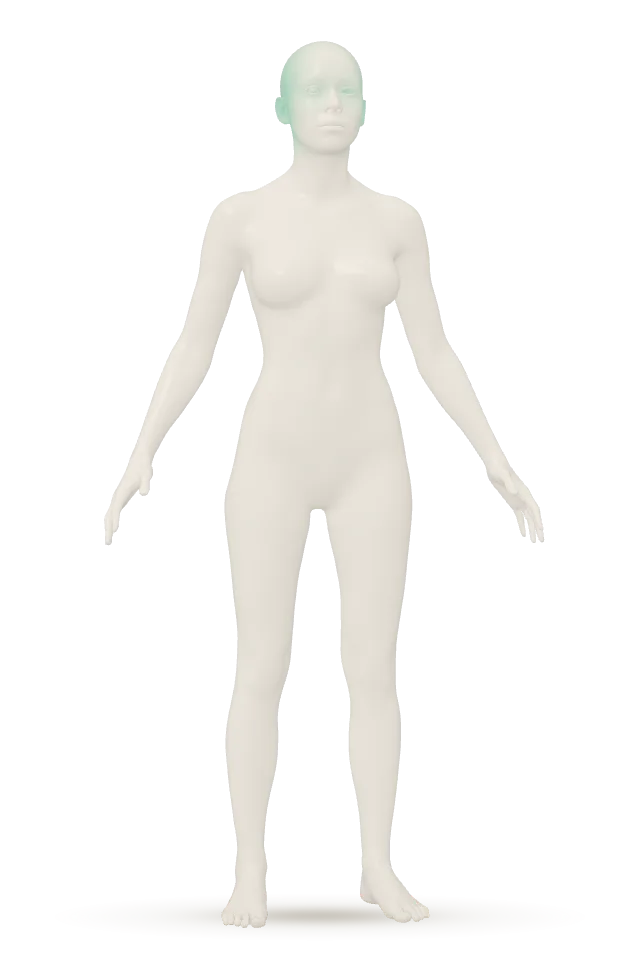
Brain, nerves & sleep
In animals. In cell and rodent studies it protects nerve cells, and small uncontrolled Russian reports point the same way.
An area lights for what a peptide is used for and what people report, with the evidence beside it. It isn’t a promise that it works there.
Week by week.
What to expect in the first 8 weeks
Day 1–10Community
The short cycle is the whole protocol
Pinealon is used in short bursts — 10–20 days of evening injections, then nothing for months. Commonly reported: the first effects are sleep-related, with denser sleep, more vivid dreams and a clearer-headed morning. Evening dosing is the norm for that reason; a melatonin effect is claimed but untested.
The science
Pinealon is a synthetic tripeptide (Glu-Asp-Arg) from the Russian bioregulator tradition — a peptide Khavinson's group designed from brain-cortex extracts. Khavinson's group describes the mechanism as gene-regulatory, via short-peptide-to-DNA interaction; clinical evidence in Russian literature, rare in English-language databases.
Sources- Khavinson et al. (2011)
Updated Sep 2026
Day 10–20Community
Cognitive clarity + closing the cycle
Commonly reported late in the cycle: cleaner mental tempo and steadier mood alongside the sleep effect. The Russian protocols stop at 20 days, and longer runs have no data behind them.
The science
Russian research in aged rats documented neuroprotective effects (Mendzheritsky 2015). The short-cycle pattern is explicit in Khavinson's published protocols — the peptides are used as "pulses" rather than maintenance.
Sources- Khavinson et al. (2011)
- Mendzheritsky et al. (2015)
Updated Sep 2026
Day 20–90Community
Off-cycle consolidation
Cycle is done. Russian protocols typically space cycles 3–6 months apart, and some stack Epitalon in the same cycle. Return to Pinealon is optional — some users run one cycle/year and call it done.
The science
No pharmacokinetic data in humans; dosing intervals are traditional rather than evidence-based. The rationale for spacing cycles is that short-peptide bioregulators are conceptualized as "triggering" gene expression rather than needing steady-state concentrations.
Sources- Khavinson et al. (2011)
Updated Sep 2026
Any dayCommunity
What Pinealon is built on
Pinealon comes from the Russian bioregulator tradition — a body of research that sits outside mainstream English-language peptide literature. Animal data is real, human data is mostly Russian-language observational, and community reports are positive but unsystematic.
The science
Khavinson's group at St. Petersburg Institute of Bioregulation and Gerontology has published Russian-language clinical data on the bioregulator peptide family (Epitalon, Pinealon, Livagen, Thymalin). Translation and Western replication have been limited. In a small uncontrolled study of Pinealon and Vesugen in 32 older adults, the authors reported better biological-age markers alongside pro-oxidant activity and a drop in a blood-stem-cell marker (CD34+) (Meshchaninov 2015). Late-stage clinical evidence by Western standards is lacking.
Sources- Khavinson et al. (2011)
- Meshchaninov et al. (2015)
Updated Sep 2026
With EpitalonCommunity
Classic bioregulator pairing
Epitalon + Pinealon is the traditional Russian bioregulator stack. Epitalon targets telomerase and long-arc aging signaling, while Pinealon targets sleep and cognitive function. Commonly run together in a 10–20 day cycle 1–2x/year.
The science
Both peptides come from the same bioregulator tradition and share Khavinson's proposed mechanism — short peptides interacting with specific DNA sequences to modulate gene expression. The combination is standard in the Russian protocols; no controlled Western combination trials exist.
Sources- Khavinson et al. (2011)
Updated Sep 2026
Day 1 is the day you start it.
Mixing and a typical run.
Example numbers
Reconstitution example
Reconstitute a 5 mg vial of Pinealon with 2 mL of bacteriostatic water and a 150 mcg dose is 6 units on a U-100 syringe, about 33 doses per vial.
- Vial
- 5 mg
- Water
- 2 mL
- Amount
- 150 mcg
Draw to6 units
0.3 mL insulin syringe · 30 units
Run notes
- Cycle
- 10–20 day cycles, similar to Epitalon. Often stacked with Epitalon in the same cycle.Community practice — opinions vary. Not a clinical recommendation.
- Timing
- Evening preferred by most users, for the reported sleep effects.
- Routes
- SubQ injection, Nasal
- Stacks
- Epitalon, Selank
Safety.
Common side effects
- Vivid dreams
- Drowsiness
- Injection site reaction
Questions people ask.
What is Pinealon?
A short synthetic peptide from the Russian bioregulator program, designed from brain-tissue extracts (not pineal tissue, despite the name). In cell and rodent studies it protects nerve cells, and small uncontrolled Russian reports point the same way.
How is Pinealon dosed in research?
The research range for Pinealon is 100–200 mcg. Daily for 10-day cycles, 2-3 cycles per year. Studied in research — not a recommendation.
How long does Pinealon last?
The half-life of Pinealon is short.
What do people report on Pinealon?
Commonly reported on Pinealon: vivid dreams and deeper sleep, and clearer thinking during the cycle. Typically used in short 10-day cycles a few times per year, often alongside Epitalon.
Is Pinealon safe?
The research basis for Pinealon is emerging: primarily preclinical / limited human data. Common side effects in the library: vivid dreams, drowsiness and injection site reaction.
What does Pinealon stack with?
Common stacks for Pinealon: Epitalon and Selank.
Research.
Reference.
- Cadence
Daily
Daily for 10-day cycles, 2-3 cycles per year
- Half-life
Short
- Research basis
●
●●EmergingPrimarily preclinical / limited human data
PepVault for iPhone
Track Pinealon in PepVault
Log every dose and keep your vial and the doses left in it. 7 days free on the yearly plan for new subscribers.

Open the calculatorHow the vial count worksExplore the live demo
Reviewed How we check the library