Bofanglutide Dosage, half-life & reference guide
Also known as GZR18 · Bofa
Reviewed Evidence: ModeratePublished by PepVault
A GLP-1 drug from Gan & Lee Pharmaceuticals designed for one shot every two weeks, with a long fatty-acid chain that makes it act gently and last. In its 52-week phase 3 trial in China, people lost about 15% (24 mg) and 18.5% (48 mg) of their weight, and a follow-on trial found that one shot a month then held the loss.

- Studied range
- 12–48 mgstarting dose 3 mg
- How often
- Every 2 weeks
- Half-life
- ~7 days
- Evidence
- ●●
●Moderate - Route
- SubQ injection
Studied in research — not a recommendation.
How it works.
GLP-1 receptor agonist, semaglutide's receptor, built from human GLP-1 with no unnatural amino acids and a long 22-carbon fatty-acid chain. The chain binds it tightly to albumin and slows its release from under the skin, so activity is gentler and longer: its half-life in people is about 7 days, and its trials give it once every two weeks. Developed by Gan & Lee Pharmaceuticals in China, in phase 3 there and phase 2 in the US.
Commonly reported: GI side effects during the step-ups, as with other GLP-1 drugs. It is not approved anywhere yet.
Half-life & active level
The half-life of Bofanglutide is ~7 days (measured in people: phase 1 in American and Chinese adults, Liu 2025).
Here's how a typical Bofanglutide schedule accumulates over four weeks (one-compartment estimate).
An estimate from the half-life above, not a measurement. See your own curve build live in the half-life calculator.
Your report
Taken Bofanglutide? What did you notice?
One tap to start. About 30 seconds, no account.

Model. Individual results vary.
PepVault for iPhone
Track bofanglutide in PepVault
Log each dose, see how many doses are left in the vial, and keep your step-ups in one place.

7 days free on the yearly plan for new subscribers.
Where Bofanglutide works.
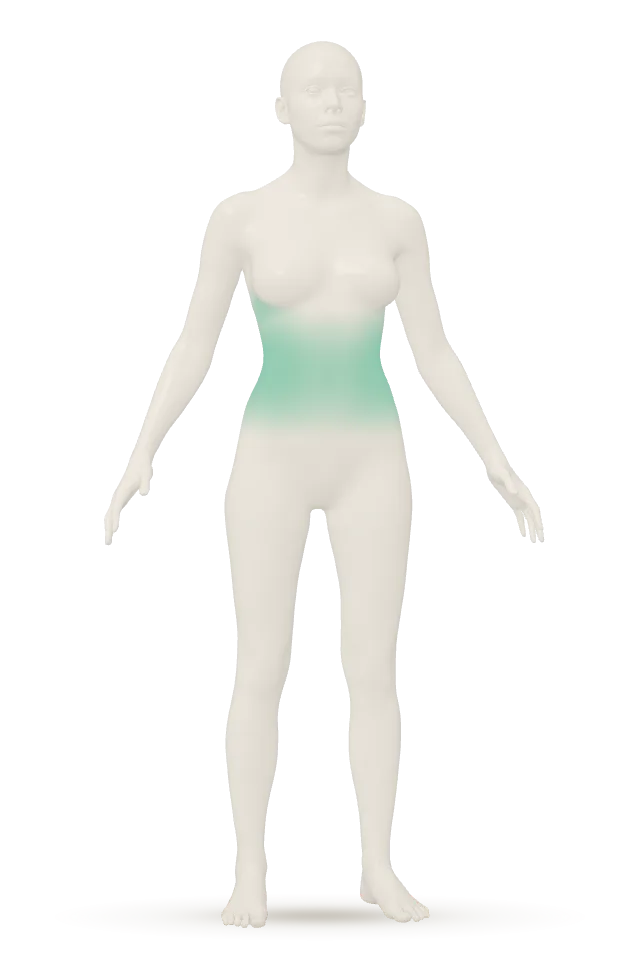
Appetite & metabolism
In people. A GLP-1 drug from Gan & Lee Pharmaceuticals designed for one shot every two weeks, with a long fatty-acid chain that makes it act gently and last.
An area lights for what a peptide is used for and what people report, with the evidence beside it. It isn’t a promise that it works there.
Week by week.
What to expect in the first 8 weeks
- Onset
- Days–2 weeks
- Peak effect
- 52 weeks (phase 3 endpoint)
- Duration
- Ongoing
Day 1–28 · 3 mgRCT
Three milligrams, the first step
You're on 3 mg, where every group in the phase 2b trial began. Commonly reported: appetite dropping within days. In that trial, GI side effects came mostly in the early step-ups and eased over time.
The science
Phase 2b (Ji 2026; 340 Chinese adults): all groups started at 3 mg and escalated every 2–4 weeks (12 mg: 3-6-9-12; 24 mg: 3-6-9-12-18-24; 48 mg: 3-6-12-24-36-48). GI AEs "occurred predominantly during the early dose-escalation period and gradually decreased over time"; the 48 mg group, without the 9 and 18 mg steps, had the most, and the intermediate steps "substantially reduced the incidence of gastrointestinal AEs".
Sources- Ji et al. (phase 2b) (2026)
Updated Nov 2026
Day 29–210 · 12 mgRCT
Twelve milligrams every two weeks
You're at 12 mg, the lowest maintenance dose in the phase 2b trial. Given every two weeks, it took off about 10% of body weight by week 30, against about 1% on placebo.
The science
Phase 2b, week 30: 12 mg every 2 weeks −9.75% vs −1.15% on placebo (difference −8.60%); 18 mg −12.55% (difference −11.39%) (Ji 2026). Nausea 34.6% and vomiting 25.0% at 12 mg vs 9.1% and 12.1% on placebo.
Sources- Ji et al. (phase 2b) (2026)
Updated Nov 2026
Any dayRCT
What Bofanglutide is built on
Phase 1 trials in the US and China, a phase 1b/2a and a 30-week phase 2b in obesity, two phase 3 trials in China, and a US phase 2 against tirzepatide. It is not approved anywhere yet.
The science
Phase 1 (Liu 2025, Diabetes Obes Metab): half-life about 7 days in both American and Chinese adults, Tmax 60-96 h. Phase 1b/2a (Ji 2026, Cell Rep Med). Phase 2b (Ji 2026, Signal Transduct Target Ther; NCT06256562, sponsor Gan and Lee Pharmaceuticals). Phase 3: GRADUAL-1 (NCT06728124), GRADUAL-3, and a trial against semaglutide (Wegovy) (NCT07150975), plus sleep apnea trials; type 2 diabetes phase 3 (NCT06777238) completed.
Sources- Liu et al. (2025)
- Ji et al. (phase 1b/2a) (2026)
- Ji et al. (phase 2b) (2026)
Updated Nov 2026
With BPC-157Community
Why people add BPC-157 to a GLP-1
GI side effects come mostly with the step-ups, and BPC-157, first studied as a stomach-protecting peptide, is added to ease them. Commonly reported: smoother step-ups. No trial has tested the pair.
The science
BPC-157's early research was on gastric protection in animal studies (Sikiric 2018 review). No trial has tested it alongside bofanglutide or any GLP-1 drug; the pairing comes from community reports.
Sources- Sikiric et al. (2018)
Updated Nov 2026
After week 8
Day 57–364 · 24 mgRCT
Twenty-four milligrams, a phase 3 dose
You're at 24 mg, one of the two doses in the phase 3 trial. Every two weeks, it took off about 15% of body weight at 52 weeks, and more than 9 in 10 lost at least 5%.
The science
GRADUAL-1 (NCT06728124; 640 Chinese adults, baseline 93.7 kg): 24 mg every 2 weeks −15.12% vs −1.11% on placebo at week 52; 91.8% reached ≥5% (Gan & Lee, Jun-12-2026; topline). Phase 2b: 24 mg every 2 weeks −13.66% and 24 mg weekly −16.69% at week 30 (Ji 2026).
Sources- Gan & Lee (GRADUAL-1 release) (2026)
- Ji et al. (phase 2b) (2026)
Updated Nov 2026
Day 85–364 · 48 mgRCT
The top dose
You're at 48 mg, the highest dose tested. In the phase 3 trial it took off about 18.5% at 52 weeks. GI side effects were more common at this dose, especially with big steps on the way up.
The science
GRADUAL-1: 48 mg every 2 weeks −18.54% vs −1.11% at week 52; 98.1% reached ≥5% (Gan & Lee, Jun-12-2026). Phase 2b at 48 mg: −16.09% at week 30; nausea 64.1%, vomiting 62.5%, diarrhea 37.5%; completion 72% vs 85-92% in other groups (Ji 2026). US phase 2 (NCT06737042, 326 people): 48 mg −15.18% at 36 weeks with no plateau vs −16.93% on open-label tirzepatide 15 mg (Gan & Lee, Jun-12-2026).
Sources- Gan & Lee (GRADUAL-1 release) (2026)
- Ji et al. (phase 2b) (2026)
Updated Nov 2026
Day 365+RCT
One shot a month to hold it
After a year of shots every two weeks, Gan & Lee tested one shot a month. Over the next 24 weeks, weight held steady on the monthly dose, while those switched to placebo regained about 8.5%. Whether to continue, space out or stop is a call for you and your clinician.
The science
GRADUAL-3 (phase 3b): participants who completed 52 weeks of GRADUAL-1 were randomised by their last dose to bofanglutide 24 or 48 mg or placebo once monthly for 24 weeks: weight change +0.41% and −0.12% vs +8.52% on placebo (both p < 0.0001); mostly mild to moderate, transient GI events, no new safety signals (Gan & Lee, Nov-4-2026; topline).
Sources- Gan & Lee (GRADUAL-3 release) (2026)
Updated Nov 2026
Day 1 is the day you start it.
Phase 1 (Liu 2025, Diabetes Obes Metab), phase 2b (Ji 2026, Signal Transduct Target Ther; NCT06256562), Gan & Lee releases Jun-12-2026 (GRADUAL-1, US phase 2) and Nov-4-2026 (GRADUAL-3), registry records. Investigational.
Moderate evidence
Mixing and a typical run.
Example numbers
Reconstitution example
Reconstitute a 10 mg vial of Bofanglutide with 2 mL of bacteriostatic water and a 3 mg dose is 60 units on a U-100 syringe, about 3 doses per vial.
- Vial
- 10 mg
- Water
- 2 mL
- Amount
- 3 mg
Draw to60 units
1 mL insulin syringe · 100 units
Run notes
- Cycle
- Used continuously in its trials: every 2 weeks for 30 to 52 weeks, with steps every 2 to 4 weeks. In the GRADUAL-3 maintenance trial, people who had finished 52 weeks moved to one shot a month and held their weight for 24 weeks, while those switched to placebo regained about 8.5%.Community practice — opinions vary. Not a clinical recommendation.
- Timing
- One SubQ shot every 2 weeks in its main trials (weekly in one phase 2b arm), from a GanleePen. The phase 2b started every group at 3 mg and stepped up every 2 to 4 weeks, through 6, 9, 12 and 18 mg to 24 mg, or in bigger jumps to 48 mg. After a year, one shot a month was tested to hold the loss. These are trial schedules, not an approved regimen.
- Route
- SubQ injection
- Stacks
- BPC-157 (GI support)
Safety.
Common side effects
- Nausea
- Vomiting
- Diarrhea
- Decreased appetite
Interactions
No interaction results have been published; Gan & Lee has run studies of its effect on stomach emptying and on other drugs (NCT07128888) and on metformin (NCT06670209). GLP-1 drugs slow stomach emptying, which can change how oral medicines are absorbed. It is a GLP-1 drug itself, so it is not stacked with another one. With insulin or a sulfonylurea, discuss glucose monitoring with your clinician.
Safety notes
Bofanglutide has no label: it is still in trials. In the 30-week phase 2b trial, GI side effects (nausea, vomiting, diarrhea) affected 79% to 91% on bofanglutide vs 33% on placebo, mostly grade 1 to 2 and early in the step-ups; they were highest in the 48 mg group, which took bigger dose jumps, and adding in-between steps lowered them. In phase 3 the safety profile matched other GLP-1 drugs, with mostly mild to moderate, transient GI events and no new safety signals. It is a GLP-1 drug, so the class warnings in GLP-1 labels (including pancreatitis, gallbladder disease and the rodent thyroid C-cell finding) are the ones to read. These are trial findings to review with your clinician.
Goes with.
One question at a time.
Mixing charts by vial size.
Questions people ask.
What is Bofanglutide?
A GLP-1 drug from Gan & Lee Pharmaceuticals designed for one shot every two weeks, with a long fatty-acid chain that makes it act gently and last. In its 52-week phase 3 trial in China, people lost about 15% (24 mg) and 18.5% (48 mg) of their weight, and a follow-on trial found that one shot a month then held the loss.
How is Bofanglutide dosed in research?
The research range for Bofanglutide is 12–48 mg, every 2 weeks (or weekly), with a 3 mg starting dose. Studied in research — not a recommendation.
How long does Bofanglutide last?
The half-life of Bofanglutide is ~7 days (measured in people: phase 1 in American and Chinese adults, Liu 2025).
What do people report on Bofanglutide?
Commonly reported on Bofanglutide: GI side effects during the step-ups, as with other GLP-1 drugs. It is not approved anywhere yet.
Is Bofanglutide safe?
The research basis for Bofanglutide is moderate: animal studies + some human data. Common side effects in the library: nausea, vomiting, diarrhea and decreased appetite.
What does Bofanglutide stack with?
Common stacks for Bofanglutide: BPC-157 (GI support).
Research.
Reference.
- Cadence
Every 2 weeks
Every 2 weeks (or weekly)
- Half-life
~7 days
~7 days (measured in people: phase 1 in American and Chinese adults, Liu 2025)
- Research basis
●●
●ModerateAnimal studies + some human data
PepVault for iPhone
Track bofanglutide in PepVault
Log each dose, see how many doses are left in the vial, and keep your step-ups in one place.
7 days free on the yearly plan for new subscribers.
Reviewed How we check the library
Track your progress
Watch it work.
Weight, waist and photos in one arc.
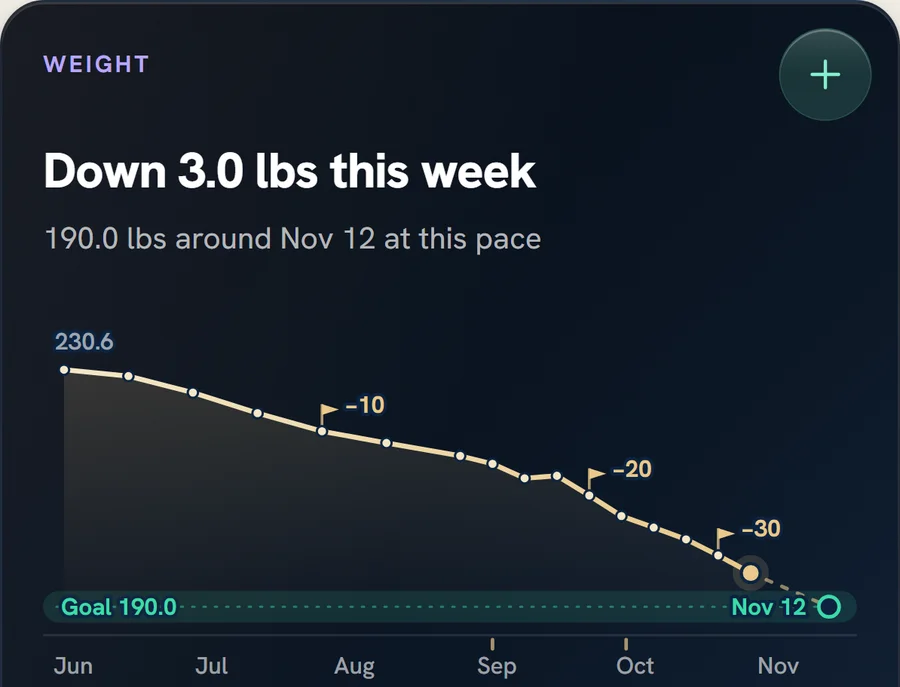

34.8 lbsdown since June