Oxytocin Dosage, half-life & reference guide
Also known as OT · Love hormone · Oxytocin nasal
Best known as the "bonding hormone," oxytocin is a hypothalamic neuropeptide with broader effects than most people realize. As a nasal spray, single doses have cut how much people eat at a meal and blunted stress responses in small studies, though an 8-week trial didn't produce weight loss; anti-inflammatory effects come mostly from animal work.

- Studied range
- 10–40 IU
- How often
- 1–2× daily
- Half-life
- ~1–6 min
- Evidence
- ●●
●Moderate - Route
- Intranasal
Studied in research — not a recommendation.
How it works.
Hypothalamic neuropeptide with broad effects: single nasal doses cut food intake at a test meal and blunted stress responses in small studies, though an 8-week trial produced no weight loss. It also has anti-inflammatory and metabolic effects (rodent data and small acute human studies). Also supports social bonding. Growing community use for appetite control alongside metabolic peptide protocols.
Commonly reported: A subtle calm, warm or more connected feeling shortly after a spray, and for many, little or inconsistent effect from dose to dose. FDA-approved only as an obstetric injection (Pitocin).
Where Oxytocin works.
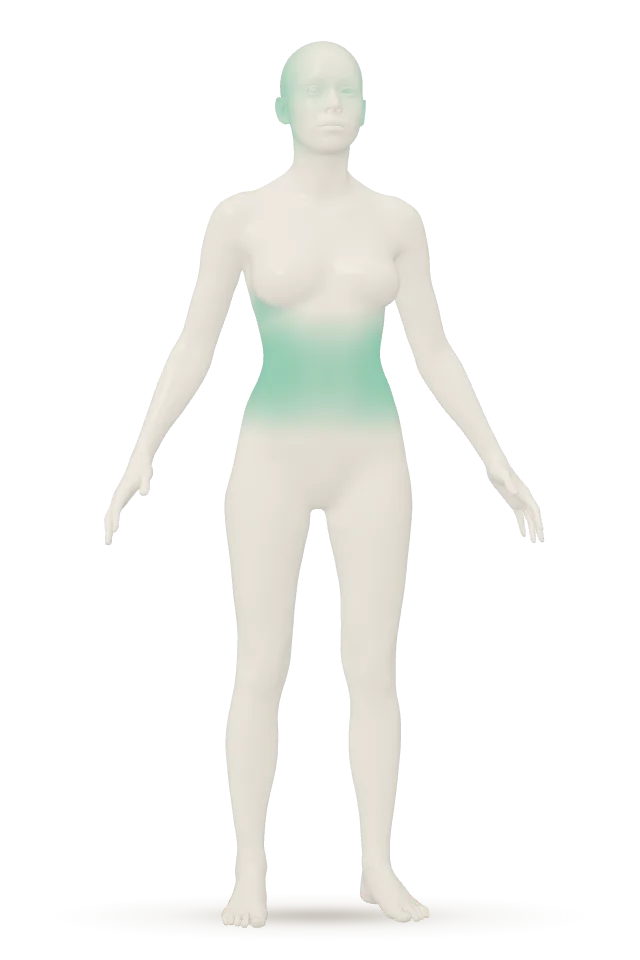
Brain, nerves & sleep
In people. Commonly reported: a subtle calm, warm or more connected feeling shortly after a spray.
Appetite & metabolism
In people. Single nasal doses cut food intake at a test meal and blunted stress responses in small studies, though an 8-week trial produced no weight loss.
An area lights for what a peptide is used for and what people report, with the evidence beside it. It isn’t a promise that it works there.
Week by week.
What to expect in the first 8 weeks
Day 1–7Community
Use it when you need it
Most users treat oxytocin as a situational tool, not a daily protocol. Commonly reported: effects within about 15–30 min of a nasal dose — fewer cravings, lower stress reactivity, sometimes a warm, connected feeling — though many find them subtle. Animal studies suggest tolerance with daily use, so users keep it flexible.
The science
Oxytocin is a 9-amino acid neuropeptide. After a nasal dose, blood levels peak at about 15 minutes and brain-fluid levels rise over about 75 minutes (Striepens 2013). Lawson et al. 2015 showed single-dose intranasal oxytocin reduced caloric intake in men, though their self-rated appetite didn't change. In animal studies, chronic daily dosing reduces oxytocin receptors (tolerance); this hasn't been shown in people.
Sources- Lawson et al. (2015)
- Striepens et al. (2013)
Updated Sep 2026
Day 7–28Animal
Watch for tolerance creep
Some daily users report the effect softening by now, and animal studies show receptor loss with chronic dosing. Many drop to 2–3x/week or take a week off; in the one 8-week human trial of 4x-daily dosing, the effect on meal size was still there at week 6.
The science
Central oxytocin receptor desensitization with chronic exogenous administration is documented in rodent studies (Peters 2014; Huang 2014); no human study has shown it, and in an 8-week trial test-meal intake was still 152 kcal lower at week 6 (Plessow 2024). Receptor internalization follows sustained exposure; how fast sensitivity returns after a break hasn't been measured.
Sources- Peters et al. (2014)
- Huang et al. (2014)
- Plessow et al. (2024)
Updated Sep 2026
Day 28–90RCT
Consolidated situational use
By now you know what it does for you — and what it doesn't. Most users settle into using it before high-stress events, before social situations, or paired with specific meals when appetite control matters. Research-grade oxytocin is not a lifestyle drug, it's a precision tool.
The science
Chronic long-term intranasal oxytocin data is limited. Most clinical trials run 4–24 weeks: autism trials were mixed and the largest, SOARS-B (24 weeks), found no benefit (Sikich 2021), and an 8-week obesity trial found no weight loss (Plessow 2024). None established a standard long-term protocol.
Sources- Sikich et al. (2021)
- Plessow et al. (2024)
Updated Sep 2026
Any dayRCT
What Oxytocin is built on
Oxytocin has a large clinical literature — for social behavior, autism, appetite and bonding — with mixed signals: acute effects in small studies, while the larger, longer trials were null. The main caveats are possible tolerance (shown in animals) and the gap between "interesting effect in a trial" and "reliably does this for me every day."
The science
Medical oxytocin is FDA-approved for obstetric use (IV/IM). Intranasal delivery for CNS effects is used research-grade in large clinical programs including the SOARS-B autism trial. Individual variability is real, and animal studies suggest tolerance; effects in placebo-controlled trials are often modest at the group level but individually variable.
Sources- Lawson et al. (2015)
- Sikich et al. (2021)
- Plessow et al. (2024)
Updated Sep 2026
With PT-141Community
Connection + desire
Oxytocin + PT-141 is a common situational stack for intimacy. PT-141 drives the desire side (melanocortin receptors) and oxytocin adds the connection/bonding side. Users keep it intermittent, not a routine.
The science
PT-141 acts on brain melanocortin receptors (mainly MC4R) and raises desire that way; oxytocin modulates the social-bonding and trust circuitry. Mechanistically distinct pathways that both contribute to sexual response (Pfaus 2009). No combination-specific trial, but the pattern is widely reported.
Sources- Pfaus (2009)
Updated Sep 2026
Day 1 is the day you start it.
A typical run.
Run notes
- Cycle
- As-needed use most common. Animal studies suggest tolerance with frequent daily use, so many users cycle or use it situationally.Community practice — opinions vary. Not a clinical recommendation.
- Timing
- Commonly taken intranasally 15–30 min before the desired effect (trials tested 30–50 min after dosing). Many avoid daily use because of the animal tolerance data.
- Route
- Intranasal
- Stacks
- PT-141, BPC-157
Safety.
Common side effects
- Mild headache
- Nausea at high doses
- Possible tolerance with frequent use (seen in animals)
Questions people ask.
What is Oxytocin?
Best known as the "bonding hormone," oxytocin is a hypothalamic neuropeptide with broader effects than most people realize. As a nasal spray, single doses have cut how much people eat at a meal and blunted stress responses in small studies, though an 8-week trial didn't produce weight loss; anti-inflammatory effects come mostly from animal work.
How is Oxytocin dosed in research?
The research range for Oxytocin is 10–40 IU, 1–2x daily or as needed. Studied in research — not a recommendation.
How long does Oxytocin last?
The half-life of Oxytocin is ~1–6 min (in blood; nasal doses peak in blood at ~15 min).
What do people report on Oxytocin?
Commonly reported on Oxytocin: A subtle calm, warm or more connected feeling shortly after a spray, and for many, little or inconsistent effect from dose to dose. FDA-approved only as an obstetric injection (Pitocin).
Is Oxytocin safe?
The research basis for Oxytocin is moderate: animal studies + some human data. Common side effects in the library: mild headache, nausea at high doses and possible tolerance with frequent use (seen in animals).
What does Oxytocin stack with?
Common stacks for Oxytocin: PT-141 and BPC-157.
Research.
Reference.
- Cadence
1–2× daily
1–2x daily or as needed
- Half-life
~1–6 min
~1–6 min (in blood; nasal doses peak in blood at ~15 min)
- Research basis
●●
●ModerateAnimal studies + some human data
PepVault for iPhone
Track Oxytocin in PepVault
Log every dose, with reminders on your schedule. 7 days free on the yearly plan for new subscribers.

Reviewed How we check the library