Liraglutide Dosage, half-life & reference guide
Also known as Victoza · Saxenda · Liraglutide injection
The predecessor to semaglutide: a GLP-1 receptor agonist that reduces appetite and improves blood sugar control, given as a daily injection rather than weekly.

- FDA label
- 0.6–3 mgstarting dose 0.6 mg
- How often
- Daily
- Half-life
- ~13 hours
- Evidence
- ●●●
Established - Route
- SubQ injection
How it works.
GLP-1 receptor agonist and predecessor to semaglutide. Stimulates insulin secretion, reduces glucagon, slows gastric emptying, and reduces appetite. Shorter half-life than semaglutide requiring daily dosing. FDA approved for type 2 diabetes (Victoza) and obesity (Saxenda). The labels step the dose up from 0.6 mg to minimize GI side effects.
Commonly reported: Appetite drops and meals end sooner, though less dramatically than on semaglutide or tirzepatide, with nausea during the climb to 3 mg. FDA-approved for diabetes (Victoza) and obesity (Saxenda), with one of the longest track records of any GLP-1 drug.
Where Liraglutide works.
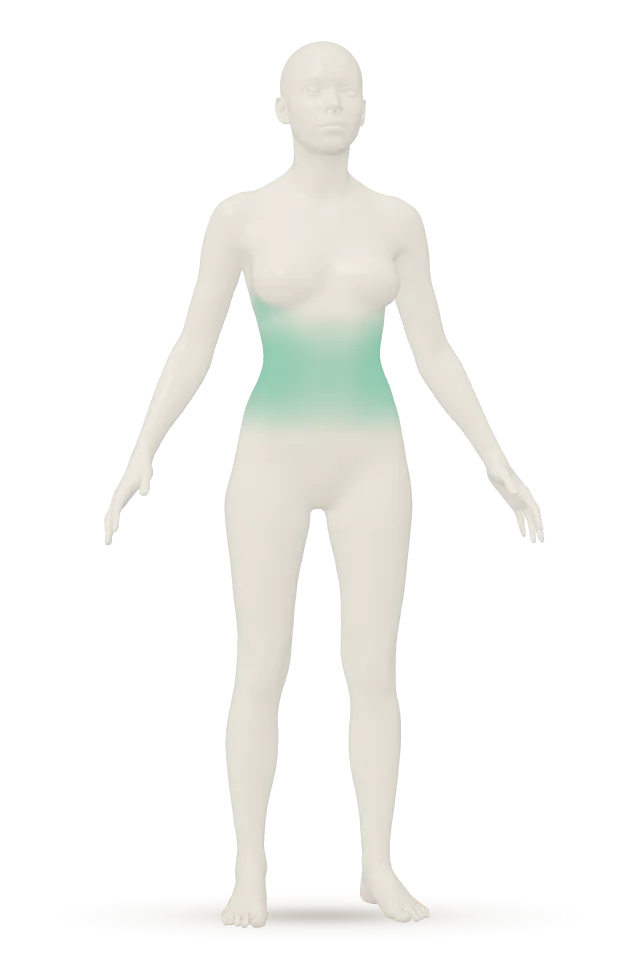
Appetite & metabolism
In people. In the main trial, about two in three people lost at least 5% within a year on this dose.
An area lights for what a peptide is used for and what people report, with the evidence beside it. It isn’t a promise that it works there.
Week by week.
What to expect in the first 8 weeks
Day 1–14 · 0.6 mgRCT
Starting dose — GI is the main thing
You're on 0.6mg — the starter dose, designed to get your gut used to delayed emptying, not to drive weight loss yet. Expect nausea, maybe early satiety, maybe loose stools. The GI stuff usually settles within the first 7–10 days.
The science
Liraglutide is a GLP-1 receptor agonist with 97% homology to native GLP-1 but half-life extended to ~13hrs via fatty acid acylation. The titration schedule (0.6 → 1.2 → 1.8 → 2.4 → 3.0mg weekly) exists specifically to reduce GI side effect intensity. SCALE trials used this schedule.
Sources- Pi-Sunyer et al. (SCALE) (2015)
Updated Apr 2026
Day 14–42RCT
Titrating up — appetite really drops
You're climbing the dose ladder now. Commonly reported: "food noise" quiets, the background hunger chatter fades, meals end sooner, and you're not thinking about food as much. Weight loss usually becomes measurable by week 4.
The science
SCALE trial (n=3731, 56 weeks) showed progressive weight loss with dose escalation: mean 8.0% body weight loss on 3.0mg at 56 weeks vs 2.6% placebo. Liraglutide acts on appetite centres in the brain, including the arcuate nucleus (animal studies).
Sources- Pi-Sunyer et al. (SCALE) (2015)
Updated Sep 2026
Day 42–168RCT
Steady loss at target dose
Full 3.0mg dose, steady pattern. In the main trial, about two in three people lost at least 5% within a year on this dose, and one in three lost more than 10% — a slower arc than semaglutide, but real and well-studied. Plateau is normal; the rate of loss slows after the first 4 months.
The science
The pivotal SCALE trial measured 8% mean weight loss at 56 weeks. LEADER trial (n=9340) showed cardiovascular risk reduction in T2D patients independent of weight effect. Daily injection cadence matters for effect stability — missing doses drops exposure faster than with semaglutide.
Sources- Pi-Sunyer et al. (SCALE) (2015)
- Marso et al. (LEADER) (2016)
Updated Sep 2026
Any dayRCT
What Liraglutide is built on
Liraglutide has one of the longest clinical track records of any GLP-1 — FDA approval for T2D (Victoza 2010) and obesity (Saxenda 2014), plus the LEADER cardiovascular outcomes trial. Daily injection is the main trade-off vs weekly semaglutide.
The science
Developed by Novo Nordisk. SCALE obesity program was the regulatory pathway for Saxenda. LEADER trial (2016) established cardiovascular risk reduction in T2D. Since eclipsed in market share by semaglutide (Ozempic/Wegovy) and tirzepatide, but with some of the longest real-world safety data in the class.
Sources- Pi-Sunyer et al. (SCALE) (2015)
- Marso et al. (LEADER) (2016)
Updated Sep 2026
After week 8
Day 168–365RCT
Maintenance and long game
Past 6 months, this is a long-term tool. Most clinical practice is either continued use for maintenance or transition to semaglutide/tirzepatide if convenience becomes the priority. Weight regain is likely if you stop cold — taper with lifestyle lock-in.
The science
In the 3-year SCALE trial in people with prediabetes, weight loss held with continued dosing (−6.1% vs −1.9% at week 160), though about half of participants withdrew (le Roux 2017). Post-discontinuation regain is well-documented across the GLP-1 class — the mechanism (appetite modulation) reverses when drug exposure stops.
Sources- Pi-Sunyer et al. (SCALE) (2015)
- le Roux et al. (2017)
Updated Sep 2026
Day 1 is the day you start it.
Mixing and a typical run.
Example numbers
Reconstitution example
Reconstitute a 10 mg vial of Liraglutide with 2 mL of bacteriostatic water and a 0.6 mg dose is 12 units on a U-100 syringe, about 16 doses per vial.
- Vial
- 10 mg
- Water
- 2 mL
- Amount
- 0.6 mg
Draw to12 units
0.3 mL insulin syringe · 30 units
Run notes
- Cycle
- FDA-approved for daily use. Community uses continuously or until goal reached.Community practice — opinions vary. Not a clinical recommendation.
- Timing
- Daily SubQ, same time each day. Titration schedule required.
- Route
- SubQ injection
Safety.
Common side effects
- Nausea
- Vomiting
- Diarrhea
- Constipation
- Pancreatitis risk
- Thyroid C-cell tumor risk (animal data)
Interactions
The Saxenda label advises against combining it with other liraglutide products or any other GLP-1 drug.
Compared with.
Questions people ask.
What is Liraglutide?
The predecessor to semaglutide: a GLP-1 receptor agonist that reduces appetite and improves blood sugar control, given as a daily injection rather than weekly.
How is Liraglutide dosed in research?
The FDA label range for Liraglutide is 0.6–3 mg, daily SubQ, with a 0.6 mg starting dose.
How long does Liraglutide last?
The half-life of Liraglutide is ~13 hours.
What do people report on Liraglutide?
Commonly reported on Liraglutide: appetite drops and meals end sooner, though less dramatically than on semaglutide or tirzepatide, with nausea during the climb to 3 mg. FDA-approved for diabetes (Victoza) and obesity (Saxenda), with one of the longest track records of any GLP-1 drug.
Is Liraglutide safe?
The research basis for Liraglutide is established: clinical trials or FDA-approved use exists. Common side effects in the library: nausea, vomiting, diarrhea, constipation, pancreatitis risk and thyroid C-cell tumor risk (animal data).
Research.
Reference.
- Cadence
Daily
Daily SubQ
- Half-life
~13 hours
- Research basis
●●●
EstablishedClinical trials or FDA-approved use exists
Track your progress
Watch it work.
Weight, waist and photos in one arc.
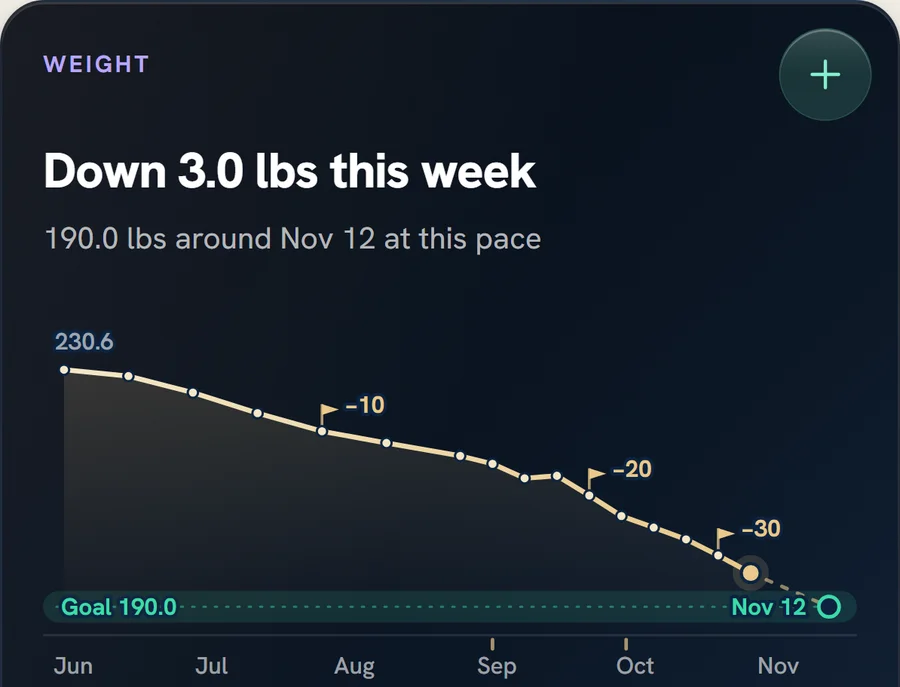


34.8 lbsdown since June
PepVault for iPhone
Track Liraglutide in PepVault
Log every dose and keep your vial and the doses left in it. 7 days free on the yearly plan for new subscribers.
Open the calculatorHow the vial count worksExplore the live demo
Reviewed How we check the library