Tirzepatide Dosage, half-life & reference guide
Also known as Mounjaro · Zepbound · LY3298176
The first dual GIP/GLP-1 receptor agonist: it activates two gut-hormone pathways at once, and in a head-to-head trial it produced more weight loss than semaglutide (20.2% vs 13.7% at 72 weeks).

- FDA label
- 2.5–15 mgstarting dose 2.5 mg
- How often
- Weekly
- Half-life
- ~5 days
- Evidence
- ●●●
Established - Route
- SubQ injection
How it works.
Dual GIP/GLP-1 receptor agonist. Significantly reduces body weight through appetite suppression, slowed gastric emptying, and improved insulin sensitivity. Approved for T2DM and obesity management.
Commonly reported: Very strong appetite suppression and meals ending early, with nausea or tiredness for a day or two after the injection, mostly after dose increases. FDA-approved for diabetes (Mounjaro) and for weight management and sleep apnea (Zepbound).
Half-life & active level
The half-life of Tirzepatide is ~5 days (FDA label).
Here's how a typical Tirzepatide schedule accumulates over four weeks (one-compartment estimate).
An estimate from the half-life above, not a measurement. See your own curve build live in the half-life calculator.
Where Tirzepatide works.
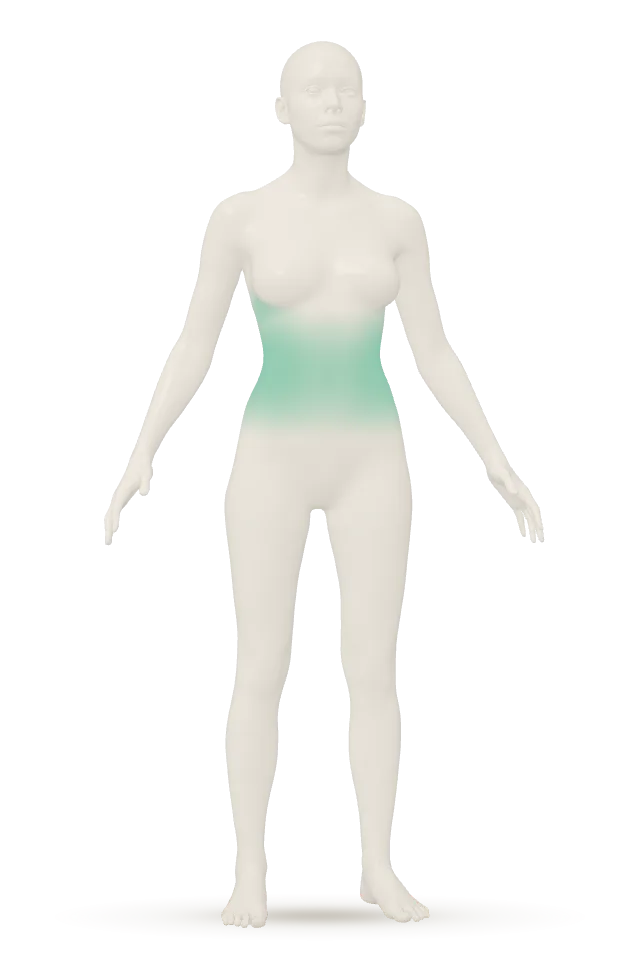
Appetite & metabolism
In people. In a head-to-head trial it produced more weight loss than semaglutide (20.2% vs 13.7% at 72 weeks).
An area lights for what a peptide is used for and what people report, with the evidence beside it. It isn’t a promise that it works there.
Week by week.
What to expect in the first 8 weeks
- Onset
- Days–2 weeks
- Peak effect
- 72+ weeks
- Duration
- Ongoing
Day 1–28 · 2.5 mgRCT
Getting your gut acclimated
The 2.5mg run-in lets your gut adapt to GIP/GLP-1 signaling. Expect appetite to drop within days and some mild nausea in week 1–2. Don't expect weight loss yet — you're building tolerance for the real dose.
The science
The 2.5mg run-in is per FDA Zepbound labeling, there to limit GI side effects at higher doses. The GIP component eases nausea in animal studies; in the SURMOUNT-5 head-to-head, nausea rates matched semaglutide (44% each), but fewer people stopped for GI side effects over 72 weeks (2.7% vs 5.6%).
Sources- FDA Zepbound label (2024)
- Aronne et al. (2025)
Updated Sep 2026
Day 29–56 · 5 mgRCT
First therapeutic dose — weight drops
You're at 5mg — the first real therapeutic dose. Appetite suppression is fully online and you should start seeing clear scale movement. SURMOUNT-1's 5mg arm reached 15% at 72 weeks.
The science
Jastreboff 2022 (NEJM SURMOUNT-1) documented the 5mg arm reaching −15% body weight at week 72. "Food noise" reduction is commonly reported in this window — users describe not thinking about food between meals for the first time in years.
Sources- Jastreboff et al. (2022)
Updated Apr 2026
Any dayRCT
What Tirzepatide is built on
One of the most thoroughly trialed weight-loss drugs in history: SURMOUNT 1 through 5, a head-to-head win over semaglutide, and an FDA approval for obstructive sleep apnea added Dec 2024.
The science
Eli Lilly (Mounjaro for diabetes 2022; Zepbound for obesity 2023). SURMOUNT-OSA (Malhotra 2024 NEJM) expanded the FDA label for moderate-to-severe obstructive sleep apnea with obesity. SUMMIT 2024 showed tirzepatide reduces HFpEF worsening events — opening cardiovascular-outcome use cases beyond weight management.
Sources- Jastreboff et al. (2022)
- Aronne et al. (2025)
Updated Apr 2026
With BPC-157Community
Why people add BPC-157 to Tirz
GI side effects during Tirz titration can be rough, and BPC-157, first studied as a stomach-protecting peptide, is added to ease them. Commonly reported: smoother step-ups, especially the later ones.
The science
Mechanism fit: BPC-157 is a fragment of a "body protection compound" first isolated from human gastric juice and characterized as gastroprotective in animal studies (gut mucosal integrity, reduced NSAID damage, gut-brain axis modulation). Tirz nausea isn't caused by gastric damage, and no trial has tested the combination; the pattern comes from community reports.
Sources- Sikiric et al. (2018)
Updated Sep 2026
Any dayClinical
Protein + lifting decide what the loss is made of
Tirz may spare a bit more lean mass than GLP-1-only drugs, though that hasn't been tested head to head, and a meaningful share of any rapid loss is muscle. Keep protein around 1.6–2.2g/kg and keep training resistance through the cut. The appetite suppression handles intake; your protein and lifting decide whether the scale drop is fat or muscle.
The science
Across incretin body-composition data, roughly 25–40% of weight lost is lean mass; in SURMOUNT-1 about three-quarters of the loss was fat, the same share as placebo, and no trial has compared lean-mass sparing against pure GLP-1s head to head. Muscle-sparing add-on trials (apitegromab + tirzepatide, EMBRAZE: ~1.9kg less lean loss; bimagrumab + sema: ~92% of loss from fat) show the field moving, but none is standard care — protein and resistance training remain the available levers.
Sources- EMBRAZE (2025)
Updated Sep 2026
After week 8
Day 57–112 · 7.5 mgRCT
Dual agonism in full effect
Dual agonism is in full effect. Commonly reported: weight loss picking up pace and body composition shifting in a way people notice.
The science
SURMOUNT-1 participants in the 10mg arm reached approximately −19% at 72wk (Jastreboff 2022). Whether the GIP arm spares lean mass hasn't been tested head to head; SURMOUNT-5 compared weight and waist with semaglutide, not body composition.
Sources- Jastreboff et al. (2022)
- Aronne et al. (2025)
Updated Sep 2026
Day 113–168 · 12.5 mgRCT
Max titration reached
Max titration (12.5 → 15mg). Appetite suppression is strongest here, and 'food noise silence' is the most common subjective change. If nausea's rough, holding at 12.5 is a reasonable call.
The science
Zepbound prescribing info 2024 documents the GI discontinuation rate rising from 3.3% at 10mg to 4.3% at 15mg. SURMOUNT-1 15mg arm reached −22.5% at 72wk. Some users plateau at 10mg and never need to escalate — staying at the lowest effective dose is the community norm.
Sources- FDA Zepbound label (2024)
- Jastreboff et al. (2022)
Updated Apr 2026
Day 169–504RCT
Weeks 24 to 72: where most people plateau
Most people reach a weight plateau between about 6 and 9 months, and nearly 9 in 10 have plateaued by week 72; that is expected, not a sign it stopped working. In the SURMOUNT-5 head-to-head, tirzepatide reached 20.2% loss at 72 weeks against 13.7% for semaglutide, with nearly twice as many people crossing 25% loss.
The science
Aronne 2025 (NEJM SURMOUNT-5, 751 patients, 72wk): the first direct Tirz-vs-Sema comparison. Tirz arm hit 20.2% vs 13.7% for sema — ~47% greater relative loss — and ≥25% loss was reached by 31.6% on tirz vs 16.1% on sema. Stopping because of GI side effects: 2.7% vs 5.6%. A post-hoc analysis of SURMOUNT-1 found a median time to plateau of 24–36 weeks, with about 88–90% plateaued by week 72 (Horn 2025). SURMOUNT-OSA also showed ~25 AHI event reduction — which led to the Dec 2024 FDA approval for obstructive sleep apnea with obesity.
Sources- Aronne et al. (2025)
- Horn et al. (2025)
- Malhotra et al. (2024)
Updated Sep 2026
Day 365+RCT
A maintenance medication, not a course
Before deciding to stop, know the pattern: stopping tirzepatide usually means regaining most of the loss. A 2026 BMJ meta-analysis puts it around 10kg back in the first year and back to baseline in about 18 months, and in SURMOUNT-4 people switched to placebo regained 14% of their body weight within a year. Hold, slow-taper, or stop is a call for you and your clinician — go in expecting a long-term relationship, not a fixed course.
The science
SURMOUNT-4 (withdrawal design) and a BMJ meta-analysis (West 2026) document substantial regain after discontinuation (~9.9kg in year 1, back to baseline by ~1.5 years), reflecting that incretin therapy maintains a metabolic set point rather than resetting it. The continue/taper/stop decision is yours, made with your clinician.
Sources- SURMOUNT-4 (2024)
- West et al. (2026)
Updated Sep 2026
Day 1 is the day you start it.
SURMOUNT Phase III trials. FDA-approved. Head-to-head with semaglutide showing superior weight loss.
Clinical trial data
Mixing and a typical run.
Example numbers
Reconstitution example
Reconstitute a 10 mg vial of Tirzepatide with 2 mL of bacteriostatic water and a 2.5 mg dose is 50 units on a U-100 syringe, about 4 doses per vial.
- Vial
- 10 mg
- Water
- 2 mL
- Amount
- 2.5 mg
Draw to50 units
0.5 mL insulin syringe · 50 units
Run notes
- Cycle
- FDA-approved for ongoing use. Titrate slowly upward. Community maintains on minimum effective dose.Community practice — opinions vary. Not a clinical recommendation.
- Timing
- Once weekly SubQ. Consistent day and time preferred. Can take with or without food.
- Route
- SubQ injection
- Stacks
- BPC-157 (GI support), MOTS-c
Safety.
Common side effects
- Nausea
- Diarrhea
- Vomiting
- Constipation
- Abdominal pain
- Decreased appetite
- Fatigue
Interactions
Tirzepatide delays gastric emptying and can reduce the absorption of concomitant oral medications — the label specifically flags reduced oral-contraceptive efficacy, a documented interaction to discuss with a clinician. Co-use with insulin or insulin secretagogues (sulfonylureas) increases hypoglycemia risk per the label, warranting clinician-guided dose review and glucose monitoring. No specific documented interaction with SSRIs, anticoagulants, or thyroid replacement beyond general caution; raise all medications with your clinician.
Safety notes
Across the SURMOUNT program and the FDA Zepbound label, the dominant adverse events are gastrointestinal (nausea, diarrhea, vomiting, constipation), mostly mild-moderate and escalation-related. The label carries a boxed warning for thyroid C-cell tumors based on rodent studies (human relevance undetermined; contraindicated with personal/family history of medullary thyroid carcinoma or MEN 2). Trial-adjudicated acute pancreatitis was ~0.2% (similar to placebo); gallstones were ~1.1% vs 1.0% on placebo and gallbladder inflammation 0.7% vs 0.2%, partly attributable to rapid weight loss. These are trial/label findings to review with your clinician.
Goes with.
Questions people ask.
What is Tirzepatide?
The first dual GIP/GLP-1 receptor agonist: it activates two gut-hormone pathways at once, and in a head-to-head trial it produced more weight loss than semaglutide (20.2% vs 13.7% at 72 weeks).
How is Tirzepatide dosed in research?
The FDA label range for Tirzepatide is 2.5–15 mg, weekly, with a 2.5 mg starting dose.
How long does Tirzepatide last?
The half-life of Tirzepatide is ~5 days (FDA label).
What do people report on Tirzepatide?
Commonly reported on Tirzepatide: very strong appetite suppression and meals ending early, with nausea or tiredness for a day or two after the injection, mostly after dose increases. FDA-approved for diabetes (Mounjaro) and for weight management and sleep apnea (Zepbound).
Is Tirzepatide safe?
The research basis for Tirzepatide is established: clinical trials or FDA-approved use exists. Common side effects in the library: nausea, diarrhea, vomiting, constipation, abdominal pain, decreased appetite and fatigue.
What does Tirzepatide stack with?
Common stacks for Tirzepatide: BPC-157 (GI support) and MOTS-c. Curated stacks with Tirzepatide: Shred Stack.
Research.
Reference.
- Cadence
Weekly
- Half-life
~5 days
~5 days (FDA label)
- Research basis
●●●
EstablishedClinical trials or FDA-approved use exists
Track your progress
Watch it work.
Weight, waist and photos in one arc.
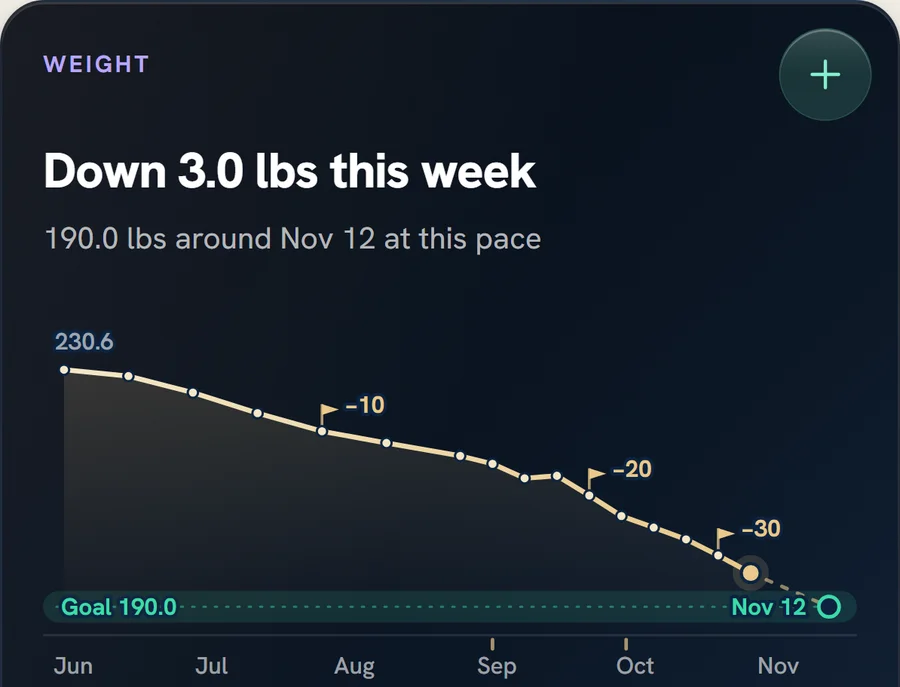


34.8 lbsdown since June
PepVault for iPhone
Track Tirzepatide in PepVault
Log every dose, keep your vial and the doses left in it and watch its estimated active level. 7 days free on the yearly plan for new subscribers.
Open the calculatorHow the vial count worksExplore the live demo
Reviewed How we check the library