L-Carnitine (injectable) Dosage, half-life & reference guide
Also known as L-Carnitine · Levocarnitine · Carnitor · Carnitine · L-Carnitine injection · LC
Reviewed Evidence: ModeratePublished by PepVault
A nutrient your body makes and gets from red meat, which carries fat into the mitochondria to be burned. The injection is an FDA-approved drug for people who lack it, such as dialysis patients. People inject it hoping to burn more fat in training: in healthy men, oral carnitine with carbohydrate raised muscle carnitine and endurance output over 24 weeks, and oral trials found a modest weight loss of about a kilo; injected carnitine has not been tested for fat loss.

- Studied range
- 700–1400 mg
- How often
- 3× weekly
- Half-life
- ~17 hours
- Evidence
- ●●
●Moderate - Routes
- IM, IV
Studied in research — not a recommendation. FDA-approved (Carnitor; generics) as an IV injection for carnitine deficiency in inborn metabolic disorders and dialysis patients; use for fat loss is off-label.
How it works.
Not a peptide: a small nutrient your body makes and gets from meat, which carries long-chain fatty acids into the mitochondria, where they are burned for energy; skeletal and heart muscle run mainly on that fat. FDA-approved as an injection (Carnitor and generics) for people who lack it: those with certain inborn metabolic disorders and dialysis patients. In healthy people the idea is that more carnitine in muscle means more fat burned, but muscle takes it up only when insulin is high: in a 24-week trial, oral carnitine with carbohydrate raised muscle carnitine by 21% and work output by 11%, and a meta-analysis of oral trials found a modest weight loss. No trial has tested injected carnitine for fat loss.
Commonly reported: Little to feel, and in some body odor or nausea.
Your report
Taken L-Carnitine (injectable)? What did you notice?
One tap to start. About 30 seconds, no account.

Model. Individual results vary.
PepVault for iPhone
Track L-Carnitine (injectable) in PepVault
Log each dose, see how many doses are left in the vial, and keep your step-ups in one place.

7 days free on the yearly plan for new subscribers.
Where L-Carnitine (injectable) works.
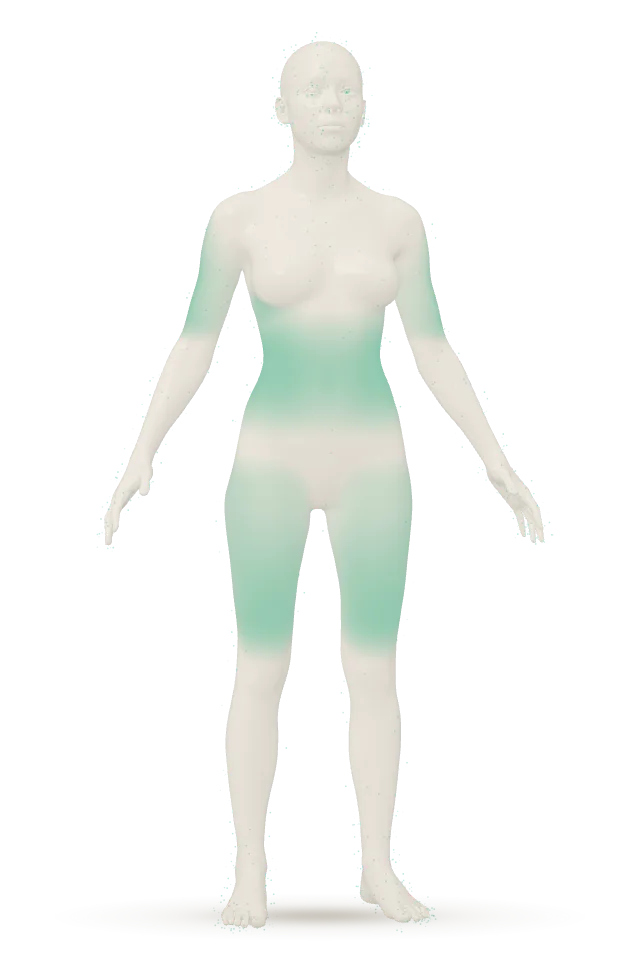
Appetite & metabolism
In people. Oral trials found a modest weight loss of about a kilo; injected carnitine has not been tested for fat loss.
Muscle
In people. In a 24-week trial, oral carnitine with carbohydrate raised muscle carnitine by 21% and work output by 11%.
Energy & longevity
In people. Which carries long-chain fatty acids into the mitochondria, where they are burned for energy.
An area lights for what a peptide is used for and what people report, with the evidence beside it. It isn’t a promise that it works there.
Week by week.
What to expect in the first 8 weeks
- Onset
- Hours (blood levels rise)
- Peak effect
- 12–24 weeks (muscle carnitine, in the one long trial)
- Duration
- Ongoing; the long trial ran 24 weeks
Day 1–14Clinical
The fat carrier, topped up
Carnitine is the shuttle that carries fat into your mitochondria to be burned. An injection raises your blood level at once, though most of it leaves in the urine within a day. Expect little to feel early on.
The science
Carnitor label: a carrier of long-chain fatty acids across the inner mitochondrial membrane. After a 20 mg/kg IV bolus, about 76% of the dose was in the urine within 24 hours; distribution half-life 0.585 hours, terminal half-life 17.4 hours. Oral bioavailability is about 15%, which is the case for injecting it.
Sources- Carnitor prescribing information (FDA) (2023)
Updated Nov 2026
Day 7–60Clinical
Muscle needs insulin to take it in
Raising blood carnitine is easy; getting it into muscle is the hard part. In a study in healthy men, muscle took it up only when insulin was high, which is why some pair it with a carbohydrate meal.
The science
Stephens 2006: 8 healthy men had 5 hours of IV carnitine infusion (blood about 500 µmol/L) with insulin held at fasting or at a high level. Only with high insulin did muscle carnitine rise, from 22.0 to 24.7 mmol/kg dry muscle, with the carnitine transporter OCTN2 turned up 2.3-fold. The authors note that earlier studies failed to raise muscle carnitine in healthy people by diet or IV carnitine alone.
Sources- Stephens et al. (2006)
Updated Nov 2026
Day 14–90Animal
Why injecting skips the gut question
Gut bacteria turn carnitine taken by mouth into TMAO, a compound linked to artery disease. An injection bypasses most of the gut, one reason people give for injecting it, though no study has measured TMAO after carnitine injections.
The science
Koeth 2013: gut microbes converted oral L-carnitine to TMA and then TMAO; omnivores made more TMAO than vegans and vegetarians; carnitine feeding sped atherosclerosis in mice only when gut microbes were intact; in 2,595 patients, blood carnitine predicted heart events only alongside high TMAO. The Carnitor label lists TMAO as a main metabolite of oral carnitine.
Sources- Koeth et al. (2013)
- Carnitor prescribing information (FDA) (2023)
Updated Nov 2026
Any dayRCT
What injectable carnitine is built on
L-carnitine injection is an FDA-approved drug for people who lack it. For fat loss, the evidence is oral: a modest weight loss of about a kilo across many trials. Injecting it for fat loss is a community practice no trial has tested.
The science
Carnitor label (2023): approved for inborn metabolic disorders causing carnitine deficiency and for dialysis patients; even there, the label says effects on symptoms and outcomes are not determined. Talenezhad 2020 pooled 37 oral randomized trials (2,292 people): body weight −1.21 kg, fat mass −2.08 kg, with no change in waist or body-fat percentage, largest near 2,000 mg a day. In a crossover study, a carnitine infusion did not ease lipid-induced insulin resistance (Bruls 2020).
Sources- Carnitor prescribing information (FDA) (2023)
- Talenezhad et al. (2020)
- Bruls et al. (2020)
Updated Nov 2026
With Semaglutide and TirzepatideCommunity
A fat carrier beside a GLP-1
People add carnitine to a GLP-1 hoping more of the fat they lose gets burned as fuel. No study has tested the pair; the GLP-1 does the heavy lifting, and carnitine's own effect on weight in trials was about a kilo.
The science
No published trial combines injected carnitine with semaglutide or tirzepatide. The oral meta-analysis (Talenezhad 2020) found a weight loss of 1.21 kg over placebo. The pairing is community practice.
Sources- Talenezhad et al. (2020)
Updated Nov 2026
After week 8
Day 60–180RCT
More fat burned, more output
The one long trial took 24 weeks to load muscle with carnitine. Once it did, muscle burned less sugar at easy pace and made less lactate at hard pace, and work output rose 11%. That was oral carnitine with carbohydrate, not injections.
The science
Wall 2011: 14 healthy men randomized double-blind to 2 g L-carnitine-L-tartrate with 80 g carbohydrate, or carbohydrate alone, twice a day for 24 weeks. All effects appeared at 24 weeks: muscle total carnitine +21%; at 50% VO2max, 55% less muscle glycogen used (consistent with more fat burned); at 80%, 44% less muscle lactate; work output in a 30-minute trial up 11% from baseline, with no change in the control group.
Sources- Wall et al. (2011)
Updated Nov 2026
Day 1 is the day you start it.
Carnitor FDA label (2023) for the drug facts and safety; small human mechanism studies and a meta-analysis of oral trials. Injected carnitine for fat loss has no trial.
Preliminary research
A typical run.
Run notes
- Cycle
- The label gives it by vein, three times a week after dialysis in its studies, and lets the dose come down after 3–4 weeks. The crowd injects it into muscle, a route no study has measured. Raising muscle carnitine took months in the one long trial (Wall 2011: 24 weeks, with carbohydrate).Community practice — opinions vary. Not a clinical recommendation.
- Timing
- Commonly injected before training or a fasted cardio session, on the idea that more fat reaches the mitochondria then. Muscle takes up carnitine when insulin is high (Stephens 2006), so taking it with a carbohydrate meal is the pattern the muscle-uptake studies support.
- Routes
- IM injection, IV injection
- Stacks
- Semaglutide, Tirzepatide
Safety.
Common side effects
- Nausea or vomiting
- Body odor
- Stomach upset
- Loose stools at high doses
Interactions
The Carnitor label reports INR rises in people on warfarin and recommends checking INR after starting or changing the dose. Seizure medicines are worth raising, given the label's seizure reports. Discuss any prescription medications with your clinician.
Safety notes
A prescription drug (Carnitor injection) approved for carnitine deficiency from inborn metabolic disorders and in dialysis patients; injecting it for fat loss or performance is off-label and untested in trials. The label lists no contraindications. Its warnings are serious allergic reactions (anaphylaxis, throat swelling, bronchospasm), mostly in dialysis patients and some within minutes of an IV dose, and seizures reported after oral or IV carnitine, more often in people who already have seizures. Common effects are nausea and vomiting, with body odor and gastritis less often; large doses can cause diarrhea. Gut bacteria turn carnitine taken by mouth into TMAO, a compound linked to hardening of the arteries in mice and to heart risk in people with high levels; an injection skips most of the gut, but this has not been measured. For athletes: L-carnitine is not on the WADA 2026 list, but IV infusions or injections of more than 100 mL in 12 hours are banned outside hospital care (M2.2). Discuss with your clinician.
Goes with.
One question at a time.
Questions people ask.
What is L-Carnitine (injectable)?
A nutrient your body makes and gets from red meat, which carries fat into the mitochondria to be burned. The injection is an FDA-approved drug for people who lack it, such as dialysis patients. People inject it hoping to burn more fat in training: in healthy men, oral carnitine with carbohydrate raised muscle carnitine and endurance output over 24 weeks, and oral trials found a modest weight loss of about a kilo; injected carnitine has not been tested for fat loss.
How is L-Carnitine (injectable) dosed in research?
The research range for L-Carnitine (injectable) is 700–1400 mg, 3x weekly. Studied in research — not a recommendation. FDA-approved (Carnitor; generics) as an IV injection for carnitine deficiency in inborn metabolic disorders and dialysis patients; use for fat loss is off-label.
How long does L-Carnitine (injectable) last?
The half-life of L-Carnitine (injectable) is ~17 hours (terminal half-life after an IV dose, Carnitor label; measured on top of the body's own carnitine).
What do people report on L-Carnitine (injectable)?
Commonly reported on L-Carnitine (injectable): little to feel, and in some body odor or nausea.
Is L-Carnitine (injectable) safe?
The research basis for L-Carnitine (injectable) is moderate: animal studies + some human data. Common side effects in the library: nausea or vomiting, body odor, stomach upset and loose stools at high doses.
What does L-Carnitine (injectable) stack with?
Common stacks for L-Carnitine (injectable): Semaglutide and Tirzepatide.
Research.
Reference.
- Cadence
3× weekly
3x weekly
- Half-life
~17 hours
~17 hours (terminal half-life after an IV dose, Carnitor label; measured on top of the body's own carnitine)
- Research basis
●●
●ModerateAnimal studies + some human data
PepVault for iPhone
Track L-Carnitine (injectable) in PepVault
Log each dose, see how many doses are left in the vial, and keep your step-ups in one place.
7 days free on the yearly plan for new subscribers.
Reviewed How we check the library