P21 Dosage, half-life & reference guide
Also known as CNTF analog · P-21 peptide
A peptide analog of CNTF (a nerve growth factor) that promoted neurogenesis and synaptic plasticity in mouse and rat studies from one lab. P21 is more stable than the parent protein and crosses the blood-brain barrier (shown with oral dosing in animals); in those studies it raised BDNF and improved memory.

- Studied range
- 100–300 mcg
- How often
- Daily
- Half-life
- Unknown
- Evidence
- ●
●●Emerging - Route
- Intranasal
Studied in research — not a recommendation.
How it works.
Peptide analog of CNTF (Ciliary Neurotrophic Factor). Promoted neurogenesis, synaptic plasticity and memory in mouse and rat studies, and raised BDNF levels. More stable than CNTF itself and crosses the blood-brain barrier; the animal studies gave it by mouth, and nasal use is a community practice without published data.
Commonly reported: A subtle improvement in memory, recall and verbal fluency over a few weeks, and for many, little or no effect. No human data.
Where P21 works.
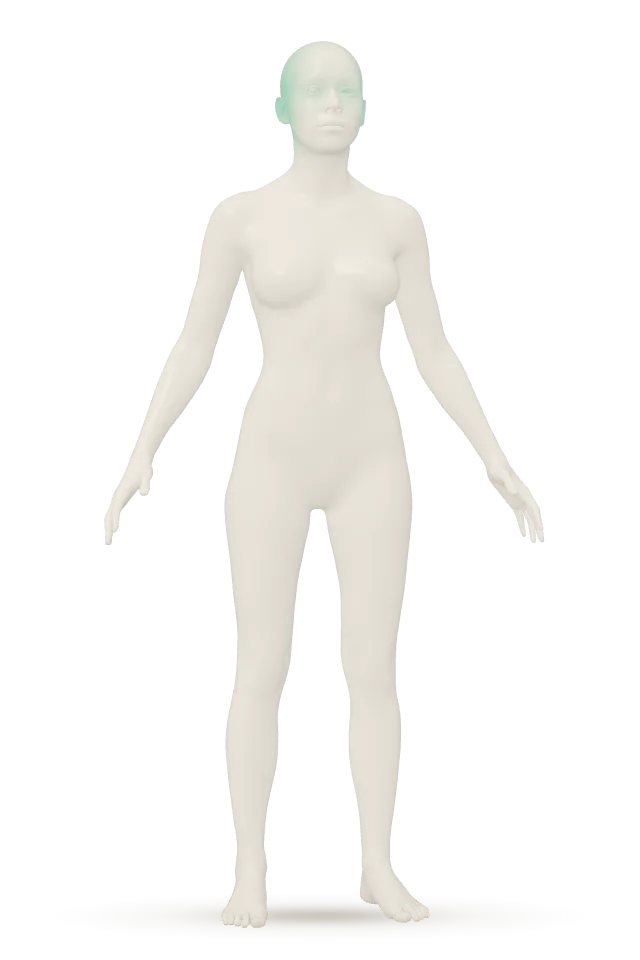
Brain, nerves & sleep
In animals. Promoted neurogenesis, synaptic plasticity and memory in mouse and rat studies, and raised BDNF levels.
An area lights for what a peptide is used for and what people report, with the evidence beside it. It isn’t a promise that it works there.
Week by week.
What to expect in the first 8 weeks
Day 1–14Community
Quiet onset by design
Commonly reported: P21 is slow-acting, with no stimulant kick and no obvious day-one signal. It works through sustained BDNF elevation and downstream synaptic plasticity. Most users take it nasally, though the animal studies gave it by mouth.
The science
P21 is a CNTF peptide analog optimized for blood-brain barrier penetration and oral activity. Li et al. 2010 showed it boosted neurogenesis and memory in normal mice; Kazim et al. 2014 found higher BDNF in Alzheimer's-model mice. The developers report it works by blocking LIF signalling (a CNTF-family pathway) and raising BDNF.
Sources- Li et al. (2010)
- Kazim et al. (2014)
Updated Sep 2026
Day 14–42Community
Memory and plasticity build
Commonly reported by those who respond: better memory consolidation and learning speed, and a general sense of "the brain is working better", building cumulatively rather than dose-to-dose. Many notice little.
The science
In rodent studies, chronic oral dosing raised BDNF and hippocampal cell proliferation. Bolognin et al. 2014 found oral P21 reduced age-related memory decline in aged rats; Kazim et al. 2014 found benefits in Alzheimer's-model mice. Human pharmacokinetics are not characterized.
Sources- Bolognin et al. (2014)
- Kazim et al. (2014)
Updated Sep 2026
Day 42–60Community
Cap the cycle and reassess
Most community protocols cap at 4–6 weeks and then take a break, since no human dosing data exist. The animal studies dosed continuously for 1–12 months.
The science
Chronic use has not been characterized in humans. The 4–6 week cycle is community convention; the animal studies dosed continuously for 1 to 12 months without cycling.
Sources- Kazim et al. (2014)
Updated Sep 2026
Any dayAnimal
What P21 is built on
P21 has a strong mechanistic story (CNTF → BDNF → neurogenesis) and positive preclinical data in Alzheimer's models, nearly all from one lab. No human trials at all. Research-stage compound with a good science foundation and no clinical evidence.
The science
Developed by Iqbal's lab at the NY State Institute for Basic Research. Primary publications focus on Alzheimer's mouse models; the first P21 paper is Li et al. 2010, and Chohan et al. 2011 tested its 11-amino-acid parent, Peptide 6. The CNTF analog strategy avoids the toxicity and delivery issues that sank CNTF itself as a therapeutic candidate in the 1990s (ALS trials). No human trials.
Sources- Li et al. (2010)
- Kazim et al. (2014)
- Bolognin et al. (2014)
Updated Sep 2026
Day 1 is the day you start it.
Mixing and a typical run.
Example numbers
Reconstitution example
Reconstitute a 5 mg vial of P21 with 2 mL of bacteriostatic water and a 200 mcg dose is 8 units on a U-100 syringe, about 25 doses per vial.
- Vial
- 5 mg
- Water
- 2 mL
- Amount
- 200 mcg
Draw to8 units
0.3 mL insulin syringe · 30 units
Run notes
- Cycle
- Very limited data. Short cycles of 4–6 weeks used cautiously.Community practice — opinions vary. Not a clinical recommendation.
- Timing
- Intranasal. Timing not well established.
- Route
- Intranasal
- Stacks
- Dihexa, Semax
Safety.
Common side effects
- No human safety data
- Generally well tolerated
- Mild headache
Questions people ask.
What is P21?
A peptide analog of CNTF (a nerve growth factor) that promoted neurogenesis and synaptic plasticity in mouse and rat studies from one lab. P21 is more stable than the parent protein and crosses the blood-brain barrier (shown with oral dosing in animals); in those studies it raised BDNF and improved memory.
How is P21 dosed in research?
The research range for P21 is 100–300 mcg, daily. Studied in research — not a recommendation.
How long does P21 last?
The half-life of P21 is unknown.
What do people report on P21?
Commonly reported on P21: A subtle improvement in memory, recall and verbal fluency over a few weeks, and for many, little or no effect. No human data.
Is P21 safe?
The research basis for P21 is emerging: primarily preclinical / limited human data. Common side effects in the library: no human safety data, generally well tolerated and mild headache.
What does P21 stack with?
Common stacks for P21: Dihexa and Semax.
Research.
Reference.
- Cadence
Daily
- Half-life
Unknown
- Research basis
●
●●EmergingPrimarily preclinical / limited human data
PepVault for iPhone
Track P21 in PepVault
Log every dose and keep your vial and the doses left in it. 7 days free on the yearly plan for new subscribers.

Open the calculatorHow the vial count worksExplore the live demo
Reviewed How we check the library