Cerebrolysin Dosage, half-life & reference guide
Also known as FPE 1070 · Cerebrolysin injection
A complex mixture of small peptides from porcine brain tissue, with reported growth-factor-like activity. Cerebrolysin is approved in many countries outside the US for stroke recovery, traumatic brain injury and dementia; trial results are mixed, and an independent 2023 review found no effect on stroke deaths and more non-fatal serious side effects.

- Studied range
- 5–10 ml
- How often
- Daily
- Half-life
- Short
- Evidence
- ●●●
Established - Routes
- IM, IV infusion
Studied in research — not a recommendation.
How it works.
Neurotrophic peptide complex derived from porcine brain tissue: a digest of small peptides and amino acids with reported growth-factor-like activity (it doesn't contain intact BDNF, NGF or CNTF). Neuroprotective, and promotes neuroplasticity and neural repair, mostly in animal and cell studies. Used clinically for stroke and dementia in many countries particularly Eastern Europe and Asia. Typically administered in a clinical setting — self-administration carries additional risks.
Commonly reported: Clearer thinking, better word-finding or faster mental tempo during or after a course, injection discomfort from the large IM volumes, and dizziness, headache or a warm flush during injection. Given in 10-20 day courses, often repeated after a few months.
Where Cerebrolysin works.
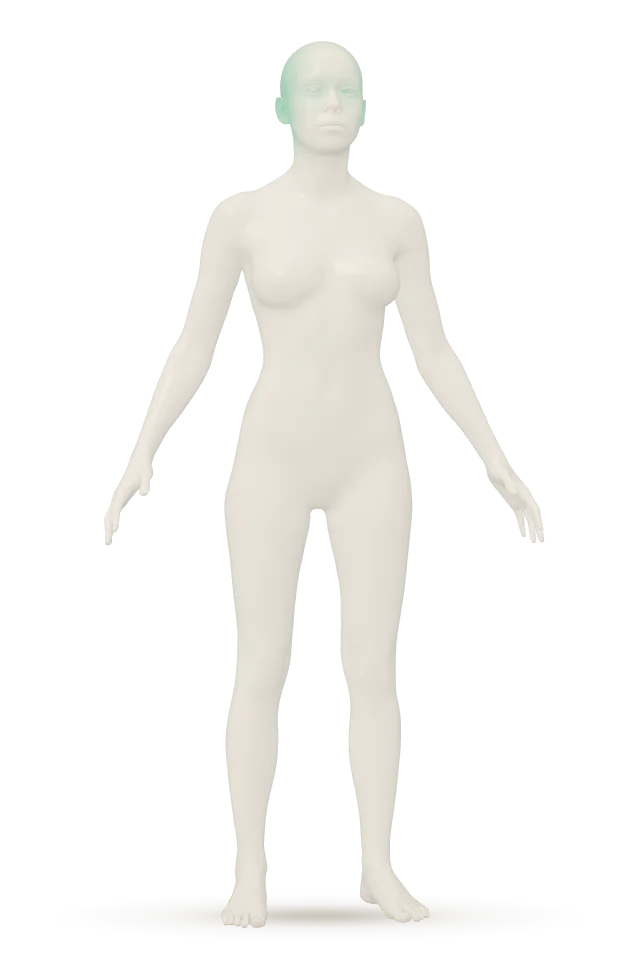
Brain, nerves & sleep
In people. Cerebrolysin is approved in many countries outside the US for stroke recovery, traumatic brain injury and dementia; trial results are mixed.
An area lights for what a peptide is used for and what people report, with the evidence beside it. It isn’t a promise that it works there.
Week by week.
What to expect in the first 8 weeks
Day 1–5Community
Intensive course mode
Cerebrolysin is used as a course, not a cycle — typically daily IM injections for 10–20 days, then a long break. Commonly reported: the first few days are about tolerability (occasional warm flushing, mild headache, injection discomfort) rather than a felt effect. The brain's remodeling response builds slowly.
The science
Cerebrolysin is a peptide complex derived from enzymatic digestion of porcine brain tissue: small peptides and free amino acids with reported growth-factor-like activity, though mass spectrometry found no fragments of BDNF, NGF or CNTF (Gevaert 2015). Clinical use is typically IV or IM in a medical setting. A manufacturer-linked meta-analysis of 9 stroke trials found early benefit on stroke severity (Bornstein 2018), while the independent Cochrane review found no clear benefit and more non-fatal serious adverse events (Ziganshina 2023).
Sources- Bornstein et al. (2018)
- Ziganshina et al. (Cochrane) (2023)
- Gevaert et al. (2015)
Updated Sep 2026
Day 5–20RCT
Mid-course cognitive lift
Commonly reported: the signal shows up in the second half of the course, with clarity, word retrieval and overall mental tempo improving. In stroke trials, functional gains were measured later, at 90 days, with mixed results.
The science
The CARS trials (21-day courses with rehab; 442 patients pooled) found better arm-motor recovery at 90 days (Muresanu 2016); the larger CASTA trial (10-day course, n=1070) was neutral overall (Heiss 2012). The effect is attributed to multi-pathway neurotrophic signaling rather than any single mechanism.
Sources- Muresanu et al. (2016)
- Heiss et al. (2012)
Updated Sep 2026
Day 20–90Clinical
Post-course consolidation
Course over. Courses are often repeated after a break of a few months, as in dementia trials; the neurotrophic effect consolidates rather than requiring continuous dosing. Users who felt a benefit commonly plan another course in 3–4 months.
The science
In a dementia trial, a 4-week IV course was repeated after 2 months (Ruether 2001); courses are commonly repeated, though no standard spacing is established. Any benefit after a course reflects neuroplastic change rather than persistent drug exposure, since the small peptides clear quickly.
Sources- Ruether et al. (2001)
Updated Sep 2026
Any dayRCT
What Cerebrolysin is built on
Cerebrolysin has more human clinical data than any other cognitive peptide — approved and used in 40+ countries for stroke, TBI, dementia and cognitive disorders. Not FDA-approved in the US; the international evidence base is large but mixed, and most positive trials are manufacturer-supported. Animal origin means handling and sourcing matter.
The science
Made by EVER Neuro Pharma (formerly Ebewe), Austria; in clinical use since at least the early 1970s. Meta-analyses of stroke and Alzheimer's trials show modest, inconsistent benefit, and independent reviews rate the evidence low; the 2023 Cochrane stroke review found more non-fatal serious adverse events (RR 2.39). Several manufacturer-funded preclinical papers were flagged for suspect images in 2024. Not a single peptide — it's a complex mixture, which means product consistency and source authenticity matter more than with simple synthetic peptides.
Sources- Ziganshina et al. (Cochrane) (2023)
- Gauthier et al. (2015)
- Heiss et al. (2012)
Updated Sep 2026
Day 1 is the day you start it.
A typical run.
Run notes
- Cycle
- 10–20 day intensive courses, often repeated after a break of a few months, as in dementia trials.Community practice — opinions vary. Not a clinical recommendation.
- Timing
- IM injection or IV (clinical only). Morning administration typical.
- Routes
- IM injection, IV infusion (clinical setting)
- Stacks
- Semax, Selank, NSI-189
Safety.
Common side effects
- Injection site reactions
- Dizziness
- Warm sensation during IV infusion
- Headache
Questions people ask.
What is Cerebrolysin?
A complex mixture of small peptides from porcine brain tissue, with reported growth-factor-like activity. Cerebrolysin is approved in many countries outside the US for stroke recovery, traumatic brain injury and dementia; trial results are mixed, and an independent 2023 review found no effect on stroke deaths and more non-fatal serious side effects.
How is Cerebrolysin dosed in research?
The research range for Cerebrolysin is 5–10 ml, daily for 10–20 day cycles. Studied in research — not a recommendation.
How long does Cerebrolysin last?
The half-life of Cerebrolysin is short (component peptides).
What do people report on Cerebrolysin?
Commonly reported on Cerebrolysin: clearer thinking, better word-finding or faster mental tempo during or after a course, injection discomfort from the large IM volumes, and dizziness, headache or a warm flush during injection. Given in 10-20 day courses, often repeated after a few months.
Is Cerebrolysin safe?
The research basis for Cerebrolysin is established: clinical trials or FDA-approved use exists. Common side effects in the library: injection site reactions, dizziness, warm sensation during IV infusion and headache.
What does Cerebrolysin stack with?
Common stacks for Cerebrolysin: Semax, Selank and NSI-189.
Research.
Reference.
- Cadence
Daily
Daily for 10–20 day cycles
- Half-life
Short
Short (component peptides)
- Research basis
●●●
EstablishedClinical trials or FDA-approved use exists
PepVault for iPhone
Track Cerebrolysin in PepVault
Log every dose, with reminders on your schedule. 7 days free on the yearly plan for new subscribers.

Reviewed How we check the library