LL-37 Dosage, half-life & reference guide
Also known as Cathelicidin · hCAP-18 · CAP-18
Your body's own antimicrobial peptide. In lab studies it kills bacteria, fungi and some viruses, and it also steers immune responses.

- Studied range
- 100–300 mcg
- How often
- Daily
- Evidence
- ●
●●Emerging - Route
- SubQ injection
Studied in research — not a recommendation.
How it works.
Human antimicrobial peptide with broad-spectrum antimicrobial activity. In lab and animal studies it modulates innate immunity, breaks up biofilms and promotes wound healing; it can be anti- or pro-inflammatory depending on context.
Commonly reported: Noticeable injection-site redness or itching, and for some a flu-like, achy feeling in the first days. As a drug it has only been tested as a topical treatment for leg and foot ulcers, with mixed results; injected LL-37 hasn't been studied in people.
Where LL-37 works.
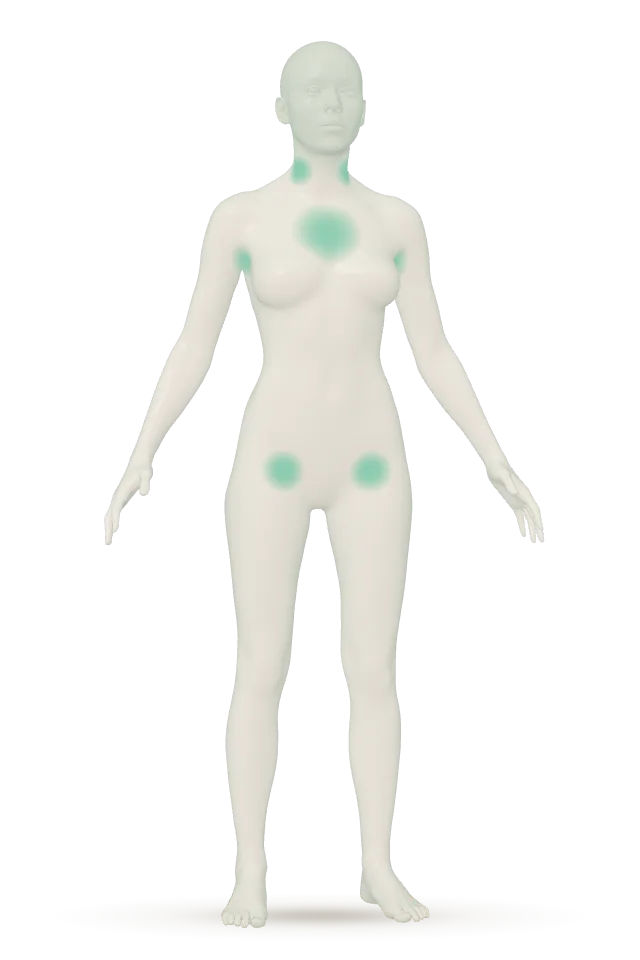
Skin & hair
In people. As a drug it has only been tested as a topical treatment for leg and foot ulcers, with mixed results.
Immune system
In animals. In lab and animal studies it modulates innate immunity, breaks up biofilms and promotes wound healing.
An area lights for what a peptide is used for and what people report, with the evidence beside it. It isn’t a promise that it works there.
Week by week.
What to expect in the first 8 weeks
Day 1–7Community
Some feel a flu-like wave early
Commonly reported: a mild flu-like or achy feeling in the first few days for some users, usually passing within days. LL-37 stirs the immune system on its own, which may be why. If it's strong or doesn't settle, stop and talk to your clinician.
The science
LL-37 is the active fragment of cathelicidin hCAP-18. In lab studies it disrupts bacterial membranes and breaks up established biofilms. The community credits the early "herx-like" feel to dying microbes releasing endotoxin, but no study has shown that; LL-37 is itself immune-stimulating (Kahlenberg & Kaplan 2013), a simpler explanation.
Sources- Vandamme et al. (2012)
- Kahlenberg & Kaplan (2013)
Updated Sep 2026
Day 7–21Community
Weeks 1 to 3: check what changed
Commonly reported around weeks 1 to 3, by those who notice a change: more energy and fewer nagging symptoms. Results vary widely and injected LL-37 hasn't been studied in people, so compare how you feel now with your starting point.
The science
LL-37 also modulates adaptive immunity via TLR signaling and recruits neutrophils in lab and animal studies. In the one randomized trial that measured it, an LL-37 cream on mildly infected diabetic foot ulcers improved granulation but didn't significantly lower bacterial colonization over 4 weeks (Miranda 2023).
Sources- Dürr et al. (2006)
- Kahlenberg & Kaplan (2013)
- Miranda et al. (2023)
Updated Sep 2026
Day 21–28Community
Cycle wrap-up — time to assess
Most LL-37 runs cap at 2–4 weeks. Symptoms flat or improved? Good time to stop and let the body re-equilibrate before deciding on another round. Longer runs don't have data behind them.
The science
Endogenous LL-37 has roles in both defense and inflammation regulation — chronically elevated levels are implicated in psoriasis and rosacea flare activity. The short-cycle convention is conservative because there's no long-term exogenous dosing data in humans.
Sources- Morizane & Gallo (2012)
Updated Apr 2026
Any dayCommunity
What LL-37 is built on
LL-37 has strong mechanistic data as a natural antimicrobial and a growing body of research in chronic infection and biofilm contexts. Still early on the clinical side — most exogenous dosing is community-reported.
The science
The parent peptide (hCAP-18) is a human cathelicidin essential for innate immunity. Exogenous LL-37 has been studied topically in diabetic ulcers and investigated for C. diff and cystic fibrosis indications. No completed late-stage human trials for injectable use.
Sources- Vandamme et al. (2012)
- Kahlenberg & Kaplan (2013)
Updated Apr 2026
With KPV and Thymosin Alpha-1Community
An immune-support trio
Three immune layers at once: LL-37 works on microbes directly, KPV calms inflammation, and thymosin alpha-1 tunes the adaptive side. Commonly stacked for immune support; users judge it by how they feel over several weeks.
The science
The three act on different immune layers: innate antimicrobial (LL-37), inflammatory damping (KPV) and T-cell orchestration (Tα1). No study has tested them together; the pairing rests on their separate lab, animal and (for Tα1) clinical research.
Sources- Kahlenberg & Kaplan (2013)
Updated Sep 2026
Day 1 is the day you start it.
Mixing and a typical run.
Example numbers
Reconstitution example
Reconstitute a 5 mg vial of LL-37 with 2 mL of bacteriostatic water and a 200 mcg dose is 8 units on a U-100 syringe, about 25 doses per vial.
- Vial
- 5 mg
- Water
- 2 mL
- Amount
- 200 mcg
Draw to8 units
0.3 mL insulin syringe · 30 units
Run notes
- Cycle
- Short cycles of 2–4 weeks due to limited data. Conservative approach advised.Community practice — opinions vary. Not a clinical recommendation.
- Timing
- SubQ injection. Timing flexible.
- Route
- SubQ injection
- Stacks
- Thymosin Alpha-1, KPV
Safety.
Common side effects
- Injection site pain
- Redness
- Mild systemic inflammation
Goes with.
Questions people ask.
What is LL-37?
Your body's own antimicrobial peptide. In lab studies it kills bacteria, fungi and some viruses, and it also steers immune responses.
How is LL-37 dosed in research?
The research range for LL-37 is 100–300 mcg, daily or EOD. Studied in research — not a recommendation.
How long does LL-37 last?
The half-life of LL-37 is unknown in humans (short; broken down by proteases).
What do people report on LL-37?
Commonly reported on LL-37: noticeable injection-site redness or itching, and for some a flu-like, achy feeling in the first days. As a drug it has only been tested as a topical treatment for leg and foot ulcers, with mixed results; injected LL-37 hasn't been studied in people.
Is LL-37 safe?
The research basis for LL-37 is emerging: primarily preclinical / limited human data. Common side effects in the library: injection site pain, redness and mild systemic inflammation.
What does LL-37 stack with?
Common stacks for LL-37: Thymosin Alpha-1 and KPV.
Research.
Reference.
- Cadence
Daily
Daily or EOD
- Half-life
Unknown in humans (short; broken down by proteases)
- Research basis
●
●●EmergingPrimarily preclinical / limited human data
PepVault for iPhone
Track LL-37 in PepVault
Log every dose and keep your vial and the doses left in it. 7 days free on the yearly plan for new subscribers.

Open the calculatorHow the vial count worksExplore the live demo
Reviewed How we check the library