Citicoline Dosage, half-life & reference guide
Also known as CDP-choline · CDP choline · Cytidine diphosphocholine · Cytidine 5'-diphosphocholine · Citicolina · Cognizin · Somazina
Reviewed Evidence: ModeratePublished by PepVault
A natural brain nutrient, not a peptide, that supplies choline and uridine, the building blocks of nerve-cell membranes and of acetylcholine. It is a prescription drug in Spain and other countries after stroke and head injury, and a supplement in the US. In healthy older adults with age-related memory complaints, 500 mg a day for 12 weeks improved memory over placebo; large trials in acute stroke and brain injury found no benefit.

- Studied range
- 250–2000 mgstarting dose 500 mg
- How often
- Daily
- Evidence
- ●●
●Moderate - Routes
- Oral capsule, Oral solution
Studied in research — not a recommendation.
How it works.
Not a peptide: a natural nucleotide, the step the body uses to build phosphatidylcholine, the main fat in nerve-cell membranes. Taken by mouth it is almost completely absorbed and splits into choline and cytidine (which the body turns into uridine); both reach the brain, where they are rebuilt into membrane phospholipids, and the choline also feeds acetylcholine, the neurotransmitter of attention and memory. A prescription drug in Spain and other countries for brain problems after stroke and head injury; sold in the US as a dietary supplement. Two large trials found no benefit in acute stroke or brain injury; smaller trials in healthy adults found better memory and attention.
Commonly reported: Steadier focus, and few side effects.
Your report
Taken Citicoline? What did you notice?
One tap to start. About 30 seconds, no account.

PepVault for iPhone
Track citicoline in PepVault
Log each dose and keep your schedule and step-ups in one place.

7 days free on the yearly plan for new subscribers.
Where Citicoline works.
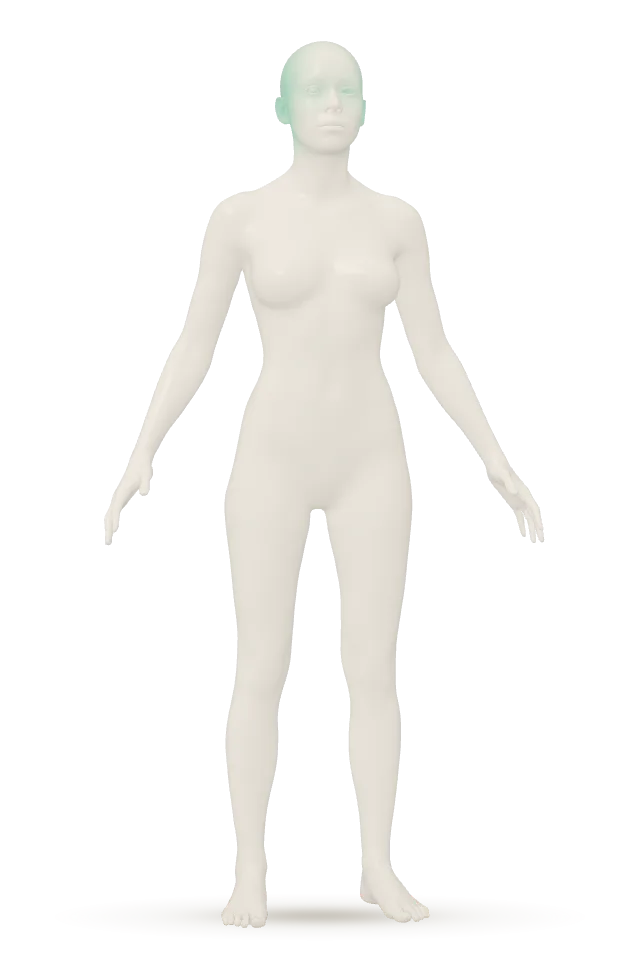
Brain, nerves & sleep
In people. Smaller trials in healthy adults found better memory and attention.
An area lights for what a peptide is used for and what people report, with the evidence beside it. It isn’t a promise that it works there.
Week by week.
What to expect in the first 8 weeks
- Onset
- 1–4 weeks (attention, in trials)
- Peak effect
- 12 weeks (memory, in trials)
- Duration
- Ongoing; trials ran 4–12 weeks
Day 1–14Clinical
Building blocks reach the brain
Citicoline splits into choline and uridine, which your brain uses to build nerve-cell membranes and acetylcholine. Blood levels rise within hours of each dose. Most people feel little in the first days; the trials measured change over weeks.
The science
Wurtman 2000: 12 fasting adults given 500, 2,000 or 4,000 mg by mouth in random order against placebo. Plasma choline stayed raised for 5, 8 and 10 hours; uridine for 5–6 hours, up 70–90% after 500 mg and 100–120% after 2,000 mg, with no further rise at 4,000 mg. Cytidine itself was barely detectable: in people, uridine and choline carry it. The Somazina label: oral absorption practically complete, broken down to choline and cytidine in the gut wall and liver.
Sources- Wurtman et al. (2000)
- Somazina product information (AEMPS) (2021)
Updated Nov 2026
Day 14–42RCT
Attention is the first to show
In a placebo-controlled trial, four weeks of citicoline sharpened attention and motor speed. Commonly reported: steadier focus through long tasks rather than a stimulant kick.
The science
McGlade 2019: 75 healthy adolescent males, citicoline 250 or 500 mg a day (51) or placebo (24) for 28 days. On citicoline, attention (p = 0.02) and psychomotor speed (p = 0.03) improved against placebo, and a higher dose for body weight predicted better accuracy and lower impulsivity. The trial tested the maker's product (Cognizin), with its staff among the authors.
Sources- McGlade et al. (2019)
Updated Nov 2026
Day 42–120RCT
Memory builds over months
The memory trial ran 12 weeks before it measured, and that is where the gain showed: older adults with everyday memory complaints remembered paired items better than on placebo. A few months is the fair window to judge it.
The science
Nakazaki 2021: 100 healthy adults aged 50–85 with age-associated memory impairment, 500 mg a day or placebo for 12 weeks, double-blind; 99 finished. Episodic memory (paired associates) improved 0.15 against 0.06 (P = 0.0025) and a composite of four memory tests 3.78 against 0.72 (P = 0.0052). Sponsored by Kyowa Hakko Bio, the supplement's maker (NCT03369925).
Sources- Nakazaki et al. (2021)
Updated Nov 2026
Any dayRCT
What citicoline is built on
Citicoline has been a prescription brain drug in Spain since 1975, and is approved for brain injury in dozens of countries, and has a very clean safety record. The large trials in acute stroke and brain injury came back negative; the case for it as a daily nootropic rests on smaller placebo-controlled trials in healthy people, most funded by its maker.
The science
ICTUS (Dávalos 2012, Lancet): 2,298 patients with moderate-to-severe ischaemic stroke, stopped for futility, recovery odds 1.03 against placebo. COBRIT (Zafonte 2012, JAMA): 1,213 brain-injury patients, 2,000 mg a day for 90 days, no difference at 90 or 180 days. Cochrane (Martí-Carvajal 2020): 10 stroke trials, 4,281 people, little or no difference in death or disability, all at high risk of bias. In dementia and mild cognitive impairment a 2023 meta-analysis found improvement but called the studies' quality poor (Bonvicini 2023). Healthy adults: Nakazaki 2021; McGlade 2019.
Sources- Dávalos et al. (2012)
- Zafonte et al. (2012)
- Martí-Carvajal et al. (2020)
- Bonvicini et al. (2023)
Updated Nov 2026
With SemaxCommunity
Membranes and growth factors
Citicoline supplies the raw material for nerve-cell membranes and acetylcholine; Semax works on the brain's growth-factor signals. People pair them because they act on different sides of the same goal. No study has tested the two together.
The science
Citicoline's mechanism: phospholipid and acetylcholine precursor (Somazina label; Wurtman 2000). Semax's evidence is in its own library entry (rat BDNF and NGF studies, small Russian human studies). The pairing is community practice; neither compound has been studied with the other.
Sources- Somazina product information (AEMPS) (2021)
- Wurtman et al. (2000)
Updated Nov 2026
Day 1 is the day you start it.
Spain's Somazina label (AEMPS, 2021) for the drug facts and side effects; randomized placebo-controlled trials in healthy adults (small, sponsored by the maker) and two large negative trials in stroke and brain injury.
Moderate evidence
A typical run.
Run notes
- Cycle
- Taken daily and continuously in the trials: 28 days for attention (McGlade 2019), 12 weeks for memory (Nakazaki 2021), 90 days in brain injury (COBRIT). No trial set a break.Community practice — opinions vary. Not a clinical recommendation.
- Timing
- Once a day in the healthy-adult trials; higher clinical doses are split across the day (ICTUS gave 500 mg tablets every 12 hours). Commonly taken in the morning; the label sets no time of day or food rule.
- Routes
- Oral capsule, Oral solution
- Stacks
- Semax, Selank
Safety.
Common side effects
- Usually none: trial side effects ran at placebo rates
- Headache (rare)
- Nausea or loose stools (rare)
- Dizziness (rare)
Interactions
The Spanish label says it strengthens the effect of L-dopa medicines (Parkinson's treatment) and is not to be taken with meclofenoxate (centrophenoxine), another choline nootropic. No other interactions are listed. Discuss any prescription medications with your clinician.
Safety notes
A prescription drug in Spain since 1975 (Somazina) for neurological and cognitive problems after stroke and head injury, at 500 to 2,000 mg a day; in the US it is sold as a dietary supplement and is not an FDA-approved drug. The Spanish label lists every side effect as very rare (fewer than 1 in 10,000): headache, vertigo, nausea, vomiting, occasional diarrhea, rash, flushing, blood pressure changes and, rarely, hallucinations; it lists parasympathetic hypertonia as a contraindication. In the large trials (2,298 stroke patients; 1,213 with brain injury) adverse events ran at placebo rates, and a Cochrane review of 4,281 stroke patients found little or no difference in serious events. Data in pregnancy are insufficient. Not named on the WADA 2026 Prohibited List. Discuss with your clinician.
One question at a time.
Questions people ask.
What is Citicoline?
A natural brain nutrient, not a peptide, that supplies choline and uridine, the building blocks of nerve-cell membranes and of acetylcholine. It is a prescription drug in Spain and other countries after stroke and head injury, and a supplement in the US. In healthy older adults with age-related memory complaints, 500 mg a day for 12 weeks improved memory over placebo; large trials in acute stroke and brain injury found no benefit.
How is Citicoline dosed in research?
The research range for Citicoline is 250–2000 mg, daily, with a 500 mg starting dose. Studied in research — not a recommendation.
How long does Citicoline last?
The half-life of Citicoline is no single half-life: it splits into choline and uridine, and plasma choline stays raised about 5–10 hours after one oral dose (Wurtman 2000).
What do people report on Citicoline?
Commonly reported on Citicoline: steadier focus, and few side effects.
Is Citicoline safe?
The research basis for Citicoline is moderate: animal studies + some human data. Common side effects in the library: usually none: trial side effects ran at placebo rates, headache (rare), nausea or loose stools (rare) and dizziness (rare).
What does Citicoline stack with?
Common stacks for Citicoline: Semax and Selank.
Research.
Reference.
- Cadence
Daily
- Half-life
No single half-life: it splits into choline and uridine, and plasma choline stays raised about 5–10 hours after one oral dose (Wurtman 2000)
- Research basis
●●
●ModerateAnimal studies + some human data
PepVault for iPhone
Track citicoline in PepVault
Log each dose and keep your schedule and step-ups in one place.
7 days free on the yearly plan for new subscribers.
Reviewed How we check the library