Gonadorelin Dosage, half-life & reference guide
Also known as GnRH · Gonadotropin-releasing hormone · Gonadorelin acetate
A synthetic version of the hormone your hypothalamus uses to signal your pituitary to release LH and FSH — the hormones that drive testosterone production and fertility. Most commonly used alongside testosterone replacement therapy (TRT) with the aim of maintaining testicular function; no published trial has tested that use.

- Studied range
- 100 mcg
- How often
- 2–3× weekly
- Half-life
- ~2–10 min
- Evidence
- ●●●
Established - Route
- SubQ injection
Studied in research — not a recommendation.
How it works.
Synthetic GnRH (identical to the natural hormone) that stimulates pituitary release of LH and FSH. Used alongside TRT with the aim of maintaining testicular function, testosterone production and fertility; that use hasn't been tested in trials. Continuous exposure (an infusion or long-acting GnRH drugs) shuts the axis down, while intermittent injections of short-lived gonadorelin stimulate it; 2–3x weekly is the common clinic schedule.
Commonly reported: Some users on TRT say it helps keep testicular size and fullness compared with TRT alone, and many describe it as weaker than hCG. It's usually injected 2–3 times a week; what shuts the system down is constant exposure (like a drip or long-acting GnRH drugs), not daily use.
Where Gonadorelin works.
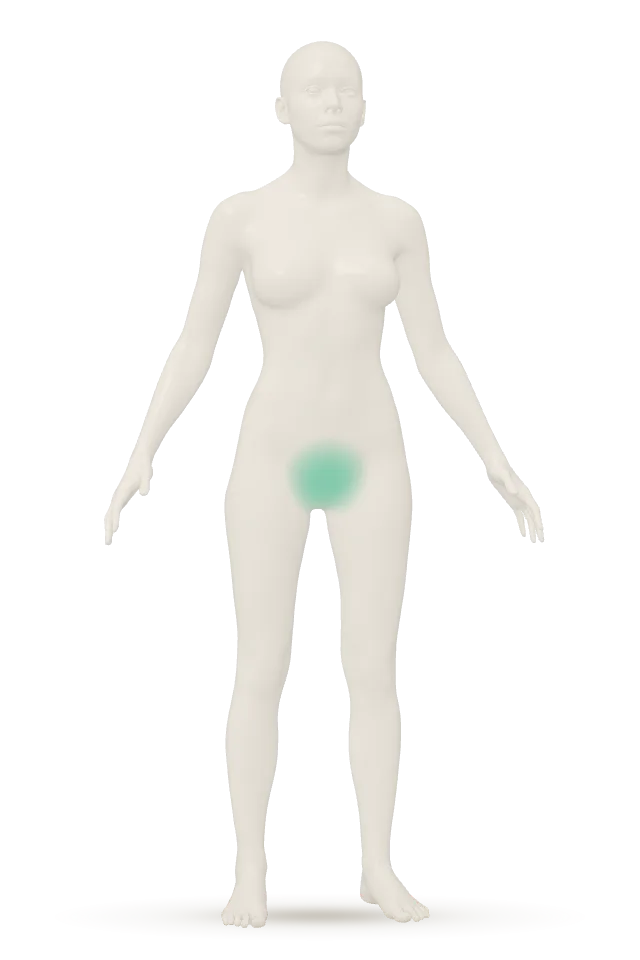
Sex & hormones
In people. Synthetic GnRH (identical to the natural hormone) that stimulates pituitary release of LH and FSH.
An area lights for what a peptide is used for and what people report, with the evidence beside it. It isn’t a promise that it works there.
Week by week.
What to expect in the first 8 weeks
Day 1–14Clinical
Settling into the cadence
First two weeks are about settling into the common clinic cadence of 2–3x/week at 100mcg. Alongside TRT, the point is intermittent LH/FSH stimulation; constant exposure (an infusion or a long-acting GnRH drug) triggers the opposite effect, desensitization and shutdown, but daily injections of short-lived gonadorelin don't.
The science
Gonadorelin is bioidentical GnRH — a 10-amino acid hypothalamic decapeptide. Continuous receptor occupation at the pituitary GnRH receptor causes downregulation and suppression (Belchetz 1978; the mechanism exploited by GnRH agonists in prostate cancer). True pulsatile therapy (a pump pulse every 1–2 hours) mimics the natural rhythm; 2–3 weekly injections are intermittent rather than pulsatile in that sense, and even 3x-daily injections kept stimulating the axis for a year (Mortimer 1974).
Sources- Belchetz et al. (1978)
- Mortimer et al. (1974)
Updated Sep 2026
Day 14–84Community
Testicular function holding
Commonly reported on TRT: some users say testicular size and fullness hold up better than on TRT alone. Whether gonadorelin injections sustain sperm production on TRT hasn't been tested, so if fertility is the goal, a semen analysis at around 3 months is the way to know.
The science
On exogenous testosterone, endogenous LH/FSH suppress and testicular function declines. Gonadorelin bypasses the suppressed hypothalamus by directly stimulating pituitary gonadotroph release. No published study has tested gonadorelin injections during TRT; the clinical evidence for protecting sperm on TRT is for low-dose hCG (Hsieh 2013).
Sources- Hsieh et al. (2013)
Updated Sep 2026
Any dayClinical
What Gonadorelin is built on
Gonadorelin is bioidentical GnRH with decades of clinical use in fertility medicine, where pump-delivered pulses are proven for hypogonadotropic hypogonadism and hypothalamic amenorrhea. The TRT use is compounded and untested in trials, but became common in men's-health clinics after hCG compounding ended in 2020.
The science
Previously FDA-approved as Factrel (a diagnostic pituitary test) and LutrePulse (1989, pump treatment to restore ovulation); both were withdrawn, and no FDA-approved product is on the US market. Now mainly compounded for TRT protocols. Pulsatile pump dosing is still used in some hypogonadotropic hypogonadism fertility protocols. Took over from hCG in many TRT clinics after March 2020, when hCG was reclassified as a biologic and compounding pharmacies had to stop making it (Borgert 2023).
Sources- Borgert et al. (2023)
- Belchetz et al. (1978)
Updated Sep 2026
After week 8
Day 84–365Clinical
Long-term maintenance pattern
Gonadorelin is typically continuous-use alongside TRT rather than cycled. At this stage it's background infrastructure, used with the aim of keeping testicular function on board. Consistency matters more than dose optimization.
The science
No upper time limit has been characterized for Gonadorelin dosing in TRT-adjacent protocols. The short half-life (2–10 min) means each dose is a discrete pulse; cumulative exposure doesn't build in the way it would for longer-acting analogs like leuprolide, which suppress the axis (Belchetz 1978).
Sources- Belchetz et al. (1978)
- Mortimer et al. (1974)
Updated Sep 2026
Day 1 is the day you start it.
Mixing and a typical run.
Example numbers
Reconstitution example
Reconstitute a 5 mg vial of Gonadorelin with 3 mL of bacteriostatic water and a 100 mcg dose is 6 units on a U-100 syringe, about 50 doses per vial.
- Vial
- 5 mg
- Water
- 3 mL
- Amount
- 100 mcg
Draw to6 units
0.3 mL insulin syringe · 30 units
Run notes
- Cycle
- Used continuously alongside TRT with the aim of maintaining testicular function, typically 2–3x/week ongoing.Community practice — opinions vary. Not a clinical recommendation.
- Timing
- Usually injected 2–3x/week (clinic convention); what shuts the system down is constant exposure, not daily injections.
- Route
- SubQ injection
Safety.
Common side effects
- Generally well tolerated
- Injection site reactions
- Headache
Questions people ask.
What is Gonadorelin?
A synthetic version of the hormone your hypothalamus uses to signal your pituitary to release LH and FSH — the hormones that drive testosterone production and fertility. Most commonly used alongside testosterone replacement therapy (TRT) with the aim of maintaining testicular function; no published trial has tested that use.
How is Gonadorelin dosed in research?
The research range for Gonadorelin is 100 mcg, 2–3x weekly (pulsatile). Studied in research — not a recommendation.
How long does Gonadorelin last?
The half-life of Gonadorelin is ~2–10 min.
What do people report on Gonadorelin?
Commonly reported on Gonadorelin: some users on TRT say it helps keep testicular size and fullness compared with TRT alone, and many describe it as weaker than hCG. It's usually injected 2–3 times a week; what shuts the system down is constant exposure (like a drip or long-acting GnRH drugs), not daily use.
Is Gonadorelin safe?
The research basis for Gonadorelin is established: clinical trials or FDA-approved use exists. Common side effects in the library: generally well tolerated, injection site reactions and headache.
Research.
Reference.
- Cadence
2–3× weekly
2–3x weekly (pulsatile)
- Half-life
~2–10 min
- Research basis
●●●
EstablishedClinical trials or FDA-approved use exists
PepVault for iPhone
Track Gonadorelin in PepVault
Log every dose and keep your vial and the doses left in it. 7 days free on the yearly plan for new subscribers.

Open the calculatorHow the vial count worksExplore the live demo
Reviewed How we check the library