Fragment 176-191 Dosage, half-life & reference guide
Also known as HGH Fragment 176-191 · HGH Frag · AOD Fragment
A stabilized fragment of the growth hormone molecule (amino acids 176-191), usually sold as the same peptide as AOD-9604. It targets fat cells: in rodents it boosted fat breakdown without affecting blood sugar or IGF-1.

- Studied range
- 250–500 mcg
- How often
- Daily
- Half-life
- ~30 min
- Evidence
- ●●
●Moderate - Route
- SubQ injection
Studied in research — not a recommendation.
How it works.
Stabilized fragment of HGH amino acids 176-191, usually the same peptide as AOD-9604 (hGH 177-191 with an added tyrosine). Boosts fat breakdown (rodent studies) without affecting blood glucose or IGF-1 levels; in obese mice it raised beta-3 receptor levels rather than binding them directly.
Commonly reported: Subtle at best, with many users noticing little and some describing slow fat loss with fasted morning dosing and a diet, plus mild injection-site redness. Human trials (as AOD-9604) found modest weight loss at best.
Where Fragment 176-191 works.
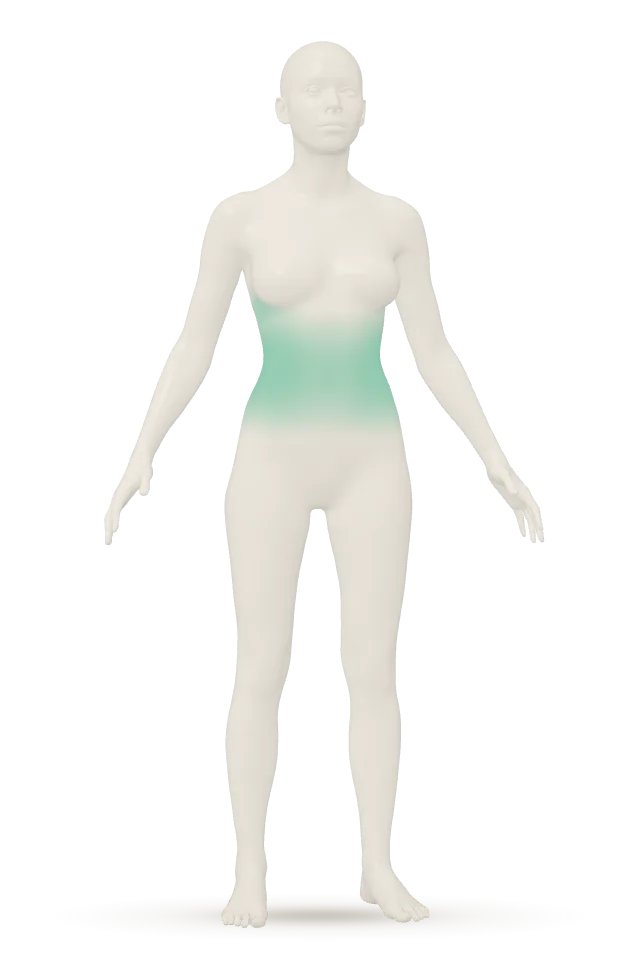
Appetite & metabolism
In animals. It targets fat cells: in rodents it boosted fat breakdown without affecting blood sugar or IGF-1.
An area lights for what a peptide is used for and what people report, with the evidence beside it. It isn’t a promise that it works there.
Week by week.
What to expect in the first 8 weeks
Day 1–14Community
No GH effects to feel
Fragment 176-191 is different from the other GH peptides: it keeps the fat-regulating tail of HGH but drops the GH signaling. Commonly reported: no change in sleep or hunger, and at most a slow drift of body fat down, usually with fasted dosing and a diet.
The science
Frag 176-191 acts on fat cells without using the GH receptor (mouse studies) — no IGF-1 rise, no insulin resistance, no pituitary feedback. It isn't a beta-3 agonist: in obese mice it raised beta-3 receptor levels instead (Heffernan 2001). Wu & Ng 1993 showed the 177-191 tail blocks fat synthesis; fat-release effects were reported later (Ng et al. 2000). Many dose fasted because insulin dampens fat release; no study has tested timing.
Sources- Wu & Ng (1993)
- Heffernan et al. (2001)
- Ng et al. (2000)
Updated Sep 2026
Day 14–56Community
A slow drift, for some users
Commonly reported, for those who respond: a subtle body-composition drift with the split-dose, fasted protocol. Users find it works best layered on an existing cut, not as a standalone.
The science
In obese rats, the fragment halved weight gain and shrank fat cells (Ng et al. 2000). Human data come from the same peptide under the name AOD-9604: six small trials, with modest weight loss in a 12-week trial and none in a larger 24-week trial.
Sources- Ng et al. (2000)
- Stier et al. (2013)
Updated Sep 2026
Day 56–112Community
Plateau is a real thing here
Commonly reported: a plateau around 8–12 weeks, and why isn't known. Cycling off 4–6 weeks or rotating to a different fat-loss approach is the conservative community play; continuing through a plateau rarely breaks it.
The science
Beta-3 receptor desensitization doesn't explain the plateau: the fragment isn't a beta-3 agonist, and in mice it raised beta-3 receptor levels (Heffernan 2001). No human chronic-dosing data exist. Community protocols have settled on 12-week cycles with breaks based on observed diminishing returns.
Sources- Heffernan et al. (2001)
Updated Sep 2026
Any dayAnimal
What Fragment 176-191 is built on
Good mechanistic story — the fat-regulating tail of HGH without the growth signaling — and solid animal data. Human data come from the same peptide sold as AOD-9604, where the larger trial failed. Treat it as a subtle fat tool layered into an existing cut, not a standalone fix.
The science
Wu & Ng at Monash University showed the C-terminal 177-191 tail blocks fat synthesis (1993). AOD-9604 (Metabolic Pharmaceuticals) was the commercial version and reached phase 2b in obesity before discontinuation. Frag 176-191 is the research-grade equivalent, usually the identical peptide. No major harms were reported in the published animal studies, but formal toxicology data aren't public, and FDA lists AOD-9604 in compounding category 2, citing a possible risk of immune reactions.
Sources- Wu & Ng (1993)
- Ng et al. (2000)
Updated Sep 2026
Day 1 is the day you start it.
Mixing and a typical run.
Example numbers
Reconstitution example
Reconstitute a 5 mg vial of Fragment 176-191 with 2 mL of bacteriostatic water and a 375 mcg dose is 15 units on a U-100 syringe, about 13 doses per vial.
- Vial
- 5 mg
- Water
- 2 mL
- Amount
- 375 mcg
Draw to15 units
0.3 mL insulin syringe · 30 units
Run notes
- Cycle
- 12–16 weeks. Often cycled alongside CJC/Ipa stack. Plateau reported; cycling advised.Community practice — opinions vary. Not a clinical recommendation.
- Timing
- Fasted injection, ideally morning; many split it into 2 daily doses (community practice).
- Route
- SubQ injection
- Stacks
- CJC-1295 no DAC, Ipamorelin
Safety.
Common side effects
- Injection site reactions
- Generally well tolerated
- Mild flushing
Goes with.
Compared with.
Questions people ask.
What is Fragment 176-191?
A stabilized fragment of the growth hormone molecule (amino acids 176-191), usually sold as the same peptide as AOD-9604. It targets fat cells: in rodents it boosted fat breakdown without affecting blood sugar or IGF-1.
How is Fragment 176-191 dosed in research?
The research range for Fragment 176-191 is 250–500 mcg. Daily, split into 2 doses, fasted. Studied in research — not a recommendation.
How long does Fragment 176-191 last?
The half-life of Fragment 176-191 is ~30 min.
What do people report on Fragment 176-191?
Commonly reported on Fragment 176-191: subtle at best, with many users noticing little and some describing slow fat loss with fasted morning dosing and a diet, plus mild injection-site redness. Human trials (as AOD-9604) found modest weight loss at best.
Is Fragment 176-191 safe?
The research basis for Fragment 176-191 is moderate: animal studies + some human data. Common side effects in the library: injection site reactions, generally well tolerated and mild flushing.
What does Fragment 176-191 stack with?
Common stacks for Fragment 176-191: CJC-1295 no DAC and Ipamorelin.
Research.
Reference.
- Cadence
Daily
Daily, split into 2 doses, fasted
- Half-life
~30 min
- Research basis
●●
●ModerateAnimal studies + some human data
PepVault for iPhone
Track Fragment 176-191 in PepVault
Log every dose and keep your vial and the doses left in it. 7 days free on the yearly plan for new subscribers.

Open the calculatorHow the vial count worksExplore the live demo
Reviewed How we check the library