HGH Dosage, half-life & reference guide
Also known as GH · rHGH · Human Growth Hormone · Growth Hormone · Somatropin · hGH
Recombinant human growth hormone — an identical copy of the GH your pituitary makes. It stimulates IGF-1 production, fat burning, muscle protein synthesis and tissue repair. FDA-approved since the 1980s for GH deficiency and several growth disorders, but not for aging or athletic use: in healthy adults, trials show about 2 kg of fat swapped for lean mass, with no strength gain and more side effects.

- Studied range
- 1–4 IU
- How often
- Daily
- Half-life
- ~3-4 hours
- Evidence
- ●●●
Established - Route
- SubQ injection
Studied in research — not a recommendation.
How it works.
Recombinant human growth hormone. Binds GH receptors to stimulate IGF-1 production, protein synthesis, and lipolysis. Promotes muscle growth, fat oxidation, and tissue repair. Structurally identical to pituitary GH, though injections don't reproduce its natural pulses.
Commonly reported: Water retention, numb or tingling fingers, joint aches, and better sleep and skin. Requires careful dosing and IGF-1 monitoring — more is not always better.
Where HGH works.
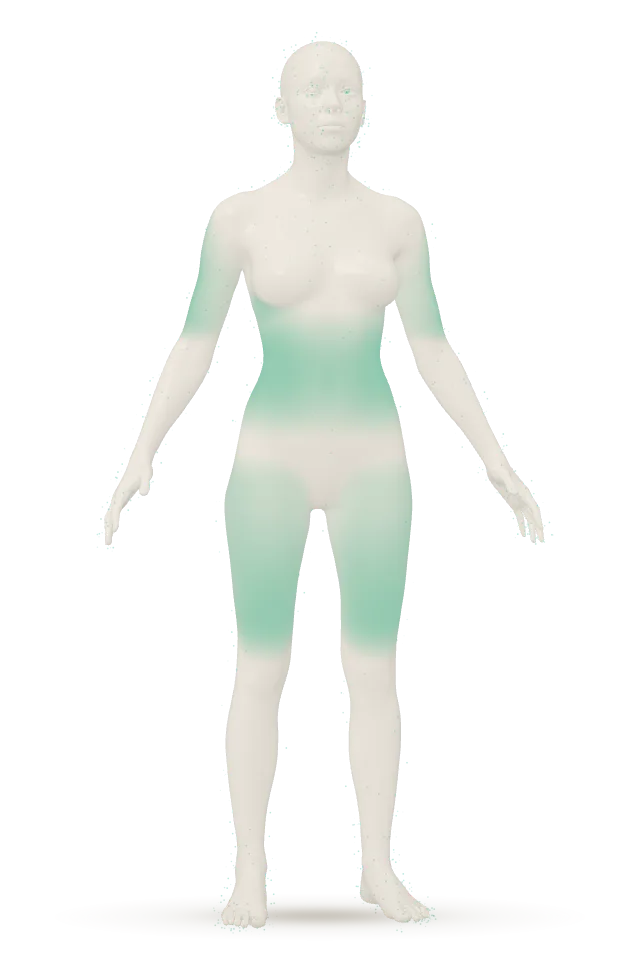
Appetite & metabolism
In people. In healthy adults, trials show about 2 kg of fat swapped for lean mass, with no strength gain and more side effects.
Muscle
In people. Promotes muscle growth, fat oxidation, and tissue repair.
Energy & longevity
In people. Recombinant human growth hormone — an identical copy of the GH your pituitary makes.
An area lights for what a peptide is used for and what people report, with the evidence beside it. It isn’t a promise that it works there.
A typical run.
Run notes
- Cycle
- Commonly reported starting dose 1-2 IU daily. Advanced users may run 3-4 IU split AM/PM. Cycles of 3-6+ months common. Monitor IGF-1 levels. Also run alongside peptide stacks; some advanced protocols add insulin, which isn't in this library.Community practice — opinions vary. Not a clinical recommendation.
- Timing
- Before bed preferred for fat loss (mimics natural nocturnal GH pulse). Morning dosing for muscle-building protocols. Fasting matters less than with secretagogues: food blunts your own GH release, but not the dose you inject.
- Route
- SubQ injection
- Stacks
- CJC-1295 + Ipamorelin, KLOW
Safety.
Common side effects
- Water retention
- Joint pain
- Carpal tunnel syndrome
- Morning fatigue
- Injection site reactions
Goes with.
- CJC-1295 + Ipamorelin
- KLOW
Questions people ask.
What is HGH?
Recombinant human growth hormone — an identical copy of the GH your pituitary makes. It stimulates IGF-1 production, fat burning, muscle protein synthesis and tissue repair. FDA-approved since the 1980s for GH deficiency and several growth disorders, but not for aging or athletic use: in healthy adults, trials show about 2 kg of fat swapped for lean mass, with no strength gain and more side effects.
How is HGH dosed in research?
The research range for HGH is 1–4 IU, daily SubQ injection. Studied in research — not a recommendation.
How long does HGH last?
The half-life of HGH is ~3-4 hours (SubQ).
What do people report on HGH?
Commonly reported on HGH: water retention, numb or tingling fingers, joint aches, and better sleep and skin. Requires careful dosing and IGF-1 monitoring — more is not always better.
Is HGH safe?
The research basis for HGH is established: clinical trials or FDA-approved use exists. Common side effects in the library: water retention, joint pain, carpal tunnel syndrome, morning fatigue and injection site reactions.
What does HGH stack with?
Common stacks for HGH: CJC-1295 + Ipamorelin and KLOW.
Research.
Reference.
- Cadence
Daily
Daily SubQ injection.
- Half-life
~3-4 hours
~3-4 hours (SubQ)
- Research basis
●●●
EstablishedClinical trials or FDA-approved use exists
PepVault for iPhone
Track HGH in PepVault
Log every dose, with reminders on your schedule. 7 days free on the yearly plan for new subscribers.

Reviewed How we check the library