Pramlintide Dosage, half-life & reference guide
Also known as Symlin · SymlinPen · AC137
Reviewed 8 studiesEvidence: EstablishedPublished by PepVault
The first amylin drug (Symlin), approved in 2005 for people with diabetes who use mealtime insulin: a shot before each main meal that slows digestion and makes people feel full sooner. In its diabetes trials weight fell about 1 to 2 kg, and in obesity trials without insulin, weight loss of about 6 to 7 kg beyond placebo was seen at a year.

- FDA label
- 15–120 mcgstarting dose 15 mcg
- How often
- 2–3× daily
- Half-life
- ~0.8 hours
- Evidence
- ●●●
Established - Route
- SubQ injection
How it works.
A synthetic copy of amylin, the hormone the pancreas releases with insulin after a meal, with three of its amino acids swapped for proline. It slows stomach emptying, blunts the after-meal rise in glucagon and acts in the brain to make people feel full, so they eat less. It lasts under an hour in the body, so it is injected right before each main meal. FDA-approved in 2005 as an add-on to mealtime insulin in type 1 and type 2 diabetes; it is the older, short-acting relative of cagrilintide, and its US pens are being discontinued.
Commonly reported: Early fullness and nausea in the first weeks. It is the short-acting ancestor of weekly cagrilintide, and its US pens are being discontinued.
Half-life & active level
The half-life of Pramlintide is ~0.8 hours (48 minutes, FDA label).
Here's how a typical Pramlintide schedule plays out over 48 hours (one-compartment estimate).
An estimate from the half-life above, not a measurement. See your own curve build live in the half-life calculator.

Model. Individual results vary.
PepVault for iPhone
Track pramlintide in PepVault
Log each dose, see how many doses are left in the vial, and keep your step-ups in one place.

7 days free on the yearly plan for new subscribers.
Where Pramlintide works.
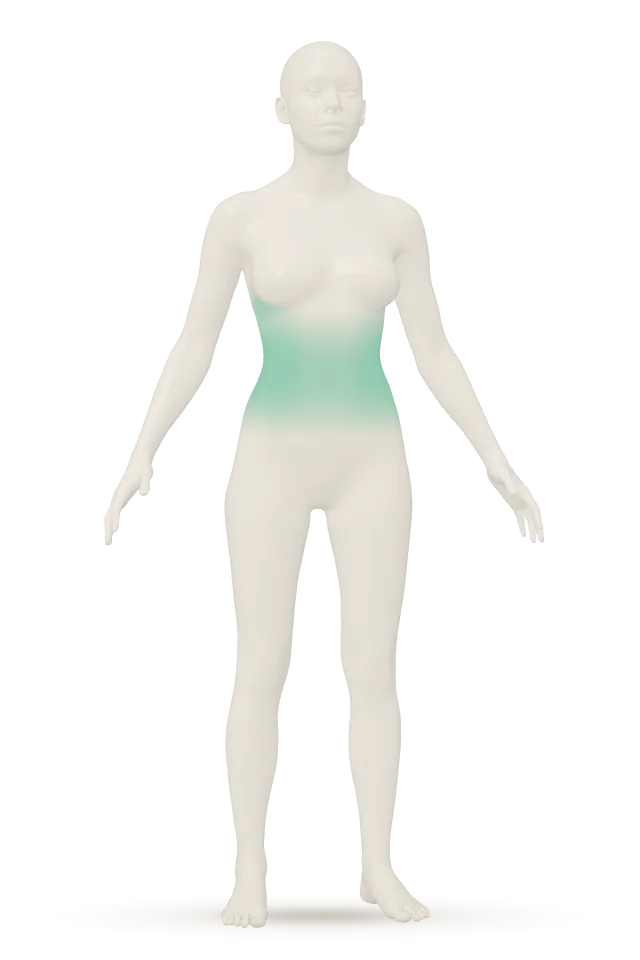
Appetite & metabolism
In people. In obesity trials of people not on insulin, pramlintide brought more weight loss than placebo, and in a year-long study the loss held while the placebo group regained.
An area lights for what a peptide is used for and what people report, with the evidence beside it. It isn’t a promise that it works there.
Week by week.
What to expect in the first 8 weeks
- Onset
- First meal (fullness, after-meal glucose)
- Peak effect
- 16–52 weeks (weight, HbA1c)
- Duration
- Ongoing
Day 1–14 · 15 mcgRCT
The 15 mcg start (type 1)
You're on 15 mcg before each main meal, the label's type 1 start, with mealtime insulin cut by half. Commonly reported: early fullness and some nausea; the label steps up by 15 mcg only after 3 days without significant nausea.
The science
The Symlin label starts type 1 diabetes at 15 mcg immediately before major meals, stepping to 30, 45 or 60 mcg, and cuts mealtime insulin (including premixed) by 50% at initiation. In three pooled type 1 trials, nausea affected 48% on 30 or 60 mcg vs 17% on placebo; it is highest at the start and decreases with time in most patients.
Sources- FDA Symlin label (2019)
Updated Nov 2026
Day 1–30 · 60 mcgClinical
60 mcg, a start and a top dose
60 mcg is where type 2 diabetes starts and where type 1 tops out. Commonly reported: meals feel smaller and nausea comes and goes in the first weeks.
The science
Label: type 2 diabetes on mealtime insulin starts at 60 mcg before each major meal and steps to 120 mcg after 3 days without significant nausea; in type 1, 60 mcg is the highest step, with a drop to 30 mcg if nausea persists at 45 or 60 mcg. A single dose 1 hour before an unlimited buffet cut caloric intake by about 21% (30 mcg, type 1) and 23% (120 mcg, type 2) against placebo, without shortening the meal.
Sources- FDA Symlin label (2019)
Updated Nov 2026
Day 4–365 · 120 mcgRCT
120 mcg, the type 2 dose
120 mcg before meals is the label's type 2 dose. In its trials weight drifted down by about 1.5 kg while it rose slightly on placebo, alongside lower after-meal glucose.
The science
In the two pooled type 2 trials (120 mcg twice daily plus insulin), nausea affected 28% vs 12% on placebo and headache 13% vs 7%. In two type 2 studies, weight fell 1.4 and 1.6 kg on Symlin against rises of 0.3 and 0.1 kg on placebo (label §14).
Sources- FDA Symlin label (2019)
Updated Nov 2026
Day 14–365RCT
What it did for weight without insulin
In obesity trials of people not on insulin, pramlintide brought more weight loss than placebo, and in a year-long study the loss held while the placebo group regained. Weight loss isn't an approved use; the newer weekly amylin drugs are the ones being tested for it.
The science
Aronne 2007: 204 adults with obesity, up to 240 mcg three times daily for 16 weeks without a lifestyle program: 3.6 kg (3.7%) placebo-corrected weight loss, and 31% vs 2% lost at least 5%. Smith 2008: 411 adults with a lifestyle program; at 12 months, placebo-corrected loss was 6.1 kg (120 mcg three times daily) and 7.2 kg (360 mcg twice daily), and 40-43% vs 12% lost at least 10%.
Sources- Aronne et al. (2007)
- Smith et al. (2008)
Updated Nov 2026
Any dayRCT
What Pramlintide is built on
Pramlintide is the first amylin drug: approved in 2005 on 26- to 52-week trials with mealtime insulin, and later tested in obesity. Its short action is why it needs a shot before each meal, and why weekly cagrilintide was designed.
The science
The Symlin label rests on placebo-controlled trials in type 1 and type 2 diabetes on insulin, with a boxed warning for severe hypoglycemia with insulin. Obesity trials (Aronne 2007; Smith 2008) tested it without insulin. Kruse 2021 describes cagrilintide as a stable, lipidated amylin analogue built for weekly dosing, where pramlintide needs injections three times a day.
Sources- FDA Symlin label (2019)
- Aronne et al. (2007)
- Smith et al. (2008)
- Kruse et al. (2021)
Updated Nov 2026
With Cagrilintide, CagriSema and SemaglutideClinical
Pramlintide and the new amylin drugs
Cagrilintide works the same amylin way, but lasts a week instead of under an hour. People who know one usually don't run both, since they hit the same receptors; pairing amylin with a GLP-1 is the idea behind CagriSema.
The science
Pramlintide's half-life is about 48 minutes (Symlin label); cagrilintide carries a fatty-acid chain that stretches it to about a week (Kruse 2021). No trial has combined pramlintide with cagrilintide; CagriSema pairs cagrilintide with semaglutide in one weekly shot.
Sources- FDA Symlin label (2019)
- Kruse et al. (2021)
Updated Nov 2026
Day 1 is the day you start it.
FDA Symlin label (DailyMed, effective December 2019); Drugs@FDA and the NDC Directory (read November 2026); Aronne 2007; Smith 2008; Kruse 2021. Approved as an add-on to mealtime insulin in diabetes; weight loss is off-label.
Clinical trial data
A typical run.
Run notes
- Cycle
- FDA-approved for ongoing use with mealtime insulin; its placebo-controlled trials ran 26 to 52 weeks. If it is stopped (surgery, illness), the label restarts it with the same start-up steps.Community practice — opinions vary. Not a clinical recommendation.
- Timing
- Right before each major meal (at least 250 kcal or 30 g of carbohydrate), into the abdomen or thigh (not the arm), at room temperature, at a site apart from the insulin shot (label). A missed dose is skipped until the next meal. Dose steps wait at least 3 days without significant nausea.
- Route
- SubQ injection
Safety.
Common side effects
- Nausea
- Loss of appetite
- Vomiting
- Headache
- Fatigue
- Dizziness
- Low blood sugar (with insulin)
Interactions
Pramlintide is never mixed with insulin in one syringe: it changes how both are absorbed, so they are separate shots at separate sites. It slows stomach emptying, so the label suggests taking oral medicines whose quick onset matters (pain relievers, antibiotics, oral contraceptives) at least 1 hour before or 2 hours after it, and it is not recommended with drugs that change gut motility. Other glucose-lowering drugs may need insulin adjustments. Discuss all your medicines with your clinician.
Safety notes
The Symlin label carries a boxed warning: taken with insulin, which is how it is approved, it raises the risk of severe low blood sugar, mostly in type 1 diabetes, usually within 3 hours of a dose; pramlintide alone does not cause low blood sugar. That is why mealtime insulin is cut by half at the start, glucose is checked often, and the label rules it out for people who can't feel their lows, have gastroparesis, an HbA1c above 9% or recurrent severe lows. A low while driving or operating machinery can cause serious injury. Nausea is the most common side effect, highest at the start and fading in most people. A pen is never shared, even with a new needle. These are label findings; review them with your clinician.
One question at a time.
Brand-name products.
Compared with.
Studies, in plain English.
- Pramlintide: HbA1c down 0.43% vs placebo at 26 weeks with insulin
- Pramlintide-insulin loop: time in range held without carb counting
- Pramlintide-insulin mix: 2.1 kg more weight loss than lispro
- Pramlintide/insulin ADO09 cut meal glucose rise 69% in high-dose group
- Pramlintide: weight loss maintained over 12 months in obesity
- Pramlintide: 3.7% placebo-corrected weight loss at 16 weeks
- Every study on Pramlintide
Questions people ask.
What is Pramlintide?
The first amylin drug (Symlin), approved in 2005 for people with diabetes who use mealtime insulin: a shot before each main meal that slows digestion and makes people feel full sooner. In its diabetes trials weight fell about 1 to 2 kg, and in obesity trials without insulin, weight loss of about 6 to 7 kg beyond placebo was seen at a year.
How is Pramlintide dosed in research?
The FDA label range for Pramlintide is 15–120 mcg, with a 15 mcg starting dose. 2–3x daily SubQ, right before major meals.
How long does Pramlintide last?
The half-life of Pramlintide is ~0.8 hours (48 minutes, FDA label).
What do people report on Pramlintide?
Commonly reported on Pramlintide: early fullness and nausea in the first weeks. It is the short-acting ancestor of weekly cagrilintide, and its US pens are being discontinued.
Is Pramlintide safe?
The research basis for Pramlintide is established: clinical trials or FDA-approved use exists. Common side effects in the library: nausea, loss of appetite, vomiting, headache, fatigue, dizziness and low blood sugar (with insulin).
Research.
Reference.
- Cadence
2–3× daily
2–3x daily SubQ, right before major meals
- Half-life
~0.8 hours
~0.8 hours (48 minutes, FDA label)
- Research basis
●●●
EstablishedClinical trials or FDA-approved use exists
PepVault for iPhone
Track pramlintide in PepVault
Log each dose, see how many doses are left in the vial, and keep your step-ups in one place.
7 days free on the yearly plan for new subscribers.
Reviewed How we check the library