Linaclotide Dosage, half-life & reference guide
Also known as Linzess
Reviewed 8 studiesEvidence: EstablishedPublished by PepVault
A daily capsule (Linzess) for chronic constipation and IBS with constipation: a small peptide that stays in the gut and draws water into the bowel so stools come more easily. In its trials more bowel movements came in the first week, and about 1 in 6 to 1 in 5 people reached its strict response bar against 3 to 6% on placebo.

- FDA label
- 72–290 mcgstarting dose 72 mcg
- How often
- Daily
- Evidence
- ●●●
Established - Route
- Oral capsule
How it works.
A 14-amino-acid peptide, related to the gut's own guanylin and uroguanylin, that works inside the intestine without entering the blood. It switches on the guanylate cyclase-C receptor on the gut lining, which raises cGMP, so the gut releases chloride, bicarbonate and water into the bowel and things move faster; in animals it also quieted the gut's pain nerves. FDA-approved in 2012 for adults with irritable bowel syndrome with constipation (IBS-C) or chronic idiopathic constipation, and for some children.
Commonly reported: Looser stools or diarrhea in the first two weeks, gas and bloating. FDA-approved since 2012; constipation from a GLP-1 drug was not what its trials studied.

PepVault for iPhone
Track linaclotide in PepVault
Log each dose and keep your schedule and step-ups in one place.

7 days free on the yearly plan for new subscribers.
Where Linaclotide works.
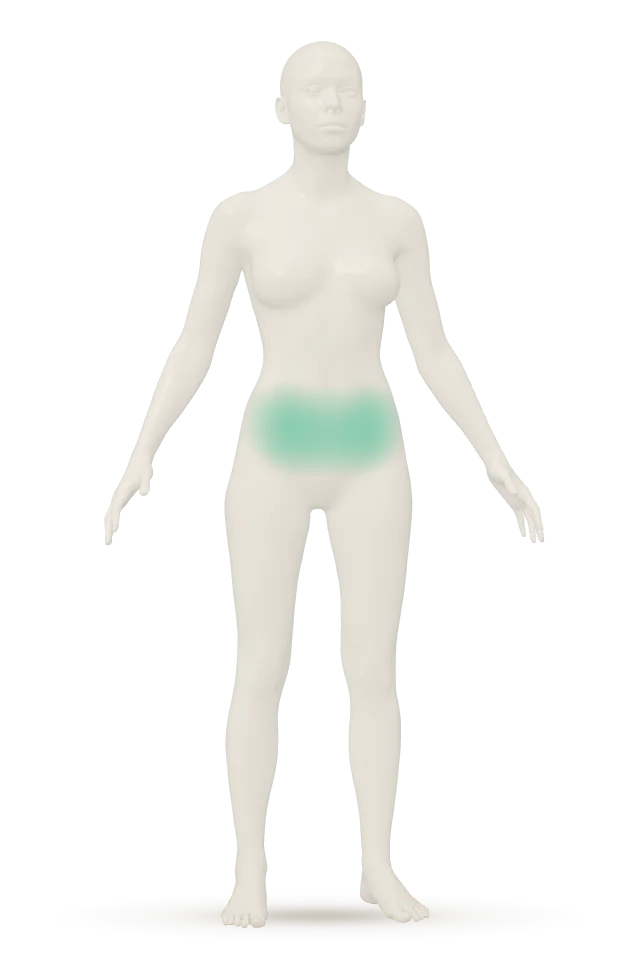
Gut
In people. A small peptide that stays in the gut and draws water into the bowel so stools come more easily.
An area lights for what a peptide is used for and what people report, with the evidence beside it. It isn’t a promise that it works there.
Week by week.
What to expect in the first 8 weeks
- Onset
- Week 1 (bowel movements)
- Peak effect
- 1–12 weeks
- Duration
- Ongoing
Day 1–14RCT
The first two weeks: things move
Linaclotide works fast: in its trials, bowel movements picked up in the first week. Commonly reported: looser stools or diarrhea in these first two weeks, which is when most of it starts; it is taken on an empty stomach, 30 minutes before a meal.
The science
In the label's chronic constipation trials, complete spontaneous bowel movement frequency reached its maximum during week 1 and held over the 12 weeks. Most diarrhea started within the first 2 weeks. Taken right after a high-fat breakfast, it gave looser, more frequent stools than when fasted, so the trials dosed it at least 30 minutes before a meal.
Sources- FDA Linzess label (2026)
Updated Nov 2026
Day 14–84RCT
How many people it works for
Against a strict bar, three or more complete bowel movements a week in most weeks, about 1 in 6 to 1 in 5 people reached it on 145 mcg, against 3 to 6% on placebo; many more saw some improvement in stool frequency and consistency.
The science
Lembo 2011 (two 12-week trials, 1,276 adults with chronic constipation): the primary end point was met by 21.2% and 16.0% on 145 mcg and 19.4% and 21.3% on 290 mcg, against 3.3% and 6.0% on placebo; secondary end points improved in both dose groups. The label kept 145 mcg because 290 mcg did not consistently add benefit; at week 12 the difference from placebo was about 1.5 complete bowel movements a week.
Sources- Lembo et al. (2011)
- FDA Linzess label (2026)
Updated Nov 2026
Any dayRCT
What Linaclotide is built on
Linaclotide is an oral peptide that never needs to reach the blood: approved in 2012 on large placebo-controlled trials in chronic constipation and IBS-C. It is a peptide that works by mouth because it only has to act in the gut, where it is broken down.
The science
The label rests on two 12-week chronic constipation trials (Lembo 2011) and two IBS-C trials of up to 26 weeks (1,605 adults on 290 mcg or placebo), plus trials in children. It acts locally on guanylate cyclase-C at the gut lining; plasma levels stay below quantitation at 72 to 290 mcg, so no standard pharmacokinetics can be calculated (label).
Sources- Lembo et al. (2011)
- FDA Linzess label (2026)
Updated Nov 2026
With Semaglutide, Tirzepatide, Retatrutide, Liraglutide and DulaglutideCommunity
Linaclotide and GLP-1 constipation
Constipation is common on GLP-1 drugs, and some people get linaclotide prescribed for it. Its trials studied chronic idiopathic constipation and IBS-C, not GLP-1 constipation, and the two together can mean diarrhea on top of a GLP-1's nausea.
The science
The Linzess label's indications are IBS-C, chronic idiopathic constipation and functional constipation in children; no trial of linaclotide in GLP-1-related constipation was found on PubMed (searched November 2026). Its main risk, diarrhea, and the GLP-1 labels' warning on kidney injury from dehydration after vomiting or diarrhea point the same way: fluids matter.
Sources- FDA Linzess label (2026)
Updated Nov 2026
After week 8
Day 85+Clinical
Living with it long term
Linaclotide is a daily, ongoing medicine. In its long open-label trials, about 3 in 10 people at the top dose needed a lower dose or a pause at some point, mostly for diarrhea, which is a call for you and your clinician.
The science
In the open-label long-term IBS-C trials, 2,147 patients took 290 mcg daily for up to 18 months; 29% had their dose reduced or suspended for adverse reactions, mostly diarrhea or other GI effects (label). The label also allows 72 mcg in chronic idiopathic constipation by presentation or tolerability.
Sources- FDA Linzess label (2026)
Updated Nov 2026
Day 1 is the day you start it.
FDA Linzess label (DailyMed, effective October 2026); Lembo 2011. Approved for IBS-C and chronic idiopathic constipation; constipation from GLP-1 drugs is not a studied use.
Clinical trial data
A typical run.
Run notes
- Cycle
- FDA-approved for ongoing daily use; its placebo-controlled trials ran 12 to 26 weeks, and open-label trials followed people on 290 mcg for up to 18 months, where 29% needed a dose reduction or pause, mostly for diarrhea.Community practice — opinions vary. Not a clinical recommendation.
- Timing
- Once daily on an empty stomach, at least 30 minutes before a meal, at about the same time each day; the capsule is swallowed whole, or opened onto applesauce or into water (label). A missed dose is skipped, never doubled.
- Route
- Oral capsule
Safety.
Common side effects
- Diarrhea
- Abdominal pain
- Gas
- Bloating
- Headache
Interactions
The label lists no drug interactions: linaclotide and its active metabolite stay below detection in the blood, and it is broken down inside the gut. Taken right after a high-fat breakfast it gave looser, more frequent stools than on an empty stomach. Diarrhea from it can add to dehydration from other causes, such as a GLP-1's vomiting. Discuss all your medicines with your clinician.
Safety notes
The Linzess label carries a boxed warning for children under 2: in newborn mice a single adult-sized dose caused deaths from dehydration, so it is never given under age 2. In adults the main risk is diarrhea: 16 to 22% in its trials, severe in about 2% on 145 or 290 mcg, mostly starting in the first 2 weeks; after approval, severe diarrhea with dizziness, fainting, low blood pressure or low potassium or sodium has needed hospital care, and the label suspends dosing and rehydrates when it happens. It is not used with a known or suspected bowel blockage. Allergic reactions, including anaphylaxis, and rectal bleeding have been reported after approval. These are label findings; review them with your clinician.
One question at a time.
Brand-name products.
Studies, in plain English.
- Linaclotide plus PEG improved colonoscopy prep quality in 8 RCTs
- Linaclotide: bowel prep scores similar to double-dose PEG
- Linaclotide beat placebo in IBS-C and chronic constipation trials
- Linaclotide plus 1 L PEG-Asc: 92% vs 86% adequate prep vs senna
- Linaclotide raised weekly bowel movements in kids with constipation
- Linaclotide: trend to more bowel movements in kids at higher doses
- Every study on Linaclotide
Questions people ask.
What is Linaclotide?
A daily capsule (Linzess) for chronic constipation and IBS with constipation: a small peptide that stays in the gut and draws water into the bowel so stools come more easily. In its trials more bowel movements came in the first week, and about 1 in 6 to 1 in 5 people reached its strict response bar against 3 to 6% on placebo.
How is Linaclotide dosed in research?
The FDA label range for Linaclotide is 72–290 mcg, daily, oral, with a 72 mcg starting dose.
How long does Linaclotide last?
The half-life of Linaclotide is not measurable: it acts in the gut and stays below detection in the blood (FDA label).
What do people report on Linaclotide?
Commonly reported on Linaclotide: looser stools or diarrhea in the first two weeks, gas and bloating. FDA-approved since 2012; constipation from a GLP-1 drug was not what its trials studied.
Is Linaclotide safe?
The research basis for Linaclotide is established: clinical trials or FDA-approved use exists. Common side effects in the library: diarrhea, abdominal pain, gas, bloating and headache.
Research.
Reference.
- Cadence
Daily
Daily, oral
- Half-life
Not measurable: it acts in the gut and stays below detection in the blood (FDA label)
- Research basis
●●●
EstablishedClinical trials or FDA-approved use exists
PepVault for iPhone
Track linaclotide in PepVault
Log each dose and keep your schedule and step-ups in one place.
7 days free on the yearly plan for new subscribers.
Reviewed How we check the library