Exenatide Dosage, half-life & reference guide
Also known as Byetta · Exendin-4 · AC2993
Reviewed 8 studiesEvidence: EstablishedPublished by PepVault
The first GLP-1 drug, made from a peptide found in Gila monster venom, approved in 2005 as Byetta for type 2 diabetes: a shot before breakfast and dinner that lowers blood sugar after meals. Its effect on weight is modest, about 3 kg on average in its 24- to 30-week trials, and it is not approved for weight loss.

- FDA label
- 5–10 mcgstarting dose 5 mcg
- How often
- 2× daily
- Half-life
- ~2.4 hours
- Evidence
- ●●●
Established - Route
- SubQ injection
How it works.
The first GLP-1 receptor agonist approved: a synthetic copy of exendin-4, a 39-amino-acid peptide first found in the venom of the Gila monster, whose sequence partly overlaps human GLP-1. It releases insulin when glucose is high, lowers glucagon and slows stomach emptying, and it reduces food intake. It is cleared by the kidneys with a half-life of about 2.4 hours, so the original form (Byetta) is a shot before the two main meals of the day. FDA-approved in 2005 for type 2 diabetes in adults; it is not approved for weight management, and every US exenatide product is now listed as discontinued.
Commonly reported: A smaller appetite and nausea in the first weeks, easing for most people with time. Every US exenatide product, including the weekly Bydureon BCise, is now listed by the FDA as discontinued.
Half-life & active level
The half-life of Exenatide is ~2.4 hours (FDA label).
Here's how a typical Exenatide schedule plays out over 48 hours (one-compartment estimate).
An estimate from the half-life above, not a measurement. See your own curve build live in the half-life calculator.

Model. Individual results vary.
PepVault for iPhone
Track exenatide in PepVault
Log each dose, see how many doses are left in the vial, and keep your step-ups in one place.

7 days free on the yearly plan for new subscribers.
Where Exenatide works.
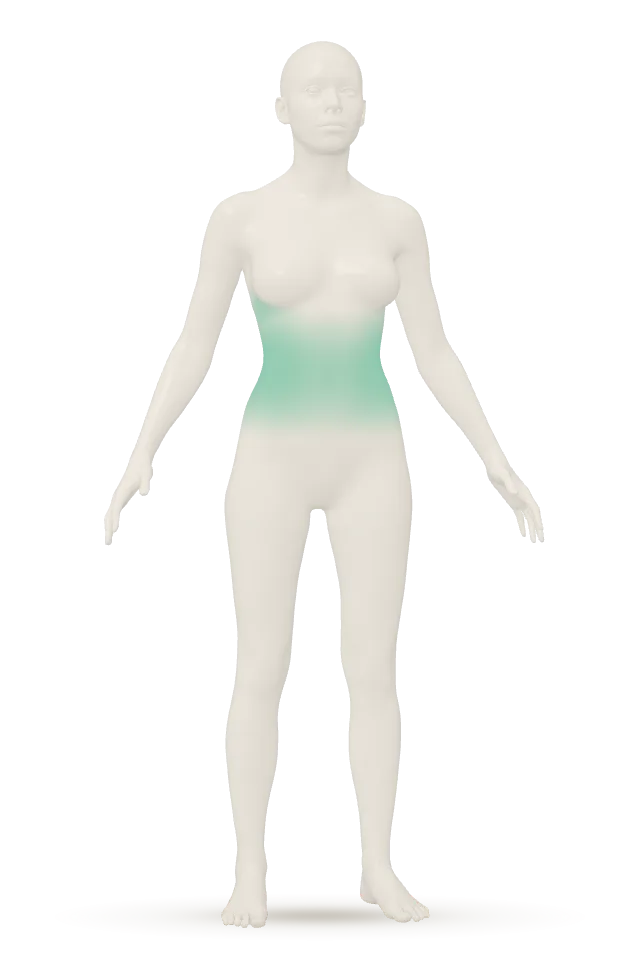
Appetite & metabolism
In people. It releases insulin when glucose is high, lowers glucagon and slows stomach emptying, and it reduces food intake.
An area lights for what a peptide is used for and what people report, with the evidence beside it. It isn’t a promise that it works there.
Week by week.
What to expect in the first 8 weeks
- Onset
- First dose (after-meal glucose)
- Peak effect
- 24–30 weeks (HbA1c)
- Duration
- Ongoing
Day 1–30 · 5 mcgRCT
The 5 mcg start, before two meals
You're on 5 mcg, the label's starting dose, taken in the hour before breakfast and dinner. Commonly reported: nausea and a smaller appetite at those meals in the first days, easing for most people over the weeks.
The science
The Byetta label starts at 5 mcg twice daily and allows 10 mcg after 1 month, stepping up to limit stomach side effects. Nausea was dose-dependent: 44% on Byetta vs 18% on placebo in the three 30-week trials with metformin or a sulfonylurea, and its frequency and severity fell with continued use in most patients. In DeFronzo 2005 (336 adults on metformin), 5 mcg lowered HbA1c by 0.40 points at 30 weeks.
Sources- FDA Byetta label (2025)
- DeFronzo et al. (2005)
Updated Nov 2026
Day 1–60Clinical
Why the shot comes before the meal
Exenatide lasts only a few hours, so each shot covers the meal after it. The label times it within the hour before a meal and never after, which is why a missed dose is skipped.
The science
The label gives a mean terminal half-life of 2.4 hours and a median peak 2.1 hours after an injection, with exenatide measurable for about 10 hours. It slows stomach emptying, which lowers the after-meal glucose rise; in a crossover study a single dose released insulin at once and lowered fasting glucose against placebo.
Sources- FDA Byetta label (2025)
Updated Nov 2026
Day 31–180 · 10 mcgRCT
10 mcg, the full dose
At 10 mcg twice daily, its trials saw the larger glucose drop and a few kilos of weight loss over half a year. Commonly reported: a day or two of nausea after the step-up, then settling.
The science
In DeFronzo 2005, HbA1c fell 0.78 points on 10 mcg vs 0.40 on 5 mcg and rose 0.08 on placebo at 30 weeks, and weight fell 2.8 kg on 10 mcg vs 1.6 kg on 5 mcg. In the label's 24-week monotherapy trial, 10 mcg lowered HbA1c by 0.9 points (0.2 on placebo) and weight by 2.9 kg (1.5 kg on placebo).
Sources- DeFronzo et al. (2005)
- FDA Byetta label (2025)
Updated Nov 2026
Any dayRCT
What Exenatide is built on
Exenatide is the original GLP-1 drug: a peptide found in Gila monster venom in 1992, approved in 2005, with a large trial program and a heart-outcomes trial for its weekly form. It is approved for type 2 diabetes, not for weight loss.
The science
Eng 1992 isolated exendin-4 from Heloderma suspectum venom. Byetta's label rests on placebo-controlled trials of 16 to 30 weeks, alone and with metformin, a sulfonylurea, a thiazolidinedione or insulin glargine (DeFronzo 2005 among them). EXSCEL (Holman 2017) tested the weekly form for cardiovascular safety. The weekly form also failed to slow Parkinson's disease in a 96-week phase 3 (Vijiaratnam 2025), a paper The Lancet placed an expression of concern on in June 2026.
Sources- Eng et al. (1992)
- DeFronzo et al. (2005)
- Holman et al. (EXSCEL) (2017)
- Vijiaratnam et al. (2025)
Updated Nov 2026
With BPC-157Community
Why people add BPC-157 to a GLP-1
Some people add BPC-157, first studied as a stomach-protecting peptide, hoping it eases GLP-1 stomach upset. Commonly reported: smoother first weeks; no trial has tested it with exenatide.
The science
BPC-157 is a fragment of a body protection compound first isolated from human gastric juice, and its gut research is almost all in animals (Sikiric 2018). No trial has tested the pairing; the pattern comes from community reports.
Sources- Sikiric et al. (2018)
Updated Nov 2026
After week 8
Day 181+RCT
A medicine the market moved past
Exenatide opened the GLP-1 class, and newer weekly drugs have since taken its place. The FDA now lists every US exenatide product as discontinued, so staying on it or switching is a call for you and your clinician.
The science
Drugs@FDA (read November 2026) lists Byetta, Bydureon, the Bydureon Pen, Bydureon BCise and the generic exenatide pen as discontinued. In EXSCEL (Holman 2017), 14,752 adults took the weekly 2 mg form or placebo for a median of 3.2 years: major cardiovascular events occurred in 11.4% vs 12.2% (HR 0.91), non-inferior for safety but not superior.
Sources- Holman et al. (EXSCEL) (2017)
Updated Nov 2026
Day 1 is the day you start it.
FDA Byetta label (DailyMed, effective September 2025); Drugs@FDA marketing status (read November 2026); Eng 1992; DeFronzo 2005; EXSCEL (Holman 2017); Exenatide-PD3 (Vijiaratnam 2025). Approved for type 2 diabetes, not weight management.
Clinical trial data
A typical run.
Run notes
- Cycle
- FDA-approved for ongoing use in type 2 diabetes; the label's trials ran 16 to 30 weeks, with open-label extensions to 52 weeks. The once-weekly extended-release form (Bydureon, later Bydureon BCise) was studied for a median of 3.2 years in EXSCEL.Community practice — opinions vary. Not a clinical recommendation.
- Timing
- Twice daily, any time in the 60 minutes before the morning and evening meals (or the two main meals, about 6 hours or more apart), never after a meal, in the thigh, abdomen or upper arm (label). A missed dose is skipped, and the next one is taken as scheduled. Drug levels peak about 2 hours after a shot and are measurable for about 10 hours.
- Route
- SubQ injection
- Stacks
- BPC-157 (GI support)
Safety.
Common side effects
- Nausea
- Vomiting
- Diarrhea
- Feeling jittery
- Dizziness
- Headache
- Indigestion
- Low blood sugar (with a sulfonylurea or insulin)
Interactions
Exenatide slows stomach emptying, so oral medicines can be absorbed more slowly: the label suggests taking drugs that need a steady level, such as contraceptives and antibiotics, at least 1 hour before the shot. Reports of a raised INR on warfarin, sometimes with bleeding, led the label to suggest closer INR checks when exenatide starts or changes. With a sulfonylurea or insulin, the label suggests considering lower doses of those. It is a GLP-1 drug itself, so it is not combined with another one or with another exenatide product. Discuss all your medicines with your clinician.
Safety notes
The Byetta label carries no boxed warning, but in a two-year rat study benign thyroid C-cell tumours were more common in female rats at every dose. Its warnings are acute pancreatitis, including fatal forms seen with GLP-1 drugs; low blood sugar, including severe episodes, when combined with a sulfonylurea or insulin; kidney injury after dehydration from vomiting or diarrhea; severe stomach side effects (it is not recommended with severe gastroparesis, or with severe kidney disease); antibodies that blunted the glucose response in 1 to 4% of trial patients; serious allergic reactions; a rare immune drop in platelets that can cause serious bleeding; gallbladder disease (1.9% vs 1.4% on placebo); and food reaching the lungs under anesthesia. A pen is never shared, even with a new needle. These are label findings; review them with your clinician.
Goes with.
One question at a time.
Brand-name products.
Compared with.
Studies, in plain English.
- Exenatide: no cognitive benefit in mild cognitive impairment
- Exenatide: lower intracranial pressure in IIH over 12 weeks
- Exenatide did not cut heavy drinking days in alcohol use disorder
- Exenatide: 29.2% spontaneous pregnancy vs 14.7% on metformin in PCOS
- Exenatide plus dapagliflozin: UACR fell 39.6% vs 11.0% on placebo
- Exenatide, alone or with dapagliflozin, improved blood sugar in PCOS
- Every study on Exenatide
Questions people ask.
What is Exenatide?
The first GLP-1 drug, made from a peptide found in Gila monster venom, approved in 2005 as Byetta for type 2 diabetes: a shot before breakfast and dinner that lowers blood sugar after meals. Its effect on weight is modest, about 3 kg on average in its 24- to 30-week trials, and it is not approved for weight loss.
How is Exenatide dosed in research?
The FDA label range for Exenatide is 5–10 mcg, twice daily SubQ, before meals, with a 5 mcg starting dose.
How long does Exenatide last?
The half-life of Exenatide is ~2.4 hours (FDA label).
What do people report on Exenatide?
Commonly reported on Exenatide: A smaller appetite and nausea in the first weeks, easing for most people with time. Every US exenatide product, including the weekly Bydureon BCise, is now listed by the FDA as discontinued.
Is Exenatide safe?
The research basis for Exenatide is established: clinical trials or FDA-approved use exists. Common side effects in the library: nausea, vomiting, diarrhea, feeling jittery, dizziness, headache, indigestion and low blood sugar (with a sulfonylurea or insulin).
What does Exenatide stack with?
Common stacks for Exenatide: BPC-157 (GI support).
Research.
Reference.
- Cadence
2× daily
Twice daily SubQ, before meals
- Half-life
~2.4 hours
~2.4 hours (FDA label)
- Research basis
●●●
EstablishedClinical trials or FDA-approved use exists
PepVault for iPhone
Track exenatide in PepVault
Log each dose, see how many doses are left in the vial, and keep your step-ups in one place.
7 days free on the yearly plan for new subscribers.
Reviewed How we check the library
Track your progress
Watch it work.
Weight, waist and photos in one arc.
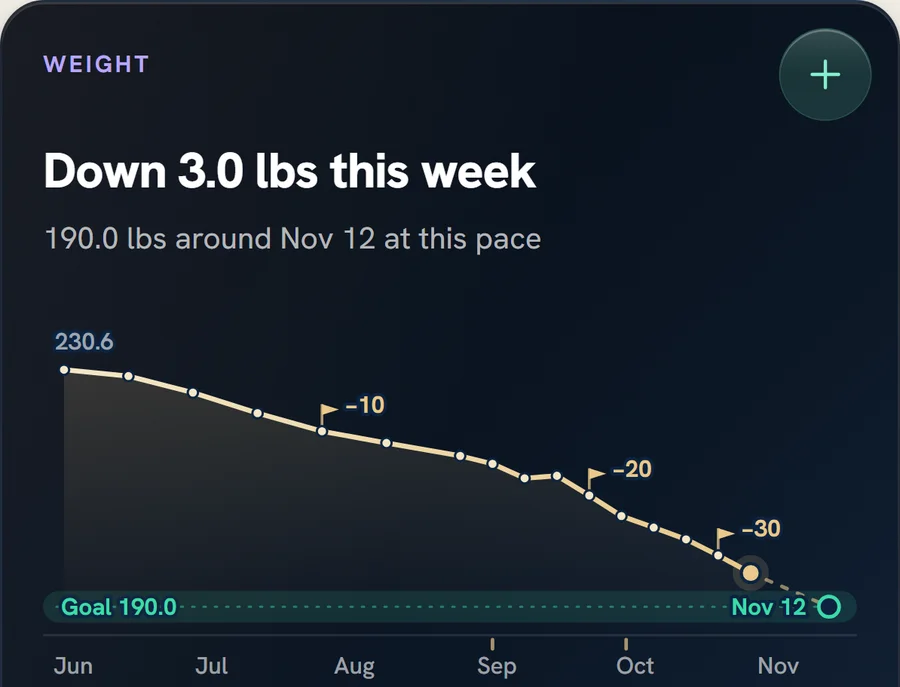

34.8 lbsdown since June